Visa

About AESE Business School
Executive education in Portugal
AESE Business School is a Portuguese institution specialising in the education of business and institutional leaders. Its history records the creation of the Associação de Estudos Superiores de Empresa in Lisbon on 3 October 1980. The first edition of its senior management programme, PADE, was organised in Lisbon that year. Over subsequent decades the school developed a portfolio of executive programmes, an Executive MBA and sector-specific education, with activity in Lisbon and Porto. Its current institutional identity combines general management education with a Christian and humanist perspective on people and society.
AESE describes itself as a nonprofit institution of public utility and places human dignity, integrity, service and professional responsibility at the centre of its mission. Its educational model adopts a general management perspective, examining an organisation as a whole and considering how decisions affect people and society. This emphasis is reflected in the way the school brings strategic, financial, operational and ethical questions together. The intention is to develop judgement across organisational functions rather than approach management solely as a collection of separate technical disciplines.
Several milestones illustrate the development of this model. AESE established a Porto delegation in 1992 and created its family business studies centre in 1995. Its Lisbon campus opened in 2000, followed by the Executive MBA in 2001 in partnership with IESE Business School. Health institution management education followed in 2004, and a programme for social organisations began in 2008. These additions show the extension of its management education into different organisational settings while retaining a common focus on leadership and decisions.
Sources: Institutional history ↗ · Mission and values ↗
Learning through the case method
The case method is central to AESE's teaching. Participants analyse situations drawn from actual organisations, assume the perspective of a decision-maker and work with complex problems, incomplete information and competing interests. The school describes a process beginning with individual preparation, followed by discussion in a working group and a wider classroom debate. Participants identify issues, evaluate possible responses and explain the criteria behind their choices. The purpose is to practise analysis and judgement rather than memorise a predetermined answer.
Teachers guide the discussion, question assumptions and help organise the conclusions that emerge. Participants also learn from the different industries, responsibilities and experiences represented in their group. AESE describes case writing as another part of this educational approach. In the Executive MBA and other programmes, participants can investigate organisations, speak with decision-makers and develop cases under faculty supervision. The school uses cases based on Portuguese and international companies, connecting its classroom material with practical organisational challenges.
Sources: The case method ↗
Simulations and executive study
Management simulations complement case discussion in selected programmes. They allow teams to make decisions, observe results and adjust their approach as a simulated business environment changes. AESE's description includes executive decision-making, strategy, marketing, accounting, finance and operations. Some exercises focus on competition between teams; others examine how financial information relates to management choices. Faculty-led reflection is part of the process, helping participants connect what happened in the exercise with concepts and questions relevant to organisations.
The Executive MBA combines this practical teaching approach with a broad management curriculum. Its published academic areas include finance, macroeconomics, strategy, operations, marketing, organisational governance, negotiation, leadership, values and ethics. An entrepreneurial initiative gives participants a setting for developing a business idea in a team. The programme also describes personal development, executive coaching and international learning experiences. EXSim, developed in partnership with IESE, brings several management responsibilities together in an executive simulation rather than treating each subject in isolation.
Sources: Management simulations ↗ · Executive MBA ↗
General management for experienced leaders
The PDE, or Programa de Direção de Empresas, is directed toward entrepreneurs, general managers and business-unit leaders with established experience. Its curriculum is organised around strategy and organisational transformation; markets, brands and products; finance and strategic control; leadership, culture and motivation; and operational efficiency and customer experience. Subject descriptions include internationalisation, financial diagnosis, investment decisions, communication, organisational culture, supply chains and risk. The published programme combines these areas with an international component at IESE in Madrid.
This structure reflects AESE's wider emphasis on integrating functions. A commercial decision is examined alongside finance, operations and the people who will implement it, while organisational strategy is considered together with culture and responsibility. The PDE teaching description combines individual study, group work, faculty-led sessions and practical exercises. Its international component introduces additional economic and organisational perspectives, extending discussion beyond the immediate circumstances of participants' own companies.
Sources: PDE General Management Programme ↗
Campus services and a continuing learning community
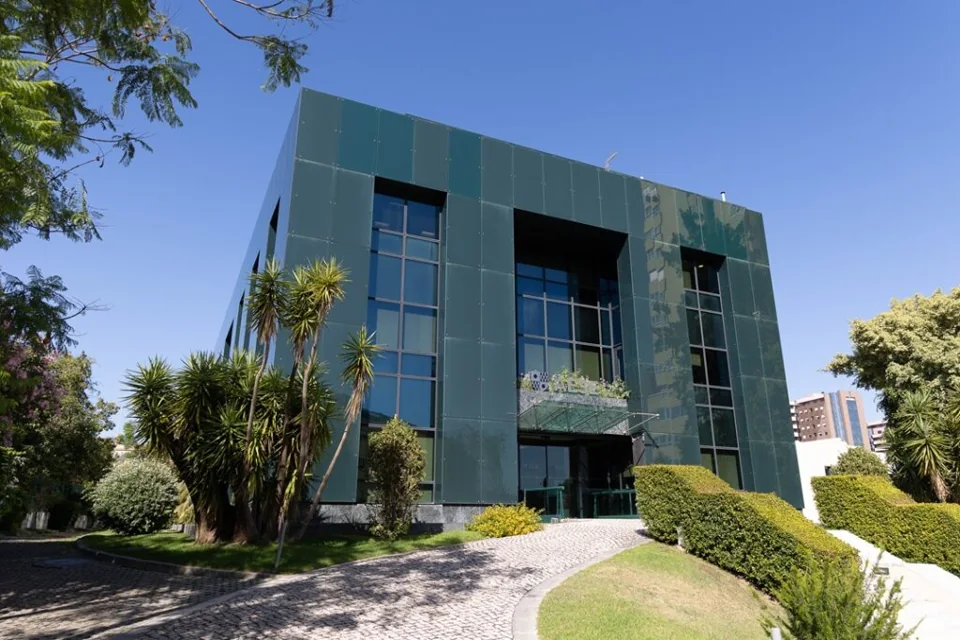
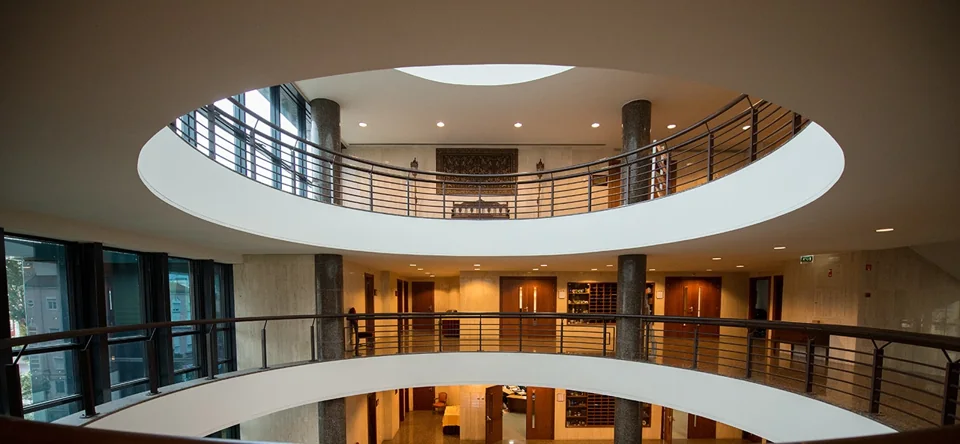
AESE identifies campuses in Lisbon and Porto. Its services information describes spaces and arrangements supporting participants during their programmes, including dining, internet access and parking. The Lisbon campus also has a bookshop providing programme-related bibliography and a chaplaincy for members of the school community interested in Christian formation. These services form part of a setting designed for professional learners who divide time between their organisational responsibilities, individual preparation and participation in class.
The school's history also records a continuing connection with former participants through alumni activities and publications. Its early alumni assembly took place in 1988, while later initiatives included leadership forums and ongoing learning activities. The AESE insight publication developed from an article-sharing initiative during the pandemic and brings together management analysis and reflection from faculty and associated contributors. This combination of programmes, discussion and continuing intellectual exchange extends the school's activity beyond a participant's initial course of study.
Sources: Campus services ↗ · Institutional history ↗