Visa


About Anglia Ruskin University
An institution shaped by several educational traditions
Anglia Ruskin University, usually known as ARU, is a university in England with main campuses in Cambridge, Chelmsford, Peterborough and Writtle. Its history begins with Cambridge School of Art, opened by John Ruskin in 1858. Later developments brought together institutions including the Cambridgeshire College of Arts and Technology and the Essex Institute of Higher Education. Their combination became Anglia Polytechnic, followed by Anglia Polytechnic University in 1992.
This institutional history helps explain the university’s breadth. Its established work in arts and education expanded into computing, engineering, business, law, life sciences and health-related education. Writtle University College merged with ARU on 29 February 2024, adding a further tradition of specialist land-based learning. ARU’s history also distinguishes its main campuses from partner institutions in Britain and overseas. Its educational development therefore reflects both the combination of earlier institutions and the growth of specialist teaching and research.
Sources: An institution shaped by several educational traditions ↗
Mission, values and relationships with communities
ARU describes its purpose through education and research that are innovative, inclusive and entrepreneurial. Its published values identify ambition, collaboration, inclusion and integrity as principles for institutional life. Ambition is linked to curiosity, progress and improvement. Collaboration concerns partnerships in which students, staff and external organizations share ideas and respond to challenges together.
The university’s inclusion statement emphasizes learning from different perspectives and enabling people to participate and belong. Integrity is expressed through honesty, fairness, kindness and responsibility toward people and the environment. These statements describe the university’s intended approach to learning and decision-making. They also place individual educational development within a wider setting of relationships between the university, its people and the communities it serves.
Sources: Mission, values and relationships with communities ↗
Cambridge: creative practice and scientific facilities
The Cambridge campus is on East Road, close to the city centre. Its published campus account brings together spaces for art, media, science, business and healthcare education. The facilities gallery identifies illustration and photography studios, a three-dimensional workshop and a computer-games studio. It also includes the Ruskin Gallery and Mumford Theatre, placing exhibition and performance spaces within the campus’s creative environment.
Other identified facilities include a science laboratory, a psychology EEG laboratory and the Cambridge Centre for Sport and Exercise Science. Healthcare teaching spaces illustrated in the same account include nursing and paramedic skills laboratories and a mock operating theatre. The campus page links undergraduate, postgraduate and research study, alongside accommodation and travel information. Its mix of specialist rooms, shared social space and Students’ Union provision presents a campus organized around several different forms of academic and student activity.
Sources: Cambridge: creative practice and scientific facilities ↗
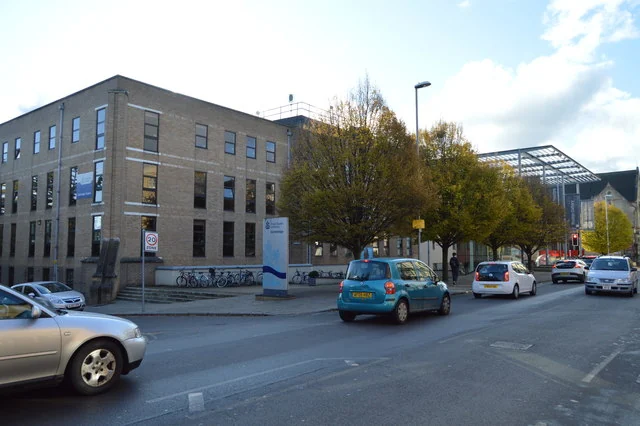
Chelmsford: a riverside setting for professional study
ARU’s Chelmsford campus is on Bishop Hall Lane in a riverside setting. Its campus account identifies the School of Medicine, the Business School, engineering laboratories and a multifunctional science laboratory among its specialist learning spaces. The facilities gallery distinguishes civil and mechanical engineering laboratories and an anatomy suite, giving a more detailed picture of the subjects supported there.
The same account illustrates nursing and midwifery skills laboratories, an early-years resource room and a Bloomberg financial-markets laboratory. An active-learning classroom and riverside café appear alongside these specialist facilities. The university also describes its Arise centre as supporting new businesses. Accommodation in the Student Village, campus maps and travel guidance are presented as part of the wider campus information. Together, these descriptions show how professional teaching environments sit alongside the practical and social spaces used during university life.
Sources: Chelmsford: a riverside setting for professional study ↗
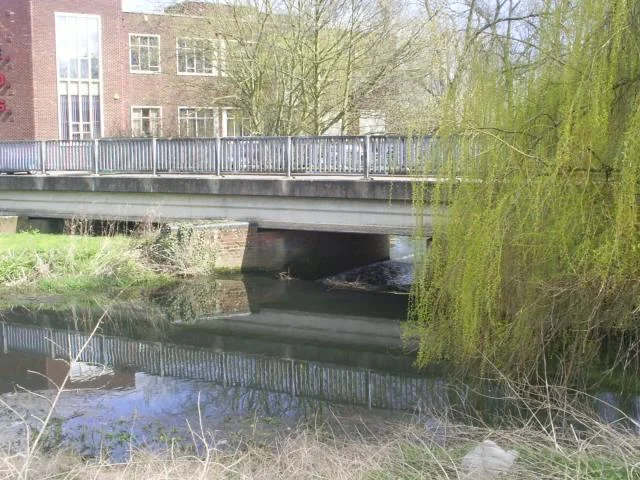
Peterborough: courses connected with a developing campus
ARU Peterborough is described as a purpose-built university campus in the centre of Peterborough. Its published study information covers undergraduate and postgraduate courses, degree apprenticeships and continuing professional development. The campus page organizes its academic activity into four broad areas: business, innovation and entrepreneurship; creative and digital arts and sciences; engineering, agricultural technology and the environment; and health, education and social care.
The university directs prospective students to information about teaching buildings, study spaces, specialist laboratories and equipment. It also identifies placements as part of its approach to gaining experience beyond taught study. Campus maps, travel information, accommodation guidance and an introduction to the city accompany the academic material. These different elements provide an overview of the setting for study, while individual course information remains important for understanding the requirements and structure of a particular qualification.
Sources: Peterborough: courses connected with a developing campus ↗
Writtle: land-based subjects and practical learning
The Writtle campus occupies a countryside setting in Essex and serves both university and college students. Its campus description identifies animal care and management, agriculture, horticulture, sport and conservation as specialist subject areas. A working farm, dedicated equine facilities and canine facilities give these subjects a practical setting alongside classroom and laboratory work.
The published gallery illustrates farm animals, stables, riding facilities, a canine therapy clinic and a hydrotherapy pool. It also identifies a research glasshouse, science facilities, a reptile room and the Centre of Sport and Health. These resources reflect the campus’s combination of animal, environmental and human-performance subjects. Writtle’s information separates college courses from undergraduate and postgraduate study, with different events for these routes. Accommodation, campus maps and information about the surrounding village accompany the course material, helping place specialist education within its rural campus environment.
Sources: Writtle: land-based subjects and practical learning ↗