Visa


About Abingdon and Witney College
A college serving Oxfordshire
Abingdon and Witney College provides education and training across Oxfordshire through campuses, specialist facilities and community-based learning. Its main teaching settings include Abingdon, Witney and Common Leys Farm, with construction training also provided at Bicester. This distribution allows different subjects to use environments suited to their practical requirements, from engineering workshops to animal-care facilities and creative studios.
The college presents routes for school leavers, undergraduate and professional learners, apprentices and adults studying part time. Its application guidance distinguishes these routes rather than treating every course as part of a single admissions process. Prospective students can explore courses, attend events and discuss support before applying. This variety is central to the institution's character: it brings technical, vocational, professional and community learning together while serving people at different stages of education and working life.
Sources: College facilities overview ↗ · Applying for courses ↗
Abingdon campus and advanced skills
Abingdon campus is on Wootton Road and combines refurbished buildings with newer teaching spaces. Its facilities include engineering and motor-vehicle workshops, media suites, hair salons and beauty-treatment rooms. The campus also lists nursing rooms, a learning and resource centre, a lecture theatre and sports facilities. Creative activity is supported through an Arts Centre, dance studio and green room, illustrating the breadth of practical subjects taught within the same campus.
The Advanced Skills Centre opened in 2018 and is dedicated to undergraduate and professional courses. The campus description connects this provision with the college's wider career-focused learning environment. Cafeteria and coffee facilities provide shared social spaces alongside specialist rooms. These named facilities give a more concrete picture of the campus than a general statement about modern buildings: learners may encounter workshops, performance spaces, resource areas and professional training environments according to their chosen subject. The appropriate course page identifies which facilities and study arrangements relate to an individual programme.
Sources: Abingdon campus ↗
Creative and technical learning at Witney
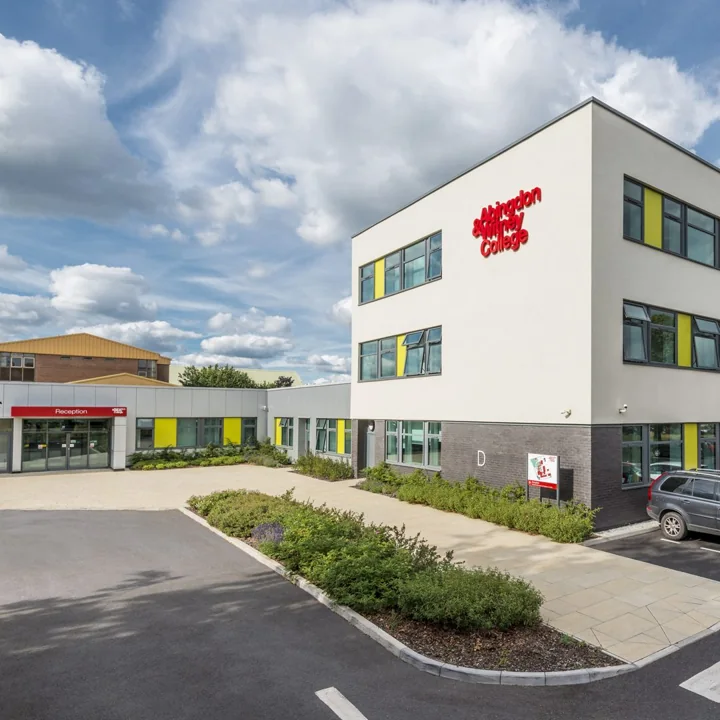
Witney campus is located on Holloway Road. Its official description emphasises the redevelopment of classrooms, workshops, studios and specialist buildings to support practical teaching. The Construction Skills Centre, built in 2015, forms part of this provision. Construction study therefore sits alongside creative and service-related subjects within the Witney learning environment.
The campus facilities include an audio-recording studio, broadcasting studio, music-technology studio and games-development suite. The list also identifies science laboratories, nursing rooms, hair salons, beauty-treatment rooms, a sensory room and an Arts Centre. This combination shows how the campus accommodates different forms of learning: producing media, developing technical skills, studying scientific subjects and practising professional services. It also explains why campus choice matters when exploring the college. Different programmes use different specialist settings, even though Abingdon and Witney remain parts of the same institution.
Sources: Witney campus ↗
Common Leys Farm and land-based subjects
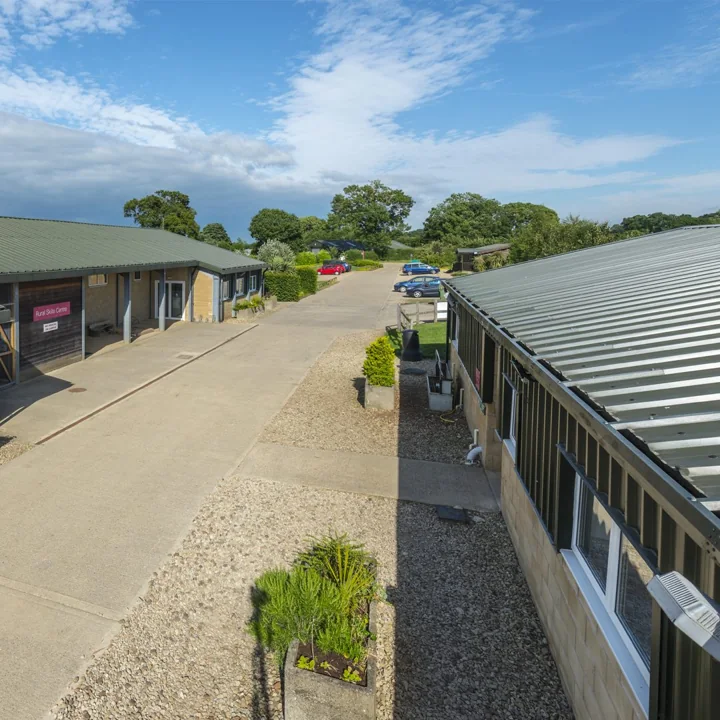
Common Leys Farm provides a different setting from the town campuses. Located on Pitts Lane near Witney, it combines classrooms with animal enclosures, equine facilities and countryside areas. The college describes a thoroughbred stud farm and facilities for agricultural and livestock technology. Its horticulture provision includes polytunnels and dedicated gardening and land-maintenance space.
The campus facilities list also identifies a dog-grooming room, canine hydrotherapy centre, horticulture unit and Livestock Technology Centre. The latter opened in May 2019. These resources bring animal care, equine work, agriculture, horticulture and countryside skills into a practical environment. The campus is therefore more than an alternative classroom location: its grounds and specialist facilities are part of the learning setting. A café provides a shared campus amenity. The official description establishes the range of facilities, while individual course information is needed to understand the exact activities and qualifications associated with each subject.
Sources: Common Leys Farm campus ↗
Apprenticeships and employer-based learning
The college's apprenticeship provision combines practical experience in employment with structured learning toward qualifications. Its published subject areas include accounting, business administration, computing, construction, engineering, early years, horticulture, human resources, plumbing and property maintenance. This range extends apprenticeship training across office-based, technical and outdoor occupations rather than limiting it to one trade.
An apprenticeship recruitment team helps prospective learners consider available vacancies, qualifications and application procedures. The college describes support with CV preparation and interview technique, as well as advice for people who do not yet meet entry requirements. Support also continues during the apprenticeship through the college's specialist staff. Employer relationships form an important part of this route, since the workplace and training programme need to fit together. The published examples illustrate the types of training offered; the availability of a specific apprenticeship depends on the programme and an appropriate employment opportunity at the time of application.
Sources: Apprenticeships ↗
Adult learning and student support
Part-time and evening provision includes opportunities to develop a hobby, return to study, retrain or extend existing skills. The college's subject list ranges from art, languages, cookery and photography to accounting, counselling, digital technologies, construction and teacher training. English, mathematics and English for speakers of other languages are also included. Community venues and online provision extend access beyond the main campuses, reflecting the college's role in learning across Oxfordshire.
The student-support directory identifies careers guidance, autism support, special educational needs and disability support, a college nurse, and help with English and mathematics. It also points to support for young carers, looked-after children and care leavers, alongside financial-support information. These are named routes to assistance rather than guarantees of a particular funding award or personal outcome. Together with the variety of course formats, they show how the college organises learning for students with different educational backgrounds, circumstances and support needs.
Sources: Part-time and evening learning ↗ · Student support ↗