Visa
About Access Creative College
Creative vocational education
Access Creative College is an independent provider of vocational education in England, offering full-time courses in music, media, games, esports and computing. Its teaching serves young people progressing from school as well as adult learners. The college’s official story identifies campuses in Birmingham, Bristol, Lincoln, London, Manchester, Norwich and Plymouth. Access Further Education Ltd trades as Access Creative College, with its registered office at Heath Mill Studios in Birmingham’s Digbeth district.
The college places practical learning and employer engagement at the centre of its curriculum. Work-related projects and industry contact connect creative interests with the processes and expectations of professional activity. Its CREATE values bring together creativity, responsibility, entrepreneurship, ambition, teamwork and equity. Within the wider education group, Access Sport College, apprenticeship provider Access Industry and higher education provider dBs Institute have distinct roles. These relationships provide context for progression without making every group institution the same college.
Sources: Our story and values ↗
Games Art and visual development
The Level 3 Games Art course develops visual ideas for games, including characters, objects and environments. Its focus extends from initial concept art to the assets that help define a game’s appearance. Students work with both digital and traditional approaches, linking artistic experimentation with the demands of interactive worlds. The course is listed across all seven campuses named in the college’s story.
This two year pathway leads to a BTEC Level 3 Extended Diploma in Art and Design, with the course page identifying Pearson’s Art and Design Practice framework. Published modules include concept art, asset creation and games design, fundamentals of three-dimensional modelling, a skills-development portfolio and a creative project. These components bring together the generation of ideas, technical production and the presentation of a body of work. The programme’s coverage therefore includes both individual images and the wider visual systems used within games.
Sources: Games Art Level 3 ↗
Music production and technical practice
The two year Level 3 Music Production course leads to the RSL Level 3 Extended Diploma for Music Practitioners in Technology. It combines creative activity with practical use of music hardware, software and specialist facilities. Its listed content includes music sequencing and production, remixing, composition in different styles, music theory and the creation of a sample library. Copyright and working in the music industry add a professional context to the technical curriculum.
The course distinguishes several aspects of production work, from creating original music to recording live instruments and balancing a final mix. This range connects musical decisions with the equipment and methods through which sound is captured, developed and presented. Its progression information links to further study in artist development and Access to Higher Education routes in music production or DJ and electronic music, alongside wider higher education options.
Sources: Music Production Level 3 ↗
Computing through classroom and workplace learning
Computing provision includes a Software Development T Level and a Level 2 Digital Systems and Data course. The T Level pathway is described as a two year programme incorporating a 45 day industry placement and leading to the Digital Production, Design and Development qualification. The Level 2 course provides a one year foundation in digital systems and data before further specialisation.
The pathway identifies programming, data science and analytics, project management, cyber security, software development and testing among its learning areas. Change management and the implementation of solutions place technical work within organisational settings. The T Level combines classroom study with experience in a relevant workplace, giving students an opportunity to apply what they have learned beyond college projects. Tutors’ professional experience is another element of the college’s approach, connecting computing concepts with practical scenarios and current methods.
Sources: Computing pathways ↗

London’s specialist creative spaces
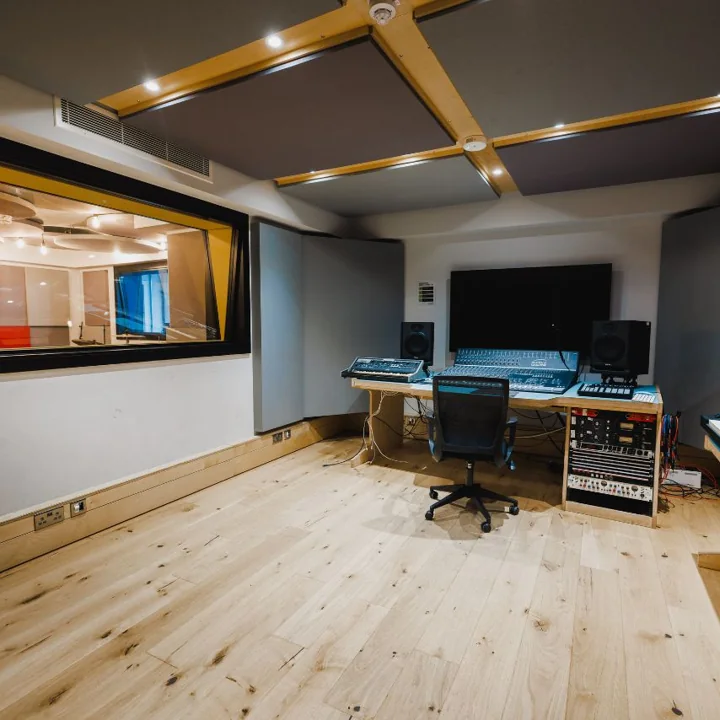
The London campus opened on Commercial Road in September 2023. Covering approximately 19,000 square feet, it brings music, media, gaming, esports and computing activity into a purpose-designed setting in the East End. Its facilities include recording studios, rehearsal rooms, music-production suites and an event space. Games and media provision has access to a green-screen studio and photographic facilities.
The campus describes its course areas as super spaces: flexible settings that combine conventional teaching with specialist practical facilities. In music, for example, a recording booth can be used within a classroom session as well as booked separately during free periods. This arrangement connects explanation, observation and individual practice. Shared areas provide places to pause between sessions, while the specialist rooms support projects requiring equipment and working environments beyond a standard classroom.
Sources: London campus and facilities ↗
Support, progress and individual learning
Student Support assists learners with learning difficulties and differences, disabilities and medical conditions. It also recognises the needs of young people in or leaving care, student carers and learners estranged from their families. The learning-support team assesses needs before study begins and during induction, drawing on information from the learner and, where appropriate, other professionals and local authorities.
Support can include individual or group assistance in class, pastoral drop-ins, help in English and mathematics, and assessment for examination access arrangements. Provision is assessed individually and can differ between campuses. One-to-one tutorials contribute to an Individual Learning Plan, followed by progress discussions and a Next Steps Meeting. The college also describes bursary assistance for eligible costs and a confidential Student Assistance Programme covering personal, emotional, academic and practical concerns, with support available around the clock.
Sources: Student support and learning plans ↗