Visa
About Angelus Silesius State University
Institutional identity and development
Angelus Silesius State University is the directory name for the public higher education institution in Wałbrzych, Poland, now called Akademia Nauk Stosowanych Angelusa Silesiusa. Its history begins with a Council of Ministers regulation of 15 June 1999 establishing the city's state higher vocational school. The university's official public-information bulletin records a change to the name Państwowa Uczelnia Angelusa Silesiusa from 1 October 2021, followed by the present name from 1 October 2022.
These changes form part of the development of the same Wałbrzych institution. Its activities include first- and second-cycle higher education, postgraduate study and training, a library and publishing service, student accommodation, academic sport and student scholarly groups. Its main address is Zamkowa 4, within the city rather than on a separate outlying campus.
Sources: Official institutional information and name changes ↗
Academic fields and practical education
The academy describes itself as a public institution with a practical educational profile. Teaching is organised across the Faculty of Design Arts and Humanities, the Faculty of Social and Technical Sciences, and the Faculty of Health Sciences. This structure brings creative, professional and technical subjects into the same institution.
The arts and humanities faculty lists interior architecture, philology, applied graphics with advertising, and preschool and early-school pedagogy. Social and technical provision includes administration, internal security and logistics, with sustainable-development management identified for students beginning in 2026/2027. Health-related fields include dietetics, cosmetology, nursing, emergency medical services, dental technology and physical education. Administration, logistics and nursing are specifically listed at both first and second cycle. The academy's account connects its educational work with practical preparation and opportunities for international exchange.
Sources: About the academy ↗
A campus within the historic city
The campus combines buildings around Zamkowa and Piotra Skargi streets in central Wałbrzych. Its main building occupies the former Czettritz Palace, also known as Wałbrzych Castle. The academy's architectural account dates the building to 1604 and describes later changes under the Hochberg family, including a new entrance and heraldic decoration.
The complex served the administration of the Hochberg estates before the Second World War and housed different institutions afterwards. The academy has owned the main building since 2004. Its infrastructure description also identifies teaching premises at Piotra Skargi, the Auditorium Novum and student residences on Zamkowa Street. The buildings' proximity gives the institution a campus integrated into the existing city, with historic accommodation alongside facilities used for contemporary teaching and student life.
Sources: Campus infrastructure ↗
Teaching and sport in Building G
Building G, at Południowa 11, brings several kinds of educational activity together. The academy identifies the Medical Simulation Centre and the STEAM and AI Education Centre within the building, alongside a sports hall and a squash room. The building and surrounding grounds are described as adapted for people with disabilities.
The main sports space accommodates volleyball, basketball and handball, with spectator seating. Curtains allow the hall to be divided into three smaller zones, giving the space flexibility for different activities. Supporting rooms include equipment stores, changing rooms and facilities for coaches. The institution's description also identifies a scoreboard and remotely controlled sports equipment. Building G therefore adds a substantial teaching and sports component to the academy's city-centre infrastructure.
Sources: Building G ↗
Library and study resources
The university library is on the ground floor of the building at Zamkowa 4. Its services are intended for both students and lecturers, who can consult the collection, borrow books and use the reading room. Computer equipment provides another way to work with information while visiting the library.
The library's explanation of its role extends beyond lending. Staff help users identify useful material whether it appears in a book, a newspaper, on a website or in multimedia. The page links to an electronic book catalogue, resources and library-use rules. These services connect a physical collection and reading space with tools for discovering material in other formats, supporting independent study as well as teaching.
Sources: University library ↗
International academic exchange
Erasmus+ provides a framework for international educational exchange at the academy. Its institutional description distinguishes student mobility from opportunities for teaching and administrative staff. Students can spend a period of study at a partner institution abroad or undertake a placement in an enterprise, research institute, laboratory or another organisation offering practical experience.
For employees, the programme includes teaching at a foreign institution and participation in professional training. The academy maintains separate information areas for outgoing students, outgoing staff, incoming students and incoming staff, together with an archive of forms and documents. This organisation reflects the different academic and administrative arrangements associated with each form of mobility. Exchange forms part of the academy's wider educational activity alongside study in Wałbrzych.
Sources: Erasmus+ ↗
Learning across generations
The academy's Multigenerational University extends educational activity to children, young people, adults and senior citizens. It combines lifelong learning with opportunities for people of different ages to meet and collaborate. The provision is organised into the University of the First Age, University of the Second Age, University of the Third Age and an intergenerational module.
Its activities include lectures, workshops, artistic work, languages, computing and movement classes. Digital skills and new technologies also feature in the description. Participants can take part in cultural, scientific and community events, open lectures, conferences and academic ceremonies. The initiative is presented as part of the academy's life, connecting the acquisition of knowledge with involvement in a broader educational community.
Sources: Multigenerational University ↗
Science, creativity and public engagement
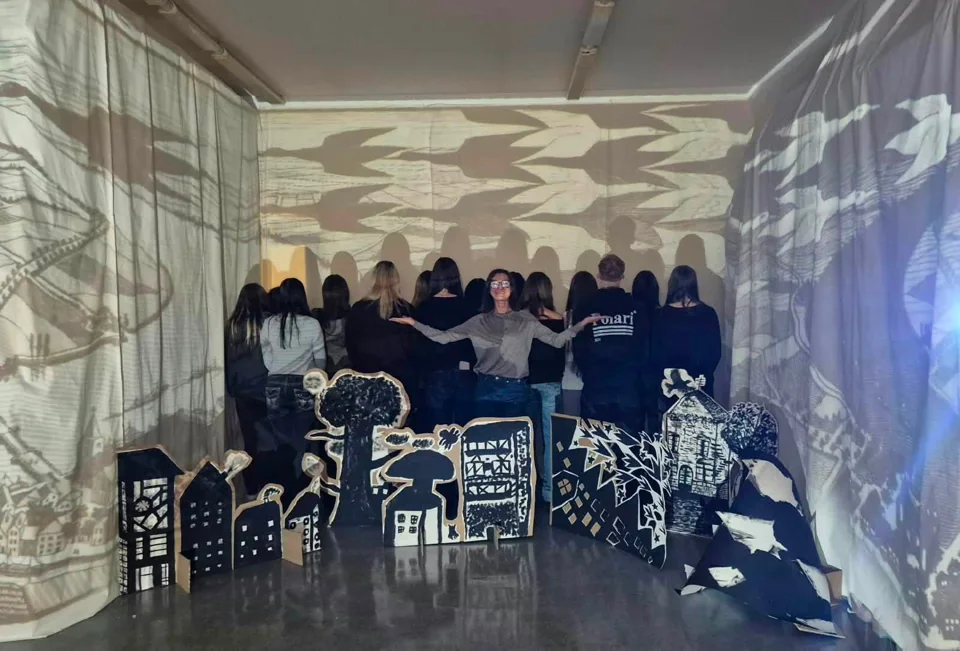
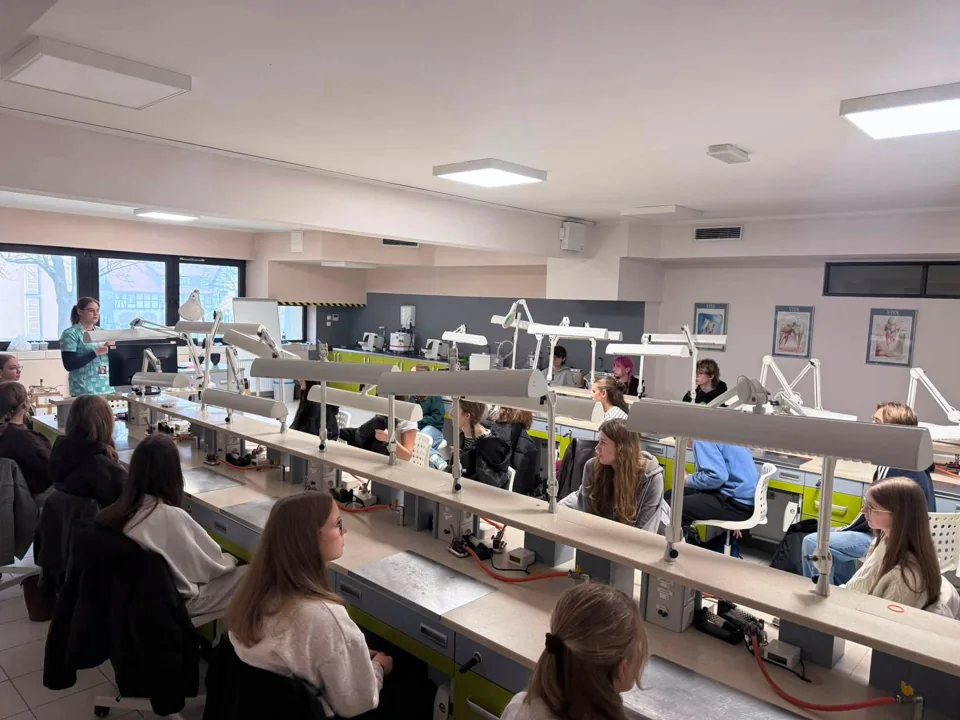
The academy participated in the twenty-ninth Lower Silesian Science Festival from 28 to 30 October 2026. Its report describes a programme spanning technology, psychology, pedagogy, art, humanities and law. Workshops included cyanotype photography, visual-memory activities, robot programming, mathematics applied to logistics, creative poetry writing and discussion of how unintended misinformation arises.
Other sessions introduced the functioning of local government and included chemistry demonstrations. Teachers and students contributed to the programme, including members of the MINISTRARE administration student group and the PromoTech group. The range of activities illustrates how the academy uses public events to connect different subjects and invite participants to encounter knowledge through discussion, demonstration and practical work. The accompanying photographs show two different workshop settings from the festival.
Sources: Lower Silesian Science Festival, 28–30 October 2026 ↗