Visa
About Academy of Economics in Katowice
From academy to university
The institution listed historically as the Academy of Economics in Katowice is now the University of Economics in Katowice. It adopted its current name on 1 October 2010 under an act passed earlier that year. Its origins lie in the School of Social-Economic Sciences, formally established on 3 December 1936, with teaching beginning on 11 January 1937 in the Faculty of Industrial Organization.
The school ceased operating during the Second World War and resumed teaching in 1945. It moved into its own premises in 1946 and subsequently developed through several institutional forms. The academy name was introduced in 1974, following the naming of the school after engineer and economist Karol Adamiecki in 1972. Later milestones included the creation of finance and insurance teaching structures, the development of information technology and communication, and the joint academic library project with the University of Silesia.
Sources: University history ↗
International Business in English
The university's International Business bachelor's programme combines economics, law, finance and management within an international setting. English is the teaching language, and students can additionally study two selected foreign languages throughout the programme. Its subjects address the management of internationalised companies, corporate strategies and cross-cultural management.
The programme describes intensive seven-week teaching blocks followed by intermediate examinations. Interactive methods include workshops, simulations, case studies, research projects and problem-based learning. Polish and visiting international lecturers contribute, while company visits and guest lectures introduce practitioners' perspectives. Internships and collaborative projects with students from other countries connect academic work with the organisation of international business. The programme also identifies a mobility window for study or placement abroad. These elements place language learning, multicultural teamwork and practical analysis alongside the underlying business disciplines.
Finance and accounting as applied study
Finance and Accounting for Business is another full-time bachelor's programme taught in English. Its scope includes corporate finance, financial reporting and analysis, financial markets, taxation, investment, capital budgeting and risk management. Information technology for finance and accounting forms part of the same professional preparation.
Teaching uses lectures, classes, laboratories and seminars, with numerical examples and case studies to examine business problems. Group discussion, teamwork and student presentations are also described. The programme specifically names spreadsheet work with Visual Basic for Applications and database work using Access and introductory SQL. An obligatory internship follows the fourth semester, with possibilities to complete the placement abroad. Language classes and sports activities accompany the disciplinary curriculum. This combination shows how the university brings quantitative analysis, digital tools and practical experience into its economic and financial education.
Sources: Finance and Accounting for Business bachelor’s programme ↗
Economics research and academic development
The Faculty of Economics provides research, publication activity and academic support for selected degree programmes and the Doctoral School. Its current form was established under the university's June 2021 statute, replacing the College of Economics that had operated between 2019 and 2021. Its longer history reaches back through the earlier economics faculty and the trade-related faculties developed from 1968 onward.
The faculty identifies economics and finance, together with management and quality sciences, as its research disciplines. This organisational role connects the university's degree teaching with specialist departments and scholarly work. It also reflects the institution's development from industrial and trade education into a wider economic university. The faculty's activities encompass both the production of research and the subject expertise supporting students at different stages of university study.
Sources: Faculty of Economics ↗
A shared academic library
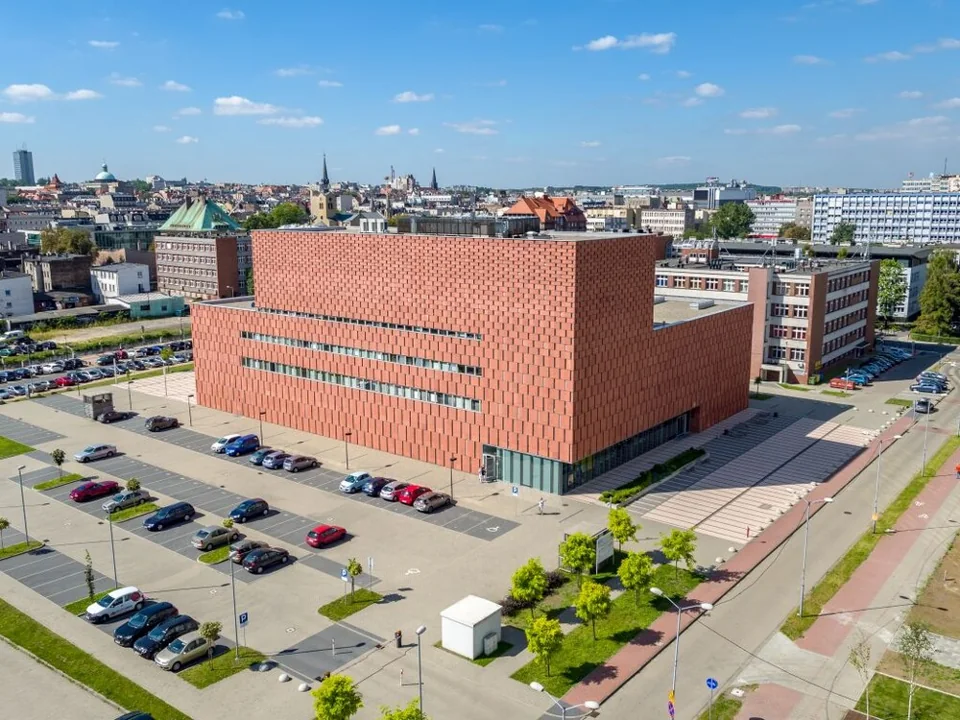
The university's Main Library combines scientific, teaching and public-service responsibilities. Since the 2012–13 academic year it has operated together with the University of Silesia's library in the Scientific Information Centre and Academic Library, known as CINiBA, at 11 Bankowa Street. The joint project extends the information resources available to both university communities.
CINiBA provides traditional books and journals alongside digital material, including electronic periodicals and statistical and photographic databases. Its stated purpose connects access to scientific literature with teaching, research and wider regional information needs. The Main Library also forms part of the national library and information network. By sharing a major facility with another university, the economics institution places its specialised literature within a broader academic environment while retaining services directed toward its own researchers, teachers and students.
Sources: Main Library history and role ↗ · Scientific Information Centre and Academic Library ↗
Technology facilities for teaching and research
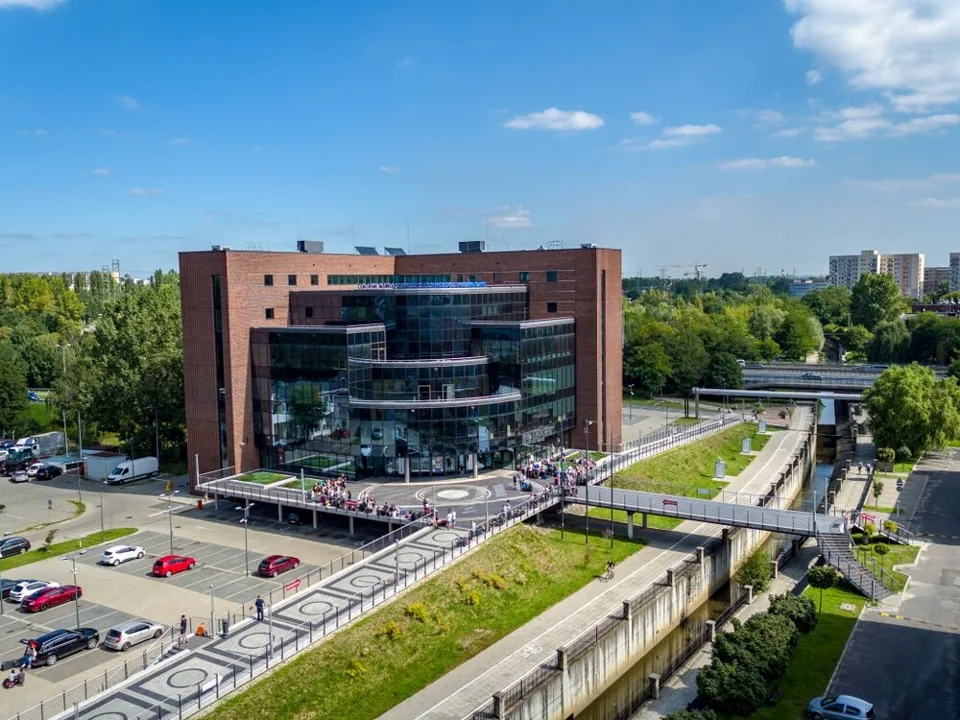
The Advanced Information Technology Center, usually referred to by the Polish abbreviation CNTI, is located at 5 Bogucicka Street. The university describes it as a building for both teaching and research, equipped with information technology, audiovisual systems, specialist software and databases. It also provides space for professional meetings and conferences.
Its role extends to cooperation with business and the hosting of regional information-technology events. Within a university concerned with economics and management, these facilities support work that depends on computing, digital information and communication. The centre is one of the named buildings in the university's campus guide, alongside teaching buildings and CINiBA. Together they show a campus combining traditional academic spaces with facilities intended for contemporary digital study and professional exchange.
Sources: Advanced Information Technology Center ↗
A historic administrative landmark
The Rector's Office occupies the former municipal building of Bogucice-Zawodzie at 50 1 Maja Street. Designed by Berlin architect Arnold Hartmann and constructed between 1911 and 1913, it predates the university. After wartime damage, the restored building was transferred to the School of Social-Economic Sciences in 1946.
A later renovation modernised the interior and facade and restored the clock tower to reflect the earlier architectural design. The renovated building reopened in September 2018. The university describes it as serving administrative, representative and cultural functions, including relations with businesses and local government. Its continued use gives the campus a visible connection with the municipal and industrial history of Katowice, alongside the newer technology and library buildings.
Sources: Rector’s Office building ↗