Visa
About Andrzej Frycz Modrzewski Krakow University
The current university name
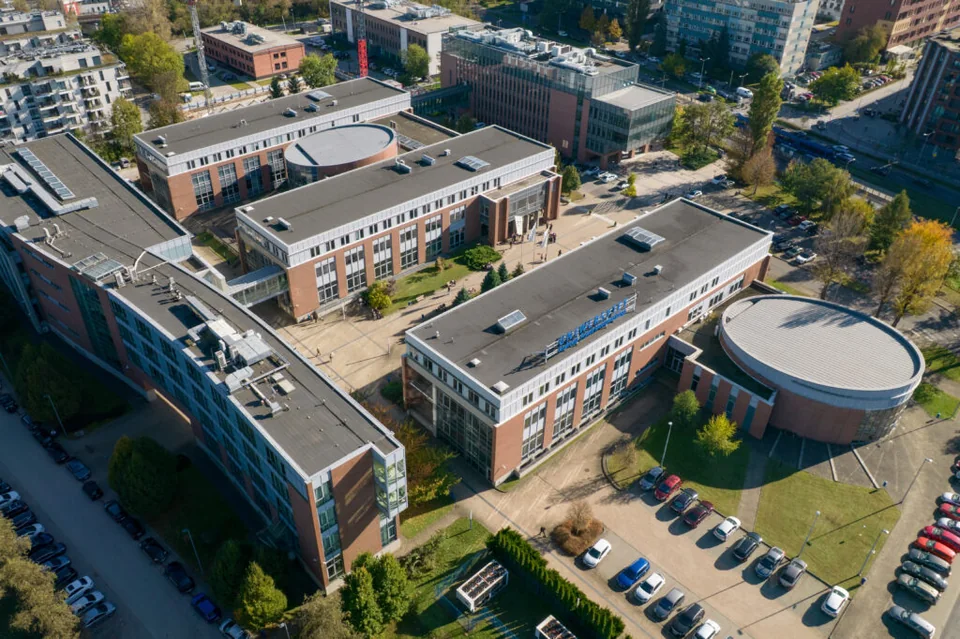
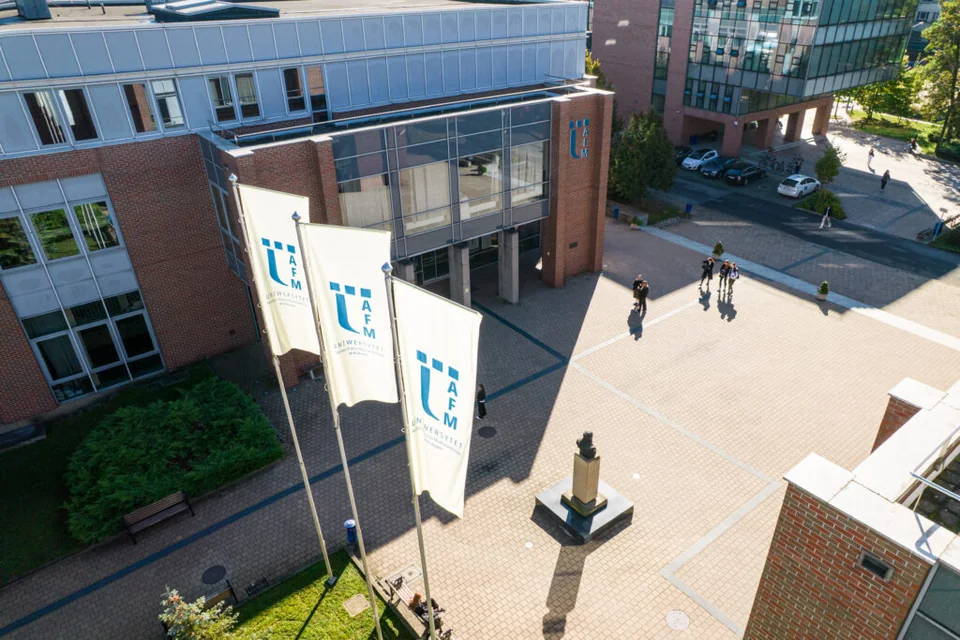
Andrzej Frycz Modrzewski Krakow University is in Kraków, Poland. Its official history records the change from Krakowska Akademia to university status under its present name on 1 September 2024.
Sources: University history and name ↗
An academic catalogue spanning different disciplines
The university’s English-language catalogue presents study across technology, business, languages, design, social sciences and health-related subjects. Its admissions office is listed at Gustawa Herlinga-Grudzińskiego 1 in Kraków, in Building B. The catalogue distinguishes undergraduate courses, graduate courses, integrated master’s studies and preparatory language courses. These are different educational routes rather than interchangeable qualifications.
Published entries include architecture, economics, logistics, psychology, philology, nursing, physiotherapy and film production management. Programme records identify the teaching language, mode, duration and qualification associated with each course. The catalogue also distinguishes degree programmes from non-degree language preparation. When reviewed, several individual entries were marked as having finished recruitment, while others displayed an application link. The descriptions below therefore explain published academic structures rather than suggesting that every course is currently accepting new applicants. This distinction matters when comparing the university’s broad academic range with a particular programme’s intake status.
Sources: English-language academic catalogue ↗
Computing combined with business study
The Computer Science and Business programme is described as a full-time English-language engineering bachelor’s course lasting seven semesters. Its curriculum brings computing subjects together with organizational and economic study. Early modules include programming, databases, calculus, probability and algorithms, alongside economics, entrepreneurship and communication. Later teaching includes software engineering, computer architecture, information systems, Python, business-data analysis in R and data visualization.
The published plan incorporates a six-month work placement and an engineering project. Specialism modules cover areas such as games and virtual-reality applications, computer graphics, applied computing, electronic business and information security. These options show different directions within the programme’s combination of technology and business. The curriculum also includes universal design and accessibility, linking technical work with the needs of people using information services. The course page’s detailed seven-semester structure is more specific than a separate introductory sentence referring to three years.
Sources: Computer Science and Business ↗
Language, literature and communication
English Philology is presented as a full-time, three-year bachelor’s programme taught in English. Its curriculum develops practical language work through vocabulary, reading, grammar, conversation, writing and style. This practical strand is accompanied by linguistics, phonetics, morphology, syntax and literary study. British and American cultural topics and intercultural communication broaden the focus beyond language exercises alone.
The published programme also includes another foreign language, entrepreneurship or project-management choices, technological tools for language specialists and social-project work. Later modules address translation, business and tourism, or language education. Examples include specialized translation, managerial competences and digital methods in language learning. Two internship components appear in the final year, alongside integrated language skills and preparation for the diploma examination. This structure connects sustained language practice with cultural understanding and professional contexts, without making employment or professional teaching eligibility an automatic consequence of completing the course.
Sources: English Philology ↗
Understanding film and television production
Film and TV Production Management is described as a three-year English-language bachelor’s course. Its published programme combines audiovisual subjects with the organization and economics of media work. Students encounter film and television language, screenwriting, audiovisual culture, marketing and management before progressing to production planning and specialist workshops.
The curriculum includes fundraising and revenue streams, film-production technology, media-market analysis and the economics of television production. Practical subjects address camera operation, editing and sound production or photography. Later teaching covers intellectual-property law, negotiation, cost planning and independent production, followed by film, television and post-production workshops. Professional internships and a social project are also listed. The programme page identifies a television studio, cameras, editing stations and sound equipment as learning resources. Taken together, these descriptions emphasize how creative production depends on planning, technical processes, legal awareness and coordinated work as well as the development of an initial idea.
Sources: Film and TV Production Management ↗
Finance and accounting as an applied curriculum
The Finance and Accounting bachelor’s programme is listed as three years of full-time study in English. Its curriculum begins with economics, accounting, research methods, spreadsheets and the organization of enterprises. Subsequent modules address financial accounting, corporate finance, financial markets, mathematics and microeconomics. Later study introduces banking, insurance, econometrics, international finance and risk management.
The final-year plan includes information tools, accounting for small enterprises, project preparation and a social project. Published specialization groups concern accounting, auditing and controlling; corporate finance; banking and insurance; and international finance. Within those groups, listed subjects include financial reporting, investment projects, taxation, sustainability reporting and international financial institutions. The course description emphasizes exercises, cases and financial software, and states that the programme concludes with a diploma examination. These are features of the university’s published educational design; they do not establish a professional licence or guarantee a particular role after graduation.
Sources: Finance and Accounting ↗
Preparation for studying through Polish
The university also publishes a non-degree preparatory Polish language course for international learners. Its detailed description sets out a nine-month programme running from October to June, with twenty hours of teaching each week and a stated total of 650 hours. The target is level B2 on the Common European Framework of Reference, rather than a degree qualification. The course description identifies learners with at least A2 Polish as its intended audience and refers to a placement procedure.
Teaching covers speaking, writing, reading and listening, together with general and academic vocabulary and grammar. Learners work with press, literary and scientific texts, practise formal writing and presentations, and prepare for a B2 examination. Integration and orientation workshops form another component. The university also mentions introductory courses for learners below the stated starting level. This preparatory route addresses the language demands of academic participation and everyday communication, without promising that every learner will achieve the target level.
Sources: Preparatory Polish language course ↗