Visa
About Andrzej Frycz Modrzewski Cracow College
From Krakowska Szkoła Wyższa to a university
The institution formerly known as Krakowska Szkoła Wyższa im. Andrzeja Frycza Modrzewskiego now operates as Andrzej Frycz Modrzewski Krakow University in Poland. Its history begins with a ministerial decision of 27 January 2000. Teaching started on 1 October that year, initially in subjects including foreign trade, American studies, European integration, public administration, management, marketing and family studies. Its earlier English directory name, Andrzej Frycz Modrzewski Cracow College, belongs within this institutional history.
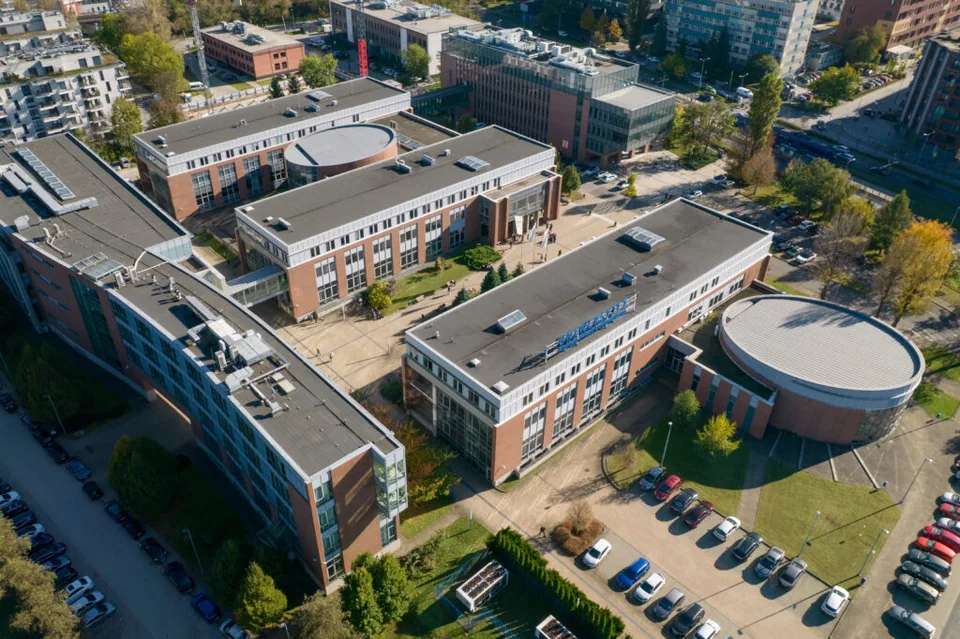
The institution adopted the Polish name Krakowska Akademia im. Andrzeja Frycza Modrzewskiego in 2009. A further change took effect on 1 September 2024, when it became Uniwersytet Andrzeja Frycza Modrzewskiego w Krakowie. Its campus is in Kraków's Zabłocie district, at Gustawa Herlinga-Grudzińskiego 1. The university describes a broad academic identity spanning professional and creative disciplines, with education in Polish and English. Its institutional development has included expansion of research, postgraduate education and cooperation beyond the university.
Sources: University history and former names ↗
Academic organization and shared services
The university's academic directory includes acting, architecture and fine arts, medicine, health sciences, social sciences and philology, law, and management, media and technology. Medicine and health sciences are grouped within Collegium Medicum. This organization places scientific, social, legal and artistic fields within the same university while retaining distinct academic units.
Shared educational resources include a foreign-language and Polish-language centre, postgraduate education, physical education and sport, and the medical simulation centre. The library, archives, university residence and student dining facilities appear among its general services. Student-facing administration includes a student service office, recruitment, international cooperation and a careers office. A student ombudsperson and student government are also listed. These units provide an institutional framework for academic work and for the practical organization of university life alongside the faculties.
The Zabłocie campus
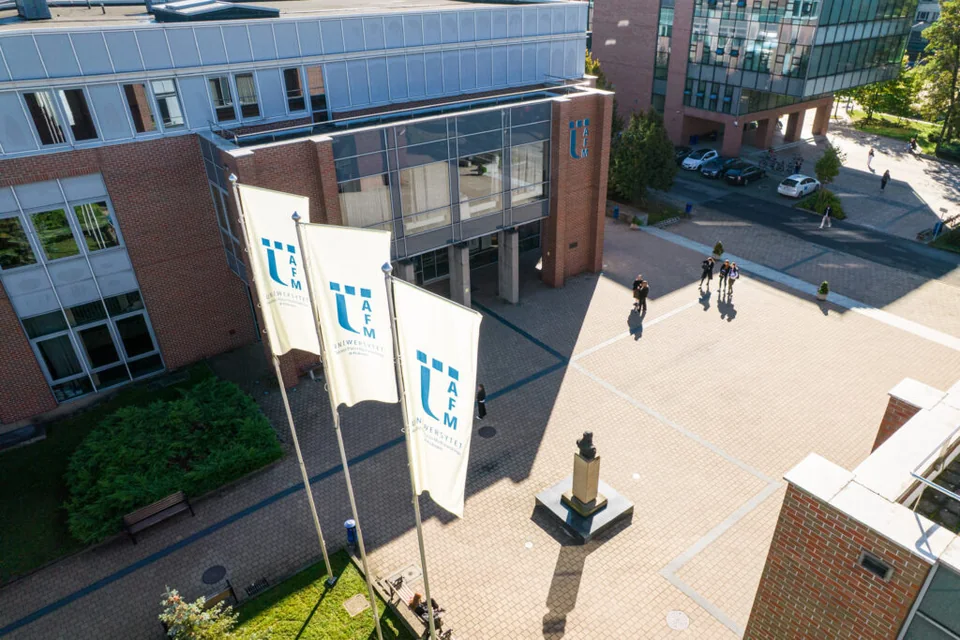
The campus consists of four buildings identified as A, B, C and D. Its infrastructure account lists lecture theatres, classrooms, laboratories, research rooms, a library and reading room, television and radio studios, and sports facilities. Medical simulation developed through a nursing-focused centre opened in 2019 and a later multidisciplinary centre. Building D, opened in 2020, provides teaching and research space associated with medical fields.
Accessibility features described by the university include automatic doors, lifts, tactile and Braille room signs, and navigation aids. The campus also has a tactile model and resources supporting people with particular access needs. Its disability-support office is identified as a source of assistance. These facilities connect the physical organization of the campus with different requirements for teaching, study and participation in university life.
Sources: Campus infrastructure and photograph gallery ↗
International relations as a field of study
The published English-language international relations curriculum combines political, social, economic and legal subjects. Its opening year includes academic skills, philosophy, social communication, psychology, economics and the study of state and law. Research methodology and project management accompany introductions to international relations and political geography. This sequence builds a foundation for examining relations between states and other international actors.
Later subjects include diplomacy, public international law, human rights, international transactions, European integration and international organizations. The final stage adds negotiation, mediation, intercultural communication and a social project. Elective subjects consider different regions, foreign policies, environmental questions and cultural relationships. The page describes a three-year undergraduate structure and is marked for resumption registrations only. Its curriculum therefore documents a particular course of study without indicating that new-entry recruitment is currently open.
Sources: International relations curriculum ↗
Management and organizational decisions
The management curriculum is presented as a three-year undergraduate programme taught in English. It combines organizational theory with economics, accounting, statistics, finance and business law. Spreadsheet work and research methods appear early in the course, connecting theoretical study with tools used to organize and interpret information. Later subjects include human capital, marketing, corporate finance, organizational behaviour and knowledge management.
The published structure also includes financial analysis, market research, public relations, and the management of change, risk and quality. Specialist modules cover marketing and advertising, enterprise management, logistics and international trade, project management, and human capital. Their subjects range from consumer behaviour and brand management to supply chains, staff development and project portfolios. A social project adds another applied component. The range shows management being approached through people, information, resources and organizational processes rather than one business function alone.
Sources: Management curriculum ↗
Architecture, design and the built environment
The English-language architecture curriculum is organized over eight semesters. Its subject range brings creative design together with technical and historical study. Initial work includes architectural and urban design, construction materials, building physics, geometry, drawing, model-making and computer-aided design. History of architecture and design theory provide additional ways to understand buildings and their settings.
Subsequent study addresses structures, urban housing, environmental protection, landscape architecture, building services and urban infrastructure. Conservation, regional architecture, art history and interior design widen the relationship between design and cultural context. A professional architecture placement occupies a later semester, followed by planning studies, design options, modelling, photography and diploma preparation. The course page also describes professional mentoring and master classes. Its recruitment status is shown as finished; the published programme remains a detailed account of how architectural study is structured at the university.
Sources: Architecture curriculum ↗