Visa
About Andijan State Pedagogical Institute
Teacher education in Andijan
Andijan State Pedagogical Institute is a higher education institution for teacher preparation in Andijan, Uzbekistan. Its development began with the Pedagogical Institute of Andijan State University, organised under a Cabinet of Ministers resolution dated 6 April 2021. That predecessor brought together teaching-methodology fields in exact and natural sciences, primary and preschool education, languages, social subjects, arts and sport.
The present Andijan State Pedagogical Institute was established on the basis of that organisation under Presidential Resolution PQ–289 of 21 June 2022. The history therefore distinguishes the institute's formation within Andijan State University from the subsequent establishment of the separately named pedagogical institute. Its early faculty structure covered a broad range of school subjects and stages of education, providing a foundation for subject teaching as well as pedagogical study. The institution's development has continued through changes to the organisation of faculties and departments.
Sources: Institute history ↗
Purpose and educational responsibilities
The institute's central purpose is to prepare higher-qualified educational specialists and academic teaching staff. Its statement of responsibilities combines subject knowledge with professional practice, critical and creative thinking, ethical conduct and responsibility toward society. Bachelor's and master's education appear within this framework, alongside the continuing development of teaching personnel.
The responsibilities also emphasise independent learning and the use of information and communication technologies. They call for modern teaching methods, the preparation of textbooks and teaching materials, student participation in research, and links between educational research and classroom practice. Cooperation with educational and scientific institutions is included among the institute's aims, as are exchanges and the development of staff expertise. These are the stated directions for its educational work, connecting the preparation of future teachers with the improvement of methods, resources and research within the institution.
Sources: Institute purpose, functions and responsibilities ↗
Science and subject teaching
Science education developed from the faculty for teaching exact and natural science subjects formed in 2021. Its historical account records a broader early grouping that included biology, chemistry, geography, mathematics, informatics, physics, astronomy and technological education. Following organisational changes, its 2023–24 description focused on biology, chemistry, and geography with basic economic knowledge.
The faculty account links subject preparation with teaching methodology. It identifies biology and geography teaching methods and chemistry teaching methods among its departmental fields. Student scientific clubs add opportunities for engagement beyond formal classes: examples include young chemists, geotourism, and floristic and natural-resource study. The faculty describes these groups as settings for scientific and creative activity under academic guidance. Its educational aims also include the development of interdisciplinary teaching and the use of contemporary pedagogical and information technologies.
Sources: Exact and Natural Sciences faculty ↗
Preschool and special education
The Preschool Education and Special Pedagogy faculty brings attention to children's early education and specialist pedagogical work. Its 2023–24 account lists preschool education, preschool psychology and pedagogy, and special pedagogy with a speech-therapy focus. These fields connect the preparation of educators with the study of how children learn and develop.
Its departmental description identifies preschool teaching methods and preschool theory. The account also records student clubs concerned with practical creativity, modern preschool education, introductory research activity, and English and Russian language learning. Cultural activities include discussions, performances and visits to theatres and museums, while intellectual games and sports provide other forms of participation. These activities sit alongside the faculty's educational subjects, giving students opportunities to work with others through academic interests, creative practice and organised campus life.
Pedagogy and school experience
The Pedagogy faculty's account traces its origins to a wider grouping of primary, preschool and language-teaching fields in 2021. Its 2023–24 description identifies primary education and pedagogy and psychology as its principal areas. The faculty's educational aims include the development of teachers' practical methods, professional creativity and ability to assess learning.
The faculty also explains a four-plus-two arrangement for full-time students in years two through four: four days of weekly study at the higher education institution and two days in general secondary schools. This connects institutional study with experience in school settings. Student clubs listed by the faculty include handwriting, speech culture, mathematics, research, young psychologists and creative pedagogy. Its stated development tasks include interactive teaching, seminars, multimedia teaching materials and electronic educational resources. The combination of coursework, school experience and subject-related clubs reflects its focus on preparing students for educational practice.
Sources: Pedagogy faculty ↗
Languages, literature and teaching
The Philology faculty was established through an institute organisational order dated 25 October 2023. Its subject descriptions include Uzbek language and literature, Russian for groups studying in other languages, Kyrgyz language and literature, and foreign-language teaching in preschool and primary education. These fields combine language study with the educational settings in which future teachers may work.
The faculty identifies departments for Uzbek language and literature, Russian and Kyrgyz languages and literature, and applied foreign languages. Its academic aims include improving teacher preparation and developing research into educational methods. Student groups cover public speaking, creative writing, contemporary linguistics, English learning and Russian conversation. The faculty also describes access to information resources, computer-equipped learning spaces and sports facilities. Literary, linguistic and communicative interests therefore form part of a wider educational environment involving both academic study and extracurricular participation.
Sources: Philology faculty ↗
Student sport and participation
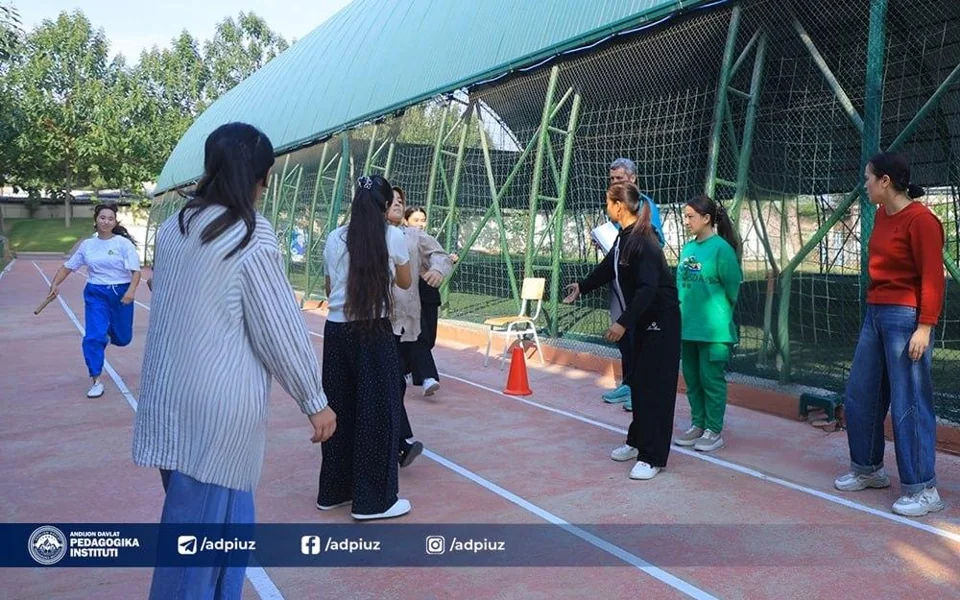
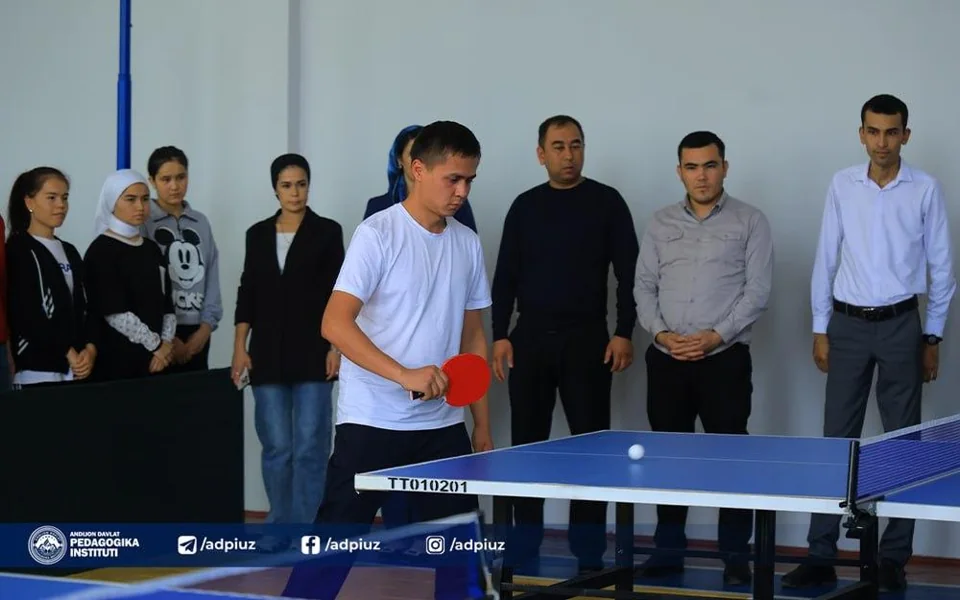
A report dated 5 October 2026 documents a faculty-stage event in the Five Initiatives Olympiad at the institute. Students from the Exact and Natural Sciences faculty competed in streetball, table tennis and athletics. Winners were identified in the individual sports, with successful participants and teams eligible to continue to the next stage.
The event illustrates an organised strand of student participation beyond classroom study. The institute presented the competitions as an opportunity to involve students in sport and physical activity. Its accompanying photographs show indoor table tennis and an outdoor sporting activity, placing the event within everyday student life.
Sources: Five Initiatives Olympiad faculty sports stage, 5 October 2026 ↗