Visa
About Academy of Arts of Uzbekistan
A national institution for art and artistic education
The Academy of Arts of Uzbekistan, known in Uzbek as O‘zbekiston Badiiy akademiyasi, is a national artistic institution based in Tashkent. It was established through presidential decree PF-1701 of 23 January 1997. Its work brings together the development of fine art, applied art and design with artistic education, research, exhibitions and support for creative practitioners. The academy's institutional role extends across a network of organisations and educational establishments.
Its stated responsibilities include preserving and developing Uzbekistan's artistic traditions, creating opportunities for artists to exhibit, supporting talented young people and strengthening the continuity of art education. International cooperation is another part of that remit: the academy seeks exchanges with art academies, educational institutions, cultural organisations and individual practitioners abroad. Its history also identifies a presidential decision of 16 August 2017 as an important basis for the further development of its activity. The headquarters are on Sodiq Azimov Street in Tashkent.
Sources: Academy history and mission ↗
An educational network across Uzbekistan
The academy's education directory links the Kamoliddin Behzod National Institute of Fine Arts and Design with a wider range of specialist establishments. It also identifies a centre for retraining and advanced professional development for teachers and specialists in art education. This places the preparation of new artists alongside the continued education of people already teaching or working in the sector.
Listed institutions include the Pavel Benkov Republican Specialised Art School, a republican design school and specialist art boarding schools. The directory extends beyond the capital to institutions in Nukus, Bukhara, Jizzakh, Shahrisabz, Kokand, Nurota and Uchqo‘rg‘on. The Jollibay Izentayev school in Karakalpakstan is among those named. This geographical spread is a concrete feature of the academy's educational landscape: its activities connect higher artistic education, specialist schooling and teacher development across several regions, rather than being confined to one Tashkent teaching site.
Academicians and the transmission of artistic knowledge
Full membership is an important part of the academy's structure. Its September 2026 account describes this status as recognition of significant contributions to fine and applied arts, design and art history through creative, scholarly and pedagogical work. Members' responsibilities include developing these fields, preserving artistic traditions and taking part in the preparation of highly qualified specialists.
A membership election took place in the academy's conference hall on 29 September 2026. The published account explains that it followed the academy's charter and used direct, equal voting by secret ballot. Observation and vote-counting commissions formed part of the procedure. Beyond the election itself, the account shows how membership connects artistic distinction with educational responsibility. Academicians are expected to contribute to the future of the national art community through their own practice, research and participation in training the next generation.
Exhibition space connecting established artists and students
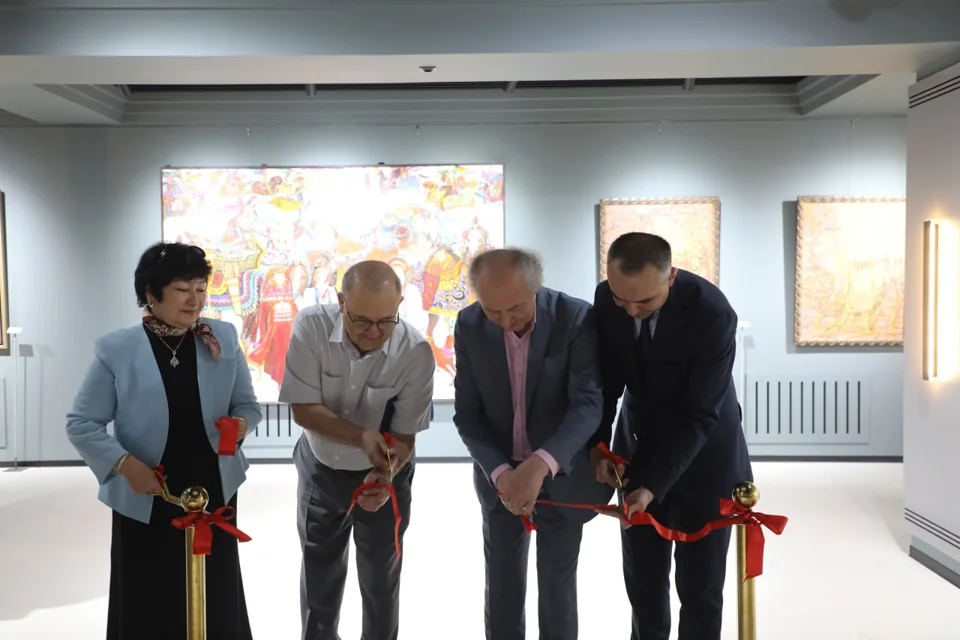
In April 2026 the academy reported the opening of a new exhibition hall at the Kamoliddin Behzod National Institute of Fine Arts and Design. Its inaugural display presented creative works by academy members. The opening brought together academy representatives, institute teachers, academicians and local and international partners.
The institute's account connected the new space with the educational process and the development of students' creative potential. It also emphasised continuity through the ustoz-shogird tradition, the relationship between experienced master and learner. The hall was presented as a platform for teachers and students, theorists and practitioners, and for different artistic projects. This example illustrates a practical relationship between the academy and the institute: established artists' work enters a teaching environment where it can support discussion, observation and the development of younger practitioners.
Sources: New exhibition hall at the Behzod Institute, April 2026 ↗
International exhibitions and cultural exchange
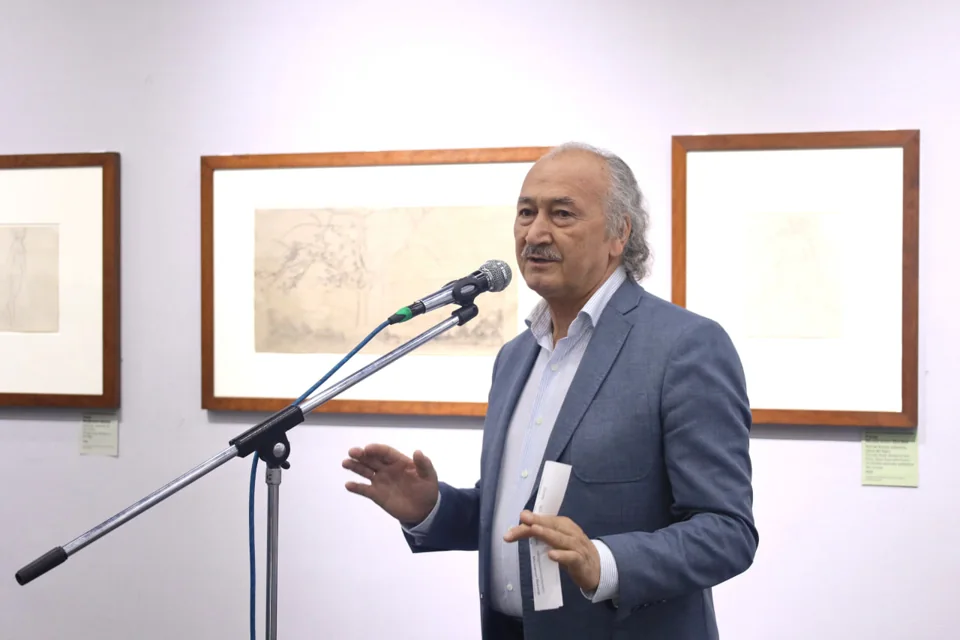
The academy's exhibition activity also introduces audiences in Uzbekistan to art from other countries. On 25 September 2026 its Tashkent exhibition hall opened a display marking the 150th anniversary of Paula Modersohn-Becker's birth. The exhibition included painting and graphic work, together with books, associated with artists of the Worpswede colony. It explored the artistic atmosphere of Germany around the turn of the twentieth century.
The academy's report situated the exhibition within wider Uzbek-German cultural exchange, acknowledging the role of the German embassy and the Goethe-Institut. It also noted previous presentations of German poster art, graphics and photography in academy exhibition spaces. In the other direction, the report referred to a February 2026 Berlin exhibition of contemporary Uzbek miniature artists continuing Timurid traditions. These examples connect the academy's international work with both historical artistic study and the presentation of living practitioners.
Sources: Paula Modersohn-Becker anniversary exhibition, September 2026 ↗
Encouraging young artists through creative competition
Youth development is visible in the academy's collaboration with Keimyung University in the Republic of Korea. In February 2026 it announced the second international creative competition on the theme Art and Literature. The published call was specifically for school pupils and invited visual responses to the relationship between the two forms of expression.
The call set out a submission period from late February to early April and specified a common paper format for the works. An academy-appointed commission was responsible for assessment, with results to be announced during the traditional international festival of fine and applied arts in Tashkent in April. The academy's department working with creative youth received entries at its headquarters. As a dated example, this competition shows another route through which the institution links artistic education with international cooperation and gives younger participants a structured opportunity to present their work.