Visa
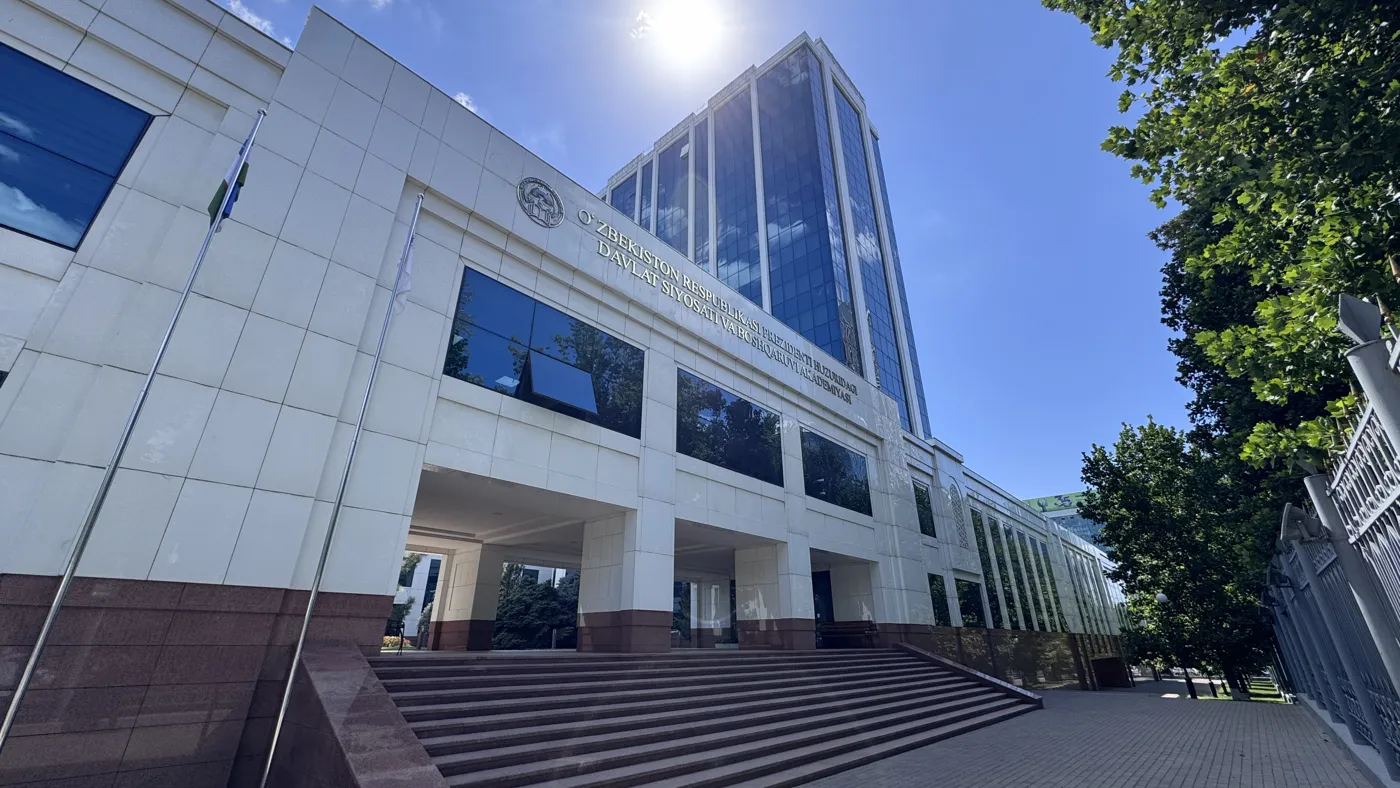

About Academy of Public Policy and Administration under the President of the Republic of Uzbekistan
A public-policy academy in Tashkent
The Academy of Public Policy and Administration under the President of the Republic of Uzbekistan is a state higher education institution in Tashkent. Its work concerns the preparation, retraining and professional development of managerial personnel, alongside research in public service, policy, administration, regional development and human-resource management. The academy is located at 45 Islam Karimov Street and is commonly identified by the Uzbek abbreviation DSBA.
The institution was established in April 1995 as the Academy of State and Social Construction under the President of Uzbekistan. It was reorganized as the Academy of Public Administration in 2012. A further reform under the presidential decree of 5 May 2025 established its present public-policy and administration identity. The academy's mission connects teaching, research and practice, including applied proposals for improving public service and governance. It also identifies digital technologies, artificial intelligence and the development of civil servants' digital competencies as priorities in its educational and research processes.
Sources: About the academy ↗
Master’s education in administration and development
The academy introduced a renewed master's offering for the 2025–2026 academic year under the 2025 reform. Its published programme page names three principal areas: Regional Development, Public Administration and Human Resource Development. These fields connect the study of government institutions with questions about places, people and the management of development. The page also describes cooperation with international higher education institutions through joint programmes and academic modules.
Interdisciplinary study is intended to address national strategic priorities across areas such as energy, transport, infrastructure, education, healthcare and water supply. The academy develops its own curricula and syllabi within the higher education standards framework. Its published admission routes include government grants, state-ordered paid contracts and open competition for tuition-based places. These different routes are associated with particular conditions; for example, the programme page identifies a period of public-sector service for government-grant graduates. The master's qualification is therefore situated within a broader system of professional preparation for administration.
Sources: Master’s programmes ↗
Short courses for people working in public service
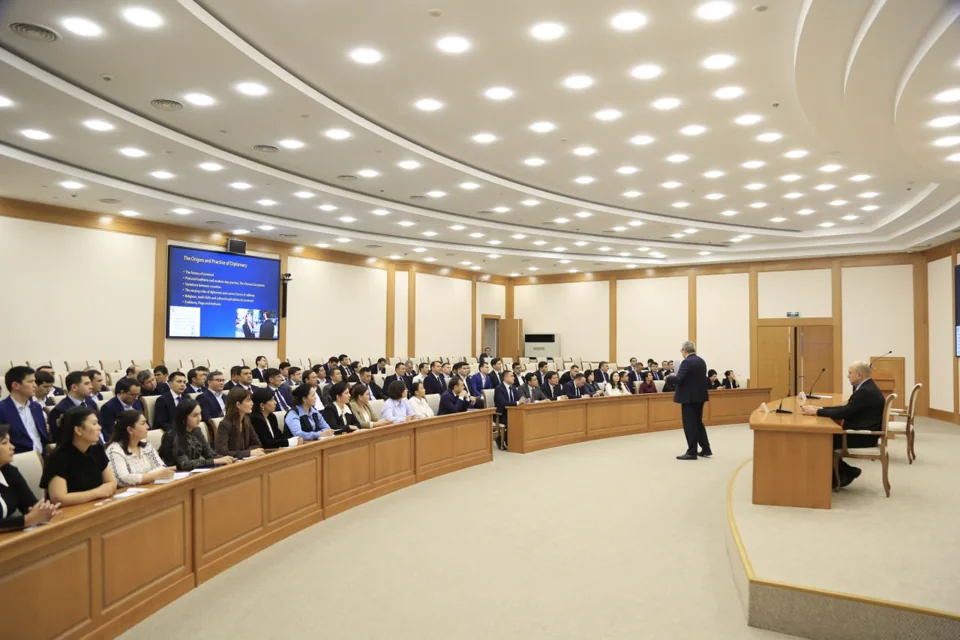
Professional development is another major strand of the academy's work. Its programme description sets out short courses lasting up to one month for current public-sector leaders, potential leaders and managerial personnel. Curricula are intended to respond to current and anticipated tasks in public service and governance. The emphasis is on developing relevant leadership knowledge and skills within a concentrated period of learning.
The academy describes assessment of acquired knowledge and professional competencies through diagnostic evaluation at the end of these courses. Teaching can involve university professors, experienced practitioners, private-sector specialists, consulting and analytical organizations, and international experts. Programme development responds to needs identified by public administration bodies, local government, economic management organizations, businesses and civil society institutions. This approach links continuing education with the different organizations in which participants apply their managerial responsibilities.
Sources: Professional development courses ↗
Women’s leadership and practical international experience
The academy's Women Leaders professional retraining programme includes opportunities for international learning. In November 2026, its official account described an internship organized with Universiti Teknikal Malaysia Melaka. Academy researchers and programme participants joined meetings with university leadership and Malaysian officials. The activities formed part of an effort to strengthen professional and leadership capacity through direct exchange with institutions abroad.
The Melaka programme included discussion of education, research, academic exchange and innovation, as well as an official meeting involving the state's governor. The academy presented the internship as an opportunity to examine international practice while strengthening educational cooperation between Uzbekistan and Malaysia. In this setting, leadership development extends beyond classroom instruction to encounters with public authorities and another country's university community.
Adult learning and the development of trainers
A meeting with DVV International in October 2026 focused on the learning needs of civil servants and the people who teach them. DVV International is the Institute for International Cooperation of the German Adult Education Association. Discussions with the academy addressed retraining, continuing professional development and the use of international experience in adult education.
Topics included strengthening the capabilities of faculty and trainers, modern teaching methods, joint seminars, expert involvement and the exchange of educational materials. The academy's account describes these as areas for continuing dialogue and possible cooperation. They connect the institution's professional-development mission with questions about how adults learn, how courses are designed and how teaching practice itself can be improved.
Sources: Dialogue with DVV International ↗
Cooperation, research and the exchange of ideas
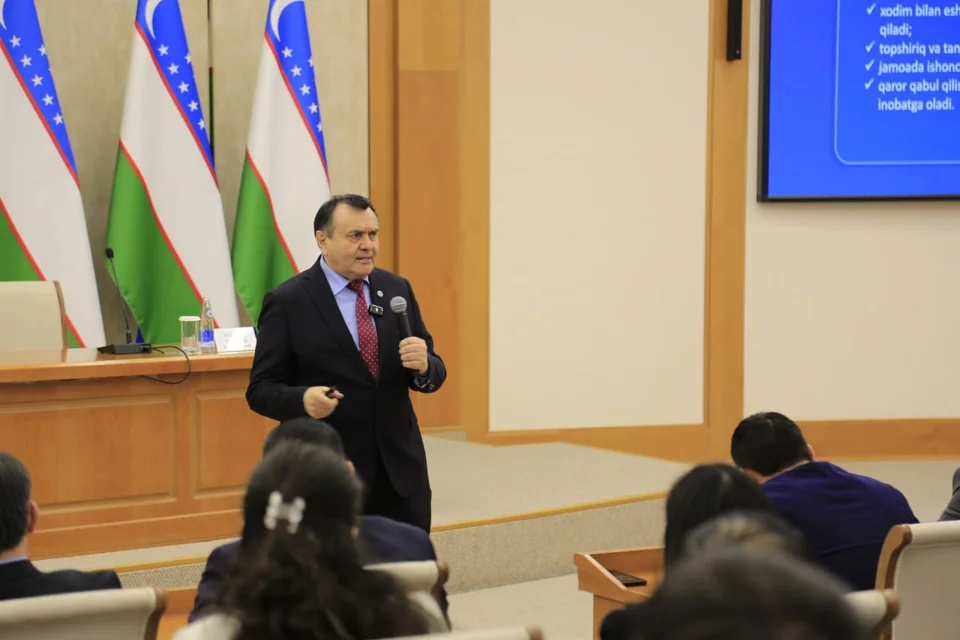
The academy's October 2026 visit to Malaysia also included discussions at Universiti Kebangsaan Malaysia. The agenda covered staff and participant exchange, joint research, professional-development programmes and educational initiatives. Attention was given to preparing public-administration specialists and examining the use of artificial intelligence and emerging technologies in education and governance. Meetings at Malaysia's Ministry of Women, Family and Community Development added discussion of women's participation and gender policy.
These visits illustrate how international cooperation intersects with the academy's educational, research and leadership activities. Alongside exchanges, the institution maintains scholarly publishing through its journal Jamiyat va boshqaruv, presented on its website with access to complete issues. The combination of academic programmes, short professional courses, research and international dialogue provides several routes through which the academy develops and circulates knowledge about public policy and administration.
Sources: Educational cooperation with Malaysia ↗ · Jamiyat va boshqaruv journal ↗