Visa
About Amran University
University origins and purpose
Amran University is a public university in Yemen, based in Amran Governorate. Its institutional history distinguishes its establishment in 2005 from becoming an independent entity in 2007. The university brings together academic faculties and research centres within that public-university structure. Its stated objectives connect academic programmes with Yemen's development needs and give scientific research a role in addressing problems in Yemeni society. Other priorities include strengthening university governance, developing staff capabilities and building relationships with civil-society organisations and comparable institutions. Integrity, excellence, innovation and community participation appear among its declared values. These commitments describe the direction of the institution's planning, including its intention to develop educational programmes and the resources needed to sustain them.
Sources: University origins and purpose ↗
Engineering and computing
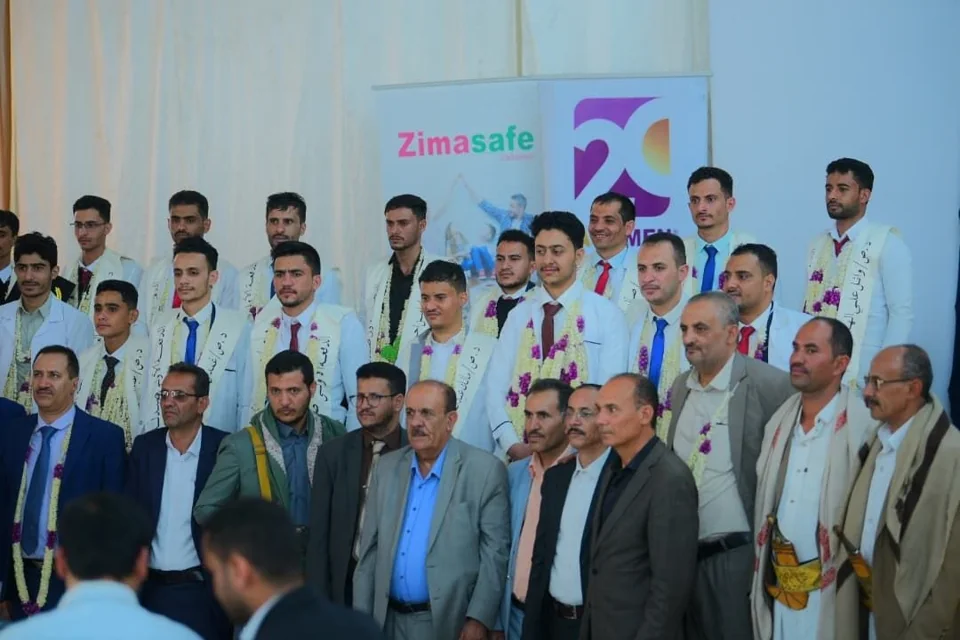
The Faculty of Engineering and Information Technology was established in 2015. Its departmental subjects include civil engineering, architecture, computer science, and cybersecurity and networks. This combination places the built environment alongside computing within a single faculty. The faculty identifies scientific and technical consultancy, specialised training and student innovation among its areas of interest. Its development objectives also address the professional development of academic and administrative staff and continuing evaluation of teaching. Infrastructure remains part of its development agenda: the faculty describes rehabilitating and completing facilities and supplying laboratories and engineering systems as work it is pursuing. It also identifies support from Amran Cement Factory in its efforts to complete laboratory infrastructure. Student creative projects are another stated priority.
Sources: Engineering and computing ↗
Postgraduate study and research
The university's postgraduate and scientific-research administration describes the preparation of master's provision for the 2020–2021 academic year. The initial subjects named in that account were accounting and auditing, business administration, educational administration and planning, Arabic language, and Quranic sciences. The account associates the business subjects with Commerce and Economics and the educational and language subjects with Education and Arts. It presents these programmes as an initial foundation for postgraduate study and research. Its broader remit includes developing further postgraduate programmes, encouraging specialised investigation and strengthening collaboration with scientific institutions inside and outside Yemen. The administration also identifies digital research information, databases, scientific publication and scholarly activities as areas it seeks to develop and document.
Sources: Postgraduate study and research ↗
Academic coordination
Academic Affairs oversees the progress of teaching across the university and coordinates the work of its faculties. Its published responsibilities include planning for teaching-staff needs and following the implementation of those plans. Programme descriptions, curriculum development and updating academic provision are carried out in coordination with the university's quality centre. The office also addresses shortcomings in educational processes and works with relevant university units and outside organisations on possible forms of support. Its remit extends to matters concerning both teaching staff and their assistants under the framework of Yemeni university regulations. This places staffing, programme development and oversight of faculty teaching within the same administrative structure, rather than leaving these matters solely to individual academic departments.
Sources: Academic coordination ↗
Quality development
The Development and Quality Assurance Center dates its establishment to 2016. It describes its role through educational improvement, staff development and the creation of an internal quality-assurance system. Training is intended for academic staff, administrators and technicians, covering educational, administrative and technical capabilities. The centre also works on university and faculty strategies, programme and course descriptions, and academic self-evaluation. Its account reports workshops to develop strategies and to describe programmes and courses in Medicine and Health Sciences. Further strategy work and programme evaluation form part of its continuing plans. The centre’s continuing plan includes completing programme self-evaluations and submitting them to the national council for accreditation and higher-education quality assurance.
Sources: Quality development ↗
Continuing education
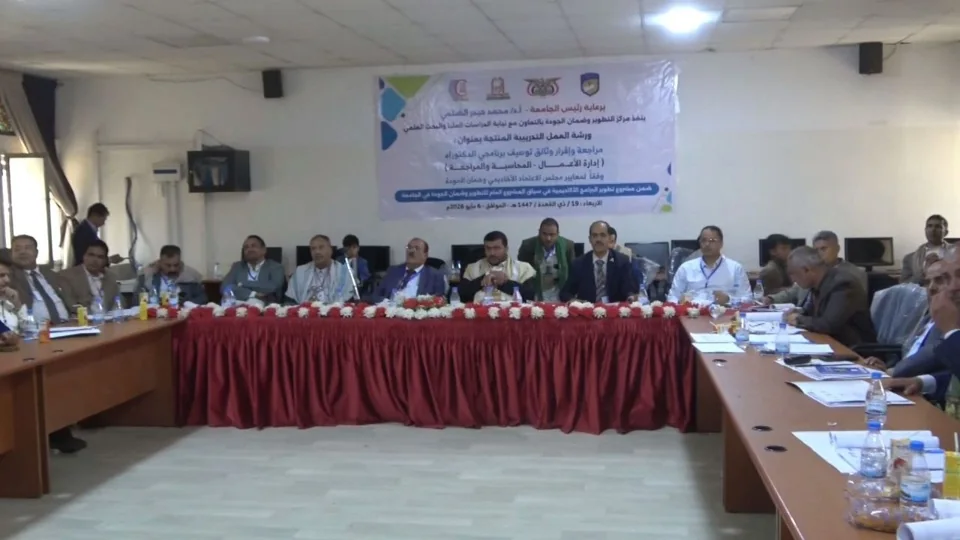
The Amran University Institute for Continuing Education provides a separate focus for educational and training activity. Its stated mission combines academic, professional and research preparation with service to the community. Its strategic objectives include developing teaching and training programmes, strengthening staff capabilities and cooperating with educational institutions, companies and government bodies. Participation by stakeholders in planning and implementation is one of its declared values, alongside transparency, innovation and social responsibility. The institute's own account also identifies practical needs: completing infrastructure and equipping laboratories remain priorities for strengthening applied learning. Its development programme therefore concerns both the content of education and the facilities through which practical work can be delivered.
Sources: Continuing education ↗
Digital administration in 2026
A university report published in November 2026 records a visit by a committee from the higher-education information-technology centre. The discussion concerned cooperation on digital systems for student information, registration, examinations, results, document issuance and evaluation. The report explains that technical systems require coordinated procedures, data governance and review by the university as well as continuing technical support. During the visit, the committee inspected preparations for a university digital centre that was still being equipped before launch. An existing central document-issuance unit, described as having started approximately a year earlier, was intended to become part of that centre later. The report thus documents an ongoing administrative project, while distinguishing the unit already operating from the larger centre still under preparation.
Sources: Digital administration in 2026 ↗
Teaching and assessment in 2026
An October 2026 university report documents first-semester examinations for the 2026–2027 academic year in the Faculty of Education and the Institute for Continuing Education. University representatives visited examination rooms and discussed the organisation of the assessments with faculty and institute administrators. The account focuses on the procedures used to run examinations and on compliance with examination regulations. It records participation by the two teaching units alongside the quality-assurance centre. This dated activity provides a concrete example of the university’s teaching administration in that academic year, complementing the longer-term institutional and programme-development plans described by its academic units.
Sources: University report on Education and Continuing Education examinations, October 2026 ↗