Visa

About Amoud University
A university rooted in Amoud Valley
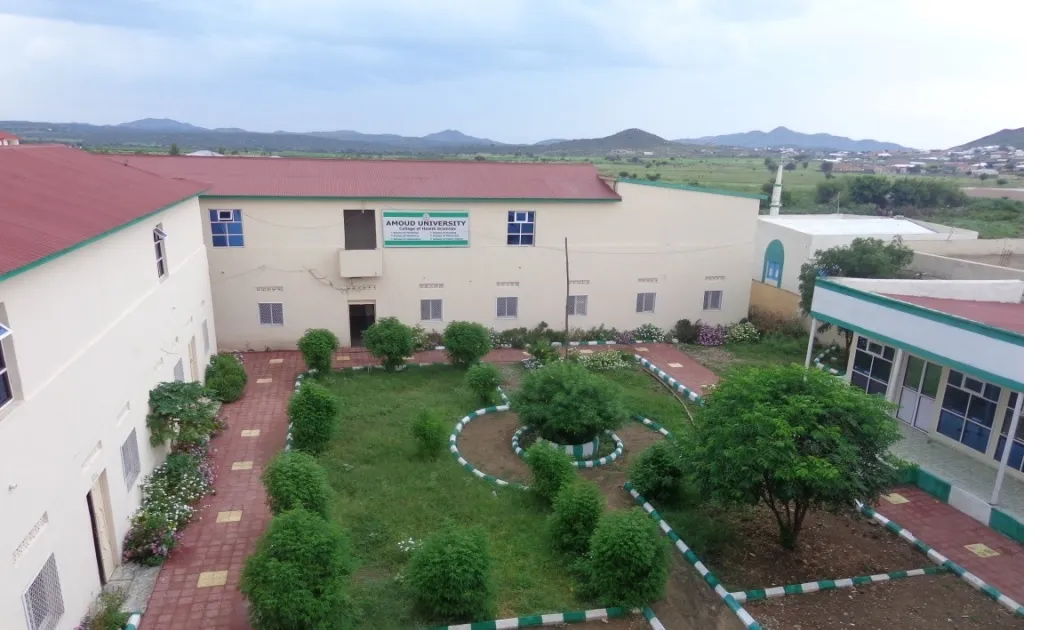
Amoud University is based in Amoud Valley, Borama, in the Awdal region of Somaliland. Its institutional account presents education as a contribution to peace, cooperation and social development. The university’s vision focuses on scholarship in the Horn of Africa and on understanding between different cultures and communities. Its mission links education and training with the development of people’s potential and participation in the wider world.
The university identifies integrity, collaboration, respect, innovation, accountability and community engagement among its core values. It also describes campus life as a community experience that extends beyond classes, encompassing cultural events and sports. These aims place academic work within a broader civic setting: developing professional knowledge, encouraging intellectual curiosity and bringing people together through learning. The institutional overview connects its present role with the earlier educational history of the Amoud site. Its objectives include promoting a peace-oriented culture and educating new generations of professionals.
Sources: About Amoud University ↗
Library collections and access to learning
The university library supports teaching, learning and research through a predominantly print-based collection. Its account describes books and other recorded information intended for students, lecturers and researchers, including users from other higher-education and research institutions. A library administration department, headed by the University Librarian, handles the administration of the university’s libraries.
The library’s stated mission includes building comprehensive collections for science, technology and related fields, supporting entrepreneurship training and improving access to information. It also sets an ambition to increase electronic access to books and journals. Reading space accompanies the collections, giving library users a place to work with material held by the university. The combination of collection development, administration and access is presented as part of the university’s academic infrastructure, serving both classroom learning and independent investigation.
Sources: Amoud University Library ↗
Student affairs and participation
The Office of Student Affairs describes its role as supporting an engaging and active learning environment. It offers guidance to enrolled students and works with colleges and faculty on activities inside and outside the classroom. Its plans and responsibilities encompass academic conferences, sports competitions, poetry recitals and other opportunities for student participation. The office also acts as a point of communication for parents and families.
Advocacy is another part of its stated work. The office encourages students to represent their own concerns and develop decision-making skills while participating in university life. It coordinates support for students with disabilities, including hearing, visual and physical impairments, and asks students seeking accommodations to contact Student Affairs. Its student-placement work involves helping faculties arrange internships with organisations such as government offices, telecommunications businesses, development organisations and the port sector. These activities connect academic departments with student support and experience beyond lectures.
Computing and informatics
The Faculty of ICT is located at the main campus near Borama. Its history dates its establishment to September 2009 and describes subsequent expansion from information technology into business information technology, software engineering and cyber security. The faculty’s current account also records the introduction of data science and information systems programmes in September 2026. Its academic scope therefore spans both technical computing and the use of information systems within organisations.
Programme descriptions identify areas including databases, programming, web development, software design, information infrastructure and computing ethics. Cyber-security study focuses on protecting data and systems, while data science emphasises interpreting numerical findings and communicating insights. The faculty describes a balance of computing theory and practical application. It also works with academic institutions, public bodies and other organisations on research, training, projects and capacity development. Electronic reference materials and resources available through the university’s Google Classroom suite complement the main library.
Sources: Faculty of Computing and ICT ↗
Engineering linked to local infrastructure
The Faculty of Engineering was established in 2008. Its stated purpose connects engineering education with local infrastructure needs and the development of technical expertise. Its programmes cover civil engineering, architecture and urban planning, electronics and telecommunications, and water supply and environmental engineering. The faculty places research, consultancy and cooperation with other organisations within this educational role.
Facilities listed by the faculty include soil, concrete, surveying, highway, electronics and telecommunications laboratories. These support practical work alongside theoretical study. The civil-engineering account addresses infrastructure, while water and environmental engineering considers sanitation facilities and environmental protection. Architecture and urban-planning teaching includes design and planning through lectures and studios. Electronics and telecommunications combines theoretical and practical courses with internship experience. The faculty also identifies construction management and water-resource engineering within its teaching interests. Across these fields, the faculty’s objectives include professional ethics, awareness of technical developments and the ability to approach structural, environmental, geotechnical, transport and water-related problems.
Sources: Faculty of Engineering ↗
An academic community at graduation
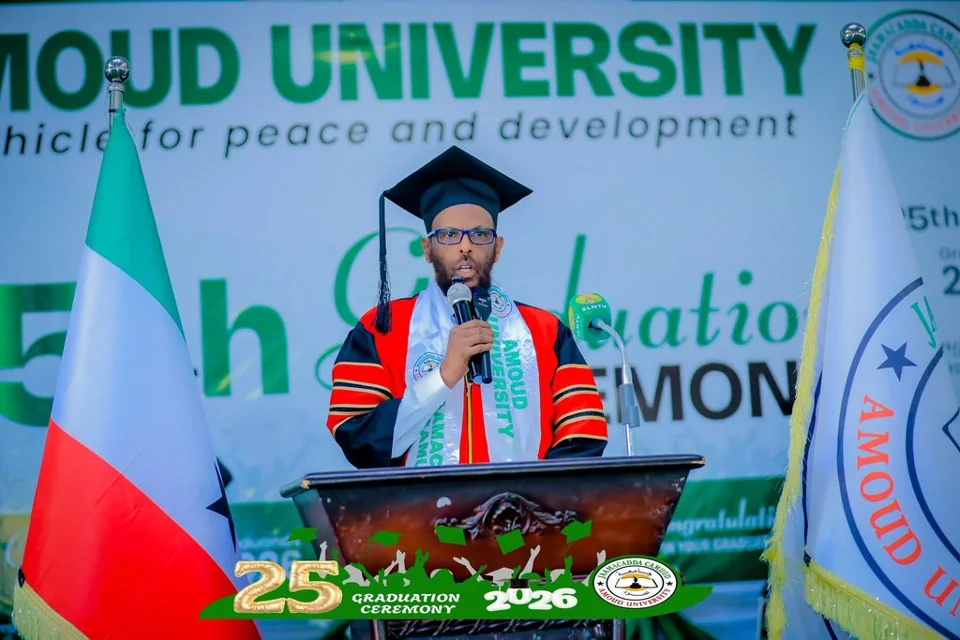
A university report published in September 2026 records its twenty-fifth annual graduation ceremony at the main campus in Borama. It describes awards across bachelor’s, master’s and doctoral levels, with university leadership, faculty, government representatives, community elders and families attending. The event brought together several parts of the university community in a shared academic occasion.
The report places the ceremony within the university’s continuing emphasis on education and community development. Its accompanying photographs show speakers addressing the gathering in academic dress, providing a view of the formal celebration through the university’s own record of the event.
Sources: September 2026 graduation report ↗