Visa
About Abrar University
A university in Mogadishu
Abrar University is a higher education institution in Mogadishu, Somalia, with an address in the Km6 Banadir area. The university records its establishment on 26 June 2014 through the Imam Shafi’i Foundation. Its founding organisation had an existing background in school education, giving the university an institutional connection with earlier educational work. Abrar describes its remit as undergraduate, postgraduate and continuing professional education, alongside research and training activities.
The university’s stated purpose places practical learning alongside academic knowledge. Its vision connects educational quality and research with innovation and the application of ideas. The mission similarly emphasises technological skills, improved student learning and contributions to community life. These are presented as institutional aims rather than guarantees of particular outcomes. Across its public materials, the connection between theory, professional practice and local needs is a recurring theme in how Abrar explains its educational role.
Sources: About Abrar University ↗ · Vision and mission ↗
The development of academic fields
Abrar’s September 2019 academic regulations provide a historical account of its academic organisation. They describe colleges covering medicine and health science, veterinary medicine, agricultural science, economics and management, engineering and technology, and Sharia and law. The document records the beginnings of medicine, veterinary medicine, agriculture and other early colleges in 2014, with health science developing in 2016 and Sharia and law established in 2019.
The same document describes the health science structure in terms of medical laboratory science, pharmacy, nursing and midwifery, and public health. Engineering and technology is associated with civil engineering, architecture, food engineering and information technology. These details illustrate the institution’s early breadth across human health, animals, agriculture, business and technical subjects. They are a dated record of development and should be distinguished from a current admissions catalogue or professional licensing determination.
One Health as an interdisciplinary focus
The Somali One Health Centre is an identifiable part of Abrar University’s research and outreach work. It brings medical, veterinary, agricultural and environmental perspectives together to examine questions that cross the boundaries between disciplines. The centre’s stated focus is the relationship between the health of people, animals, plants and their shared environment. Education, research and community programmes are the principal routes through which it seeks to address those connections.
The centre also provides a setting for professional exchange. Its website documents the first Somali One Health Conference in 2022, reporting participation from institutions and countries beyond the university itself. Topics associated with its work include zoonotic disease, vector borne disease and antimicrobial resistance. This gives a concrete interdisciplinary direction to Abrar’s wider research agenda: specialists with different forms of expertise are encouraged to consider shared problems and communicate across professional and organisational boundaries.
Sources: Somali One Health Centre ↗
Professional education in One Health
The centre’s published Postgraduate Diploma in One Health page describes an eight month online programme associated with an April 2025 intake. It is intended to develop an interdisciplinary understanding of complex health challenges and the practical skills needed to address them collaboratively. Its curriculum includes an introduction to One Health, epidemiology, economics, and the social and environmental determinants of health. Research methodology, leadership and management, health geographic information systems and communication complete the listed subject areas.
The programme description emphasises coordination with stakeholders, identifying problems in their social and environmental context, and planning or evaluating integrated projects. It also connects research design with the analysis and interpretation of evidence. These topics show how the university’s continuing and postgraduate education can bring technical knowledge together with organisational skills. The published intake is historical, so the description records a documented programme rather than asserting that the same dates or enrolment arrangements remain open.
Sources: Postgraduate Diploma in One Health, 2025 programme page ↗
A documented community outreach campaign
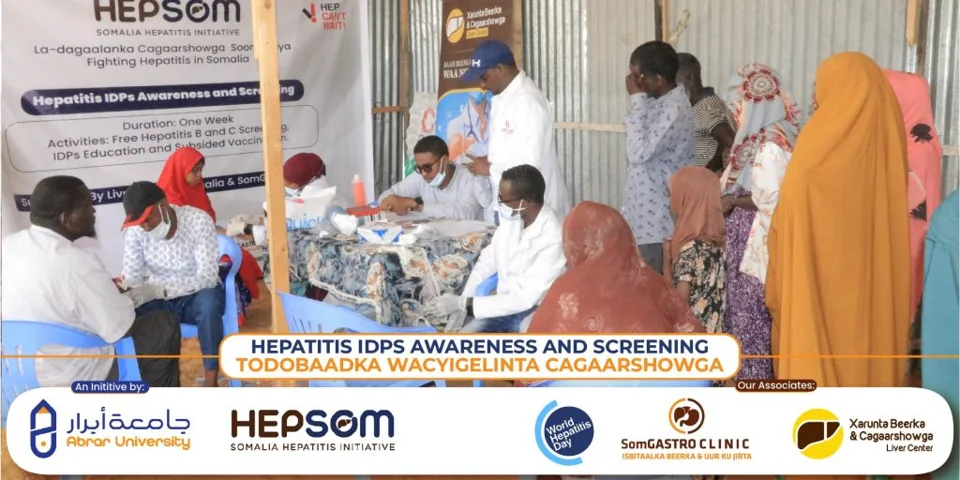
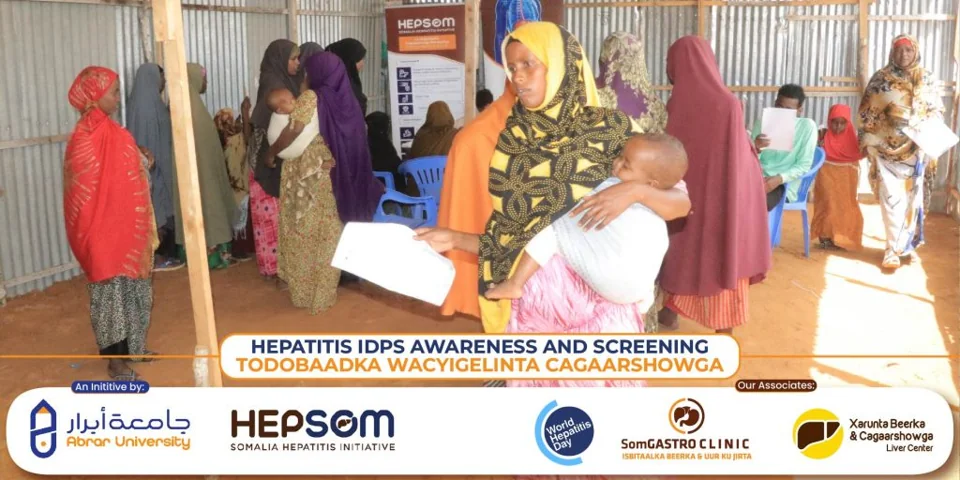
In a report dated 31 July 2023, Abrar University describes a one week Somali Hepatitis Initiative campaign organised with SomGastro Clinic. The activity took place among internally displaced communities and combined awareness sessions with screening for hepatitis B and C and subsidised vaccination. The university presents the campaign as a response to barriers that displaced people encounter when trying to access health information and services.
The report describes educational sessions about transmission and prevention, alongside the practical delivery of screening. It connects the activity with the university’s social responsibility and with international goals concerning health and wellbeing. As a dated example of outreach, it shows an institutional initiative working with an external clinical partner to reach people beyond the campus. The campaign is evidence of a specific completed activity, rather than a claim that the same service is continuously available today.
Sources: Somali Hepatitis Initiative outreach, July 2023 ↗
Student wellbeing and campus discussion
A February 2024 university report describes a one day seminar on resilience and student mental wellbeing at the main campus. Presentations, discussions and interactive sessions considered how a supportive university environment can help students. Themes included reducing stigma, building a sense of belonging and making support easier to access. The event therefore addressed student experience alongside the academic and professional subjects taught by the institution.
The report also records discussion of peer support, stress management and awareness activities. Its recommendations included strengthening links with community organisations and mental health professionals, widening access to resources and evaluating campus initiatives. Those recommendations are described as proposed directions following the seminar, rather than assumed completed services. Together with the university’s outreach and One Health work, this event illustrates Abrar’s attention to the social setting of education and to the relationships between learning, wellbeing and community engagement.