Visa

About Abrar Research and Training Centre (ARACHTI)
Identity and institutional development
Abrar Research and Training Centre, known as ARACHTI, is a Somali-led research and capacity-development institution based in Mogadishu. Its official history states that it began in 2014 as the research arm of Abrar University and was reconstituted as an independent institution on 19 October 2025. The university connection is therefore part of its origins, while its current website describes a separate centre with its own development agenda.
ARACHTI explains its name as an abbreviation of Abrar Research and Training Centre, deliberately echoing the Somali word Aragti, associated with vision and insight. Its stated mission combines producing usable evidence, developing local capacity and delivering practical solutions through partnerships. These partnerships encompass public institutions, academia, civil society, businesses and international organisations. The centre's values emphasise integrity, inclusion, local expertise and approaches suited to Somalia's circumstances. It presents itself through research, training and public-interest work rather than as a university with a conventional catalogue of degree programmes. This distinction helps readers interpret its educational role and its relationship with other institutions.
Sources: About ARACHTI: history, mission and values ↗
Applied research across interconnected systems
ARACHTI describes its research as applied and oriented toward practical problems. Its research philosophy includes relevance to Somali communities, scientific rigour, community participation and findings that can inform action. The published themes extend across health, food systems, the environment, education, governance and digital tools. This breadth reflects the centre's interest in connections between systems rather than a single academic discipline.
The health theme includes zoonotic disease, neglected tropical disease, non-communicable disease, antimicrobial resistance and outbreak preparedness. Food-system work addresses agriculture, livestock health, food security and nutrition. Environmental interests include climate variability, water security and interactions between people and ecosystems. Other themes concern educational access and quality, gender and disability inclusion, and the role of governance. Digital health, artificial intelligence, geospatial analysis and decision-support systems appear as technological areas of interest. These are ARACHTI's stated research themes, not claims that every subject has a separate laboratory or a completed project with demonstrated results.
Sources: Research and innovation ↗
Professional training and capacity development
Training is a central part of ARACHTI's institutional purpose. Its capacity-development page describes tailored programmes for Somali professionals and institutions, including short courses, mentorship, fellowships, training of trainers, technical workshops and knowledge-exchange forums. Institutional strengthening is included alongside the development of individual skills. This presents education as an ongoing professional and organisational activity, rather than limiting it to a classroom course.
The centre outlines a training process beginning with assessment of skill gaps and learning objectives. It then describes adapting curricula to context, using interactive delivery and connecting learning with field exercises and practical problems. Follow-up mentorship and access to resources form part of the proposed support, while assessment considers whether participants retain and apply knowledge. This sequence explains the centre's intended approach to training design. It does not establish that every listed format is open for enrolment at all times, or that participation leads to a particular academic qualification.
Sources: Capacity development ↗

Working with communities
ARACHTI's community-service approach treats community members as participants in research and problem solving. Its published philosophy emphasises co-creation, participation and mutual learning, with solutions adapted to local culture and circumstances. The centre identifies inclusion, transparency, accountability and avoiding harm as principles for its work. Sustainability is framed partly through strengthening local capacity rather than relying only on outside expertise.
Listed activities include field missions, technical advice, community-based health and development interventions, awareness campaigns and participatory action research. The centre also describes local problem-solving initiatives in which communities contribute to developing practical responses. These activities connect its research and training functions with people outside academic institutions. The published approach is best understood as a statement of method and priorities: it explains how ARACHTI intends to engage, while the results of an individual intervention require evidence from the relevant project or evaluation.
Sources: Community service ↗
Evidence for policy and institutional decisions
The policy-support function is directed toward government institutions and development partners. ARACHTI lists policy briefs, technical guidance, advisory services, decision-support dashboards and collaborative strategy development among its services. Briefs are intended to summarise evidence for policymakers, while technical guidance concerns the design, implementation and evaluation of programmes.
The centre also describes ongoing advice for ministries and partners and the joint development of strategies and action plans. Dashboards are presented as tools for visualising information used in monitoring and planning. These services explain how research may reach decision makers beyond academic publications. They are descriptions of the centre's offering, rather than proof that a specific national policy has been adopted or that every proposed tool is already operating.
Sources: Policy support ↗
Published programme priorities
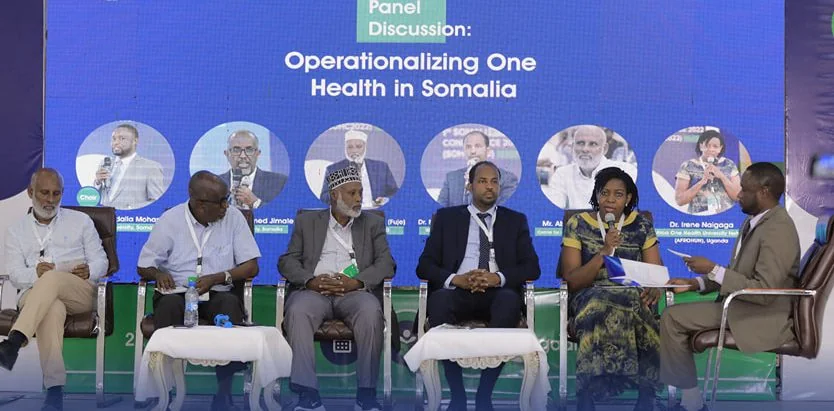
The programme directory organises work around vector-borne disease, food safety and antimicrobial resistance, social and environmental determinants of health, and education systems. Its vector-related entries concern ticks and tick-borne pathogens, tsetse and trypanosomiasis, and mosquito-borne pathogens. Several are explicitly framed through a One Health approach linking human, animal and environmental questions.
Other programme entries address foodborne and waterborne disease, antimicrobial resistance, socioeconomic and environmental factors in infectious disease, and education quality. The directory also identifies a One Health education and capacity initiative. Taken together, these priorities make the relationship between research and training concrete: questions about disease, livelihoods, environments and learning systems are placed within the same institutional programme. The directory supplies a guide to stated activity and project themes; it should not be read as an independent assessment of impact or as evidence of guaranteed services for prospective participants.
Sources: Programmes and projects ↗