Visa

About Alzaytona University of Science & Technology
A Palestinian university in Salfit
Alzaytona University of Science & Technology is a private Palestinian university in Salfit Governorate in the West Bank. Established in 2014 by Palestinian academics and business leaders from within Palestine and abroad, it began operating in 2020. Its campus location links the areas south of Nablus, north of Ramallah and east of Salfit. The university describes its purpose through scientific and technological education, research and service to Palestinian society. Innovation, teamwork, academic freedom, integrity and respect for cultural diversity appear among its institutional values. Its strategic direction includes developing cooperation with other universities and strengthening relationships with the private sector and local community. These partnerships are presented as ways to connect education, practical experience and research. The university also places self-directed learning and critical thinking within its intended educational environment, alongside a broader commitment to social responsibility and sustainable development.
Sources: University history, purpose and values ↗
Engineering and technological subjects
The Faculty of Engineering and Technology dates its establishment to 2020. Its listed bachelor’s subjects include renewable-energy engineering, robotics and control engineering, architecture, computer science, and cyber sciences and information security. These programmes bring together the design of physical systems with the study of computing and digital infrastructure. The faculty’s published approach combines theoretical knowledge with practical skills, supported by laboratories and workshops. Its dean’s message identifies continued programme development, community partnerships and the improvement of teaching and research among its priorities. The programme list provides separate information for each subject, while the faculty page also introduces its teaching staff. Its stated educational direction is to help students examine engineering and technological problems and develop new solutions. The emphasis on both computing and engineering gives the faculty a range of subjects concerned with the application of technology.
Business education with practical connections
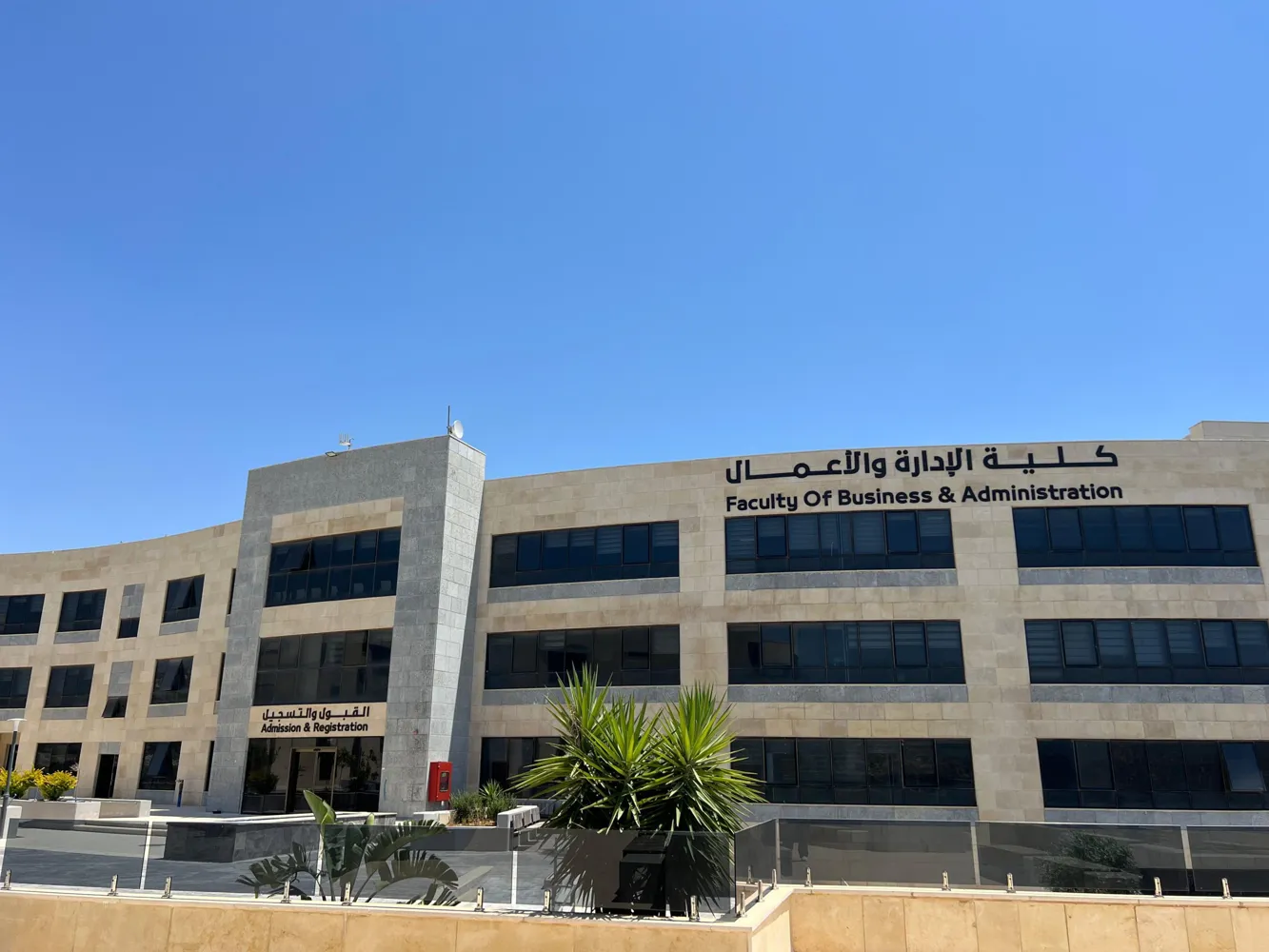
The Faculty of Administration and Business offers a range of subjects concerned with organisations, finance and changing business technologies. Its published specialisations include accounting, human-resource management, digital marketing, financial markets and institutions, and supply-chain, transport and procurement management. Artificial intelligence in business and financial technology also appear in its programme list. The faculty describes its teaching as combining academic foundations with practical experience, including contributions from people who work in business and opportunities for training. Its dean’s statement emphasises contact with Palestinian and regional business environments, student activities and the development of individual abilities. Workplace exposure is discussed as a way for students to understand how tasks and responsibilities are organised in different industries. This practical orientation sits alongside the theoretical study of management and the faculty’s stated interest in developing further partnerships and initiatives.
A library for independent study and research
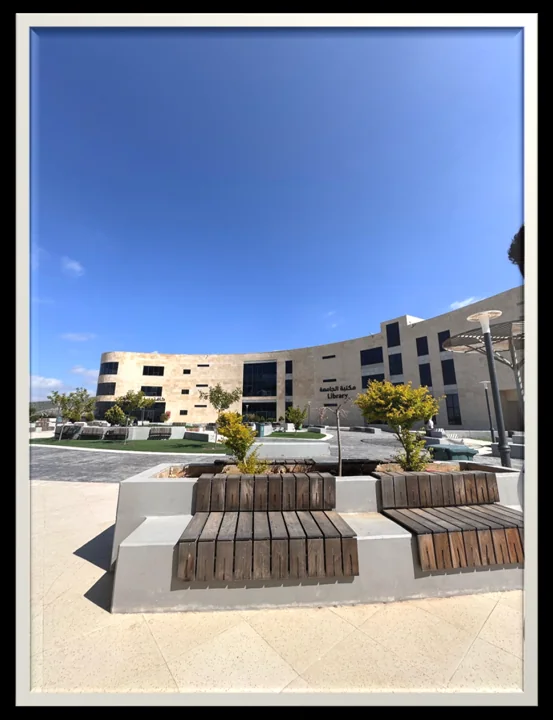
The university library supports teaching, research and community service through printed and electronic information resources. Its published services include borrowing and returns, guidance, electronic searching, computer access and database resources. It identifies spaces for general study, quiet reading and work on research or graduation projects. The library organises its collection using the Dewey Decimal Classification and provides a catalogue search facility. Its borrowing policy distinguishes the needs of students, staff and faculty: ordinary student loans cover two books for two weeks, while graduation-project students can obtain an expanded allowance with departmental confirmation. Reference books, periodicals, reserved material, graduation projects and theses are retained for use within the library. The library also lists electronic information sources, including open-access directories and research platforms. Its stated collection-development approach is to provide balanced coverage across the university’s subject areas. Loan renewals depend on demand and availability, and the published procedure requires presenting the books to library staff.
Sources: University library and services ↗
Organising scientific research
The university’s scientific-research page combines an institutional research vision with a published regulatory framework dated 2025. It describes a Research Council responsible for developing research directions, preparing an annual plan and considering the resources needed to support scholarly activity. The regulations also address research incentives, publication support, conference participation and cooperation with other organisations. Supported projects are subject to follow-up, and the council’s responsibilities include reviewing research activity and organising seminars or workshops. The university presents research as part of academic staff members’ responsibilities and as a means of producing and sharing knowledge that serves society. Its stated scope extends across science, engineering, medicine, management and other fields. This framework sets out how the institution intends to coordinate research and encourage scholarly work, while linking its priorities to Palestinian community needs and wider development objectives. The regulations envisage financial support, staff time and other resources as means of encouraging academic investigation.
Sources: Scientific research and 2025 research regulations ↗
Digital services supporting university work
The Computer Centre provides the technical functions that support academic, research and administrative activity. Its published responsibilities include maintaining the university website, overseeing wired and wireless networks, supporting email accounts and monitoring network security. It also follows the development of learning software and manages software updates and licences. Computer training and courses form part of its remit, together with support for the practical laboratory component of information-technology courses. The centre’s work extends to computer services for students, faculty and employees, as well as the computerisation of administrative procedures across university departments. Its stated purpose is to facilitate communication and make appropriate technology available to the university community. These functions connect the institution’s technological focus with the day-to-day systems used for teaching, study, research and university administration.
Sources: Computer centre responsibilities ↗