Visa
About Al-Quds University
A university developed from several colleges
Al-Quds University is a Palestinian university associated with Jerusalem and the surrounding West Bank. It developed through the gradual integration of independent colleges. The university's history identifies a religious studies college in Beit Hanina in 1978, followed by medical professions and science and technology colleges in Al-Bireh and Abu Dis in 1979. Hind Al-Husseini College for Women and the Centre for Islamic Archaeology followed in Sheikh Jarrah in 1982. A coordinating process began in 1984, bringing the separate college boards into closer association while their legal identities remained distinct. The full amalgamation was completed in 1995 through a university basic law and integrated bylaws. This history explains the institution's combination of scientific, professional and humanistic education across several locations.
Academic range
Al-Quds describes itself as a research university offering undergraduate and postgraduate study across a broad range of disciplines. Its faculties cover medicine, dentistry, pharmacy, health professions and public health, alongside engineering, science and technology. Arts and humanities, education, law, business and economics, Quranic and Islamic studies, and Shari'a extend its academic scope. Al-Quds Bard and Dual Studies also feature in its faculty structure. The university's mission connects lifelong learning, teaching and scientific research with service to local, regional and international communities. Its academic range therefore brings health education, technical knowledge, professional study and the humanities into one university environment.
Sources: Al-Quds at a Glance ↗
Abu Dis and Jerusalem locations
The university identifies Abu Dis as its main campus. Its published campus information also names the Old City, Sheikh Jarrah and Beit Hanina, with an additional location in Al-Bireh. This geographical pattern reflects the university's development from several educational institutions. Its service area includes Jerusalem and neighbouring West Bank towns, villages and refugee camps. University information places admissions and student affairs services at the Abu Dis main campus.
Sources: Al-Quds University: Abu Dis Campus ↗
Library resources and learning
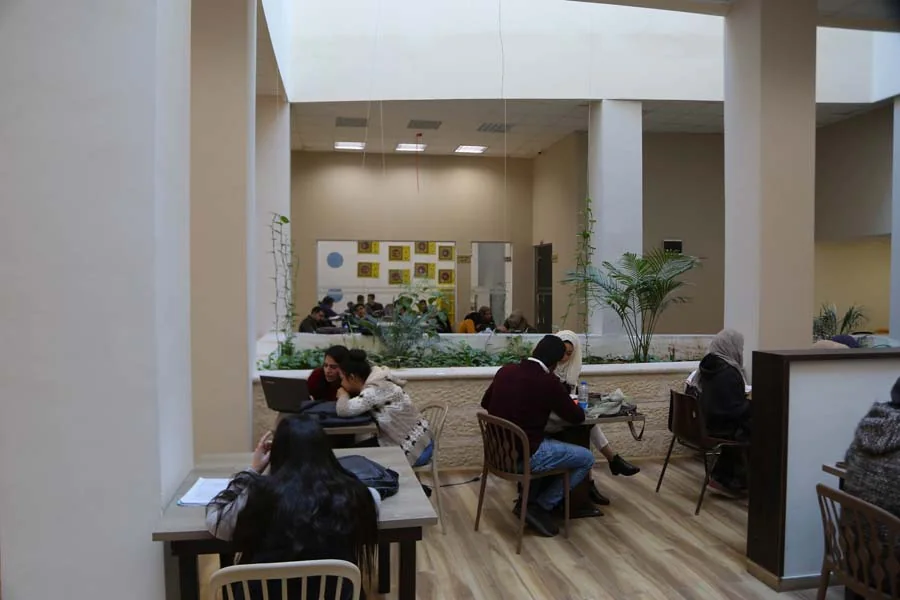
Al-Quds University's libraries support teaching, research and independent learning through printed and electronic resources. Their subject coverage follows the university's academic range, including health sciences, engineering, law, humanities, economics and education. The library account identifies the central Munib Rashid Al-Masri Library at Abu Dis, Al-Babtain Library at Beit Hanina, the Hind Al-Husseini College library in Sheikh Jarrah, a public library in the Old City and a media college library in Al-Bireh. Resources are organised using established cataloguing and classification systems. Library staff also offer introductory workshops and training in the use of resources and services, helping students and researchers locate relevant material and make fuller use of the collections.
Sources: Al-Quds University Library ↗
Museums, centres and community engagement
The university's network of centres connects research and education with cultural and community activity. Its Science Museum, opened in 2007, uses interactive education to introduce scientific ideas. The Meet Math Museum similarly focuses on interactive mathematics learning. The Centre for Jerusalem Studies supports scholarship concerning the city, while the Community Action Center, established in 1999, works with the Palestinian community in East Jerusalem. Other units address language learning, statistical studies and digital transformation, information technology training and nutrition research. Applied research is represented by chemical and biological analysis and by the Centre for Cleaner Production, whose stated interests include sustainable industrial practices and the circular economy. The university also lists a human rights clinic within its educational and community network. Together these units extend the university's work beyond its degree programmes through specialist learning, research and public engagement. A Moroccan Studies Chair was launched on 2 March 2025 as an academic and cultural initiative coordinated with the Bayt Mal Al-Quds Asharif Agency.
Student affairs and participation
The Deanship of Student Affairs acts as a communication link between students, faculties and university management. Its organisational units cover student activities, sport, voluntary work, empowerment and student affairs. The deanship describes cultural, artistic, social and sporting activities, as well as opportunities for community service and competitions. It also supervises student council elections and clubs, provides counselling and supports students facing difficulties. Financial assistance is considered in relation to academic performance and financial need. Its account of university life includes volunteering, graduate support, student initiatives and women's accommodation. Leadership, personal development and freedom of expression are among the educational purposes it identifies for participation outside scheduled classes.
Sources: Al-Quds University: Deanship of Student Affairs ↗
Strategy and institutional direction
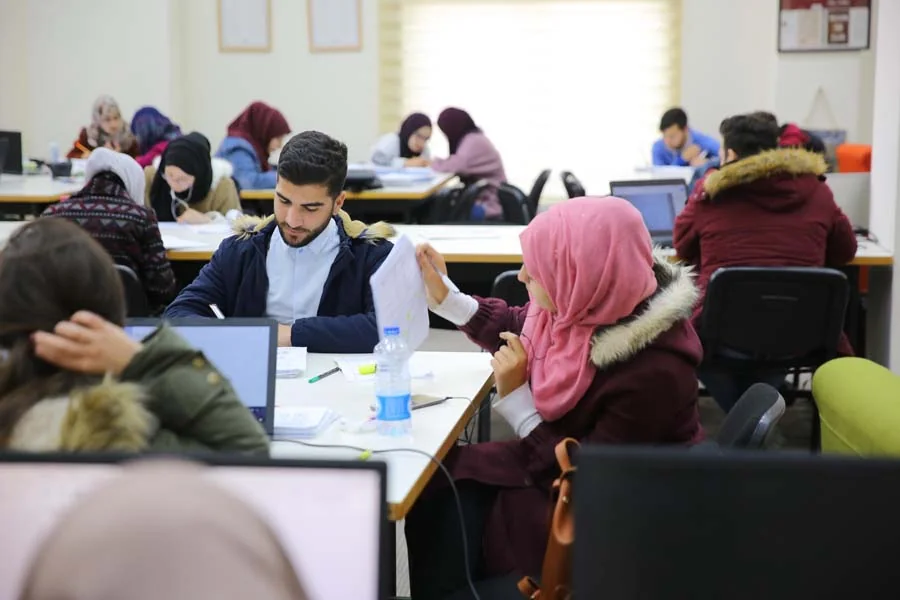
The university's 2024–2030 strategy places sustainability and social responsibility alongside education and research. Its priorities include active learning, critical thinking, problem-solving and greater use of educational technology. Academic staff development and feedback on students' progress also feature in the teaching objectives. Research priorities concern interdisciplinary cooperation, postgraduate study, innovation and links with other academic institutions. The strategy further addresses entrepreneurship through design thinking, startup development and opportunities for student initiatives. Community participation and environmental sustainability are presented as responsibilities across university operations. The published planning process used questionnaires, external review and discussions with stakeholders, followed by an action plan and measures for evaluating progress. The Board of Trustees endorsed the strategy in February 2024. These are institutional objectives and planning arrangements guiding the university's development. Internationalisation objectives include overseas academic experiences, language skills and cultural understanding. Financial management, operational efficiency and fundraising also appear in the strategic plan.