Visa
About Al-Quds University - The Arab University in Jerusalem
A university developed from several colleges
The directory name Al-Quds University – The Arab University in Jerusalem refers to Al-Quds University, the Palestinian institution whose main campus is in Abu Dis and whose educational locations also extend into Jerusalem. Its development brought several independent colleges together. A religious studies college opened in Beit Hanina in 1978, followed by medical professions and science and technology colleges in Al-Bireh and Abu Dis in 1979. Sheikh Jarrah gained Hind Al-Husseini College for Women and a centre concerned with Islamic archaeology in 1982. Coordination between the colleges began in 1984, while formal integration as one university was completed in 1995. The university's history describes a basic law and integrated bylaws establishing that unified institutional structure. The Faculty of Medicine was established in 1994, before the final amalgamation. The history distinguishes the earlier coordinating committee from the unified legal arrangements adopted in 1995.
Academic range
Al-Quds combines undergraduate and postgraduate education with a research mission. Its academic fields range from humanities, education, law and business to science, engineering and health. Medicine, pharmacy, dentistry, health professions and public health sit alongside arts and humanities, business and economics, engineering, science and technology. Quranic and Islamic studies and Shari'a are also represented in its faculty structure. The published academic overview additionally identifies Al-Quds Bard and Dual Studies. The institution links teaching and scientific enquiry with lifelong learning and service beyond the university, addressing local communities as well as regional and international audiences through its broad academic remit.
Sources: Al-Quds at a Glance ↗
Abu Dis and Jerusalem locations
Abu Dis is identified as Al-Quds University's main campus. The university's campus account also names locations in the Old City, Sheikh Jarrah, Beit Hanina and Al-Bireh. Its work serves communities in Jerusalem and surrounding West Bank towns, villages and refugee camps. Admissions and student affairs information directs visitors to university facilities in Abu Dis. This distribution of locations is connected with the separate colleges from which the institution developed.
Sources: Al-Quds University: Abu Dis Campus ↗
Library resources and learning
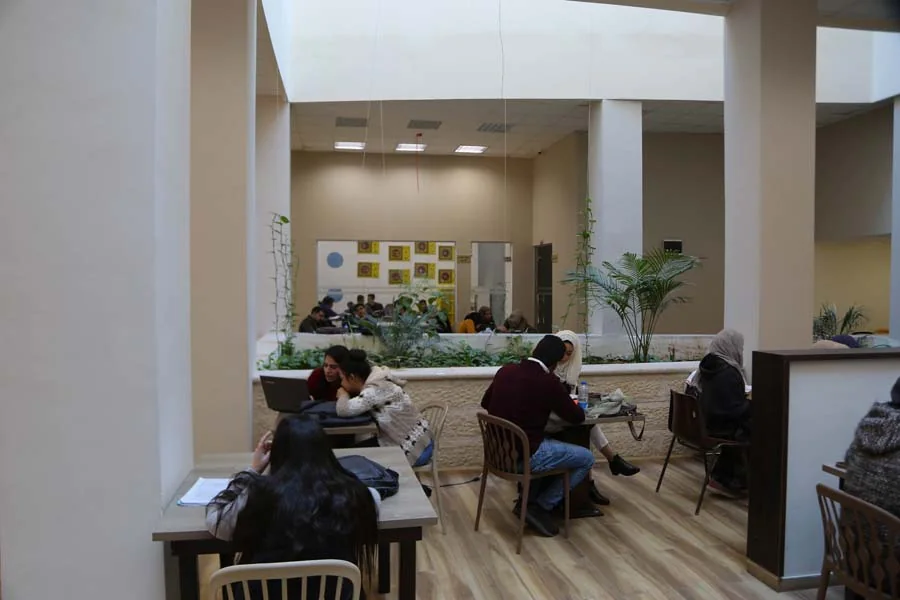
University libraries provide collections and research assistance across Al-Quds' scientific and humanistic subjects. The central library in Abu Dis bears the name Munib Rashid Al-Masri. The library account also identifies Al-Babtain Library in Beit Hanina, the Hind Al-Husseini College library in Sheikh Jarrah, an Old City public library and a media college library in Al-Bireh. Printed material and electronic books and periodicals support teaching, student learning and academic research. Established cataloguing rules and the Library of Congress classification system organise the resources. Staff offer introductory workshops and training sessions concerning library resources and services, with the aim of helping users locate information and use the available collections effectively. Collection subjects include religion, education, health, business and economics.
Sources: Al-Quds University Library ↗
Museums, centres and community engagement
Al-Quds' centres and museums provide specialist educational, research and public services. Interactive learning is central to its Science Museum, which opened in 2007, and to the Meet Math Museum. Jerusalem is itself an academic focus through the Centre for Jerusalem Studies. Community activity includes the Community Action Center, founded in 1999 to work with Palestinians in East Jerusalem, and a human rights clinic. Other units concern languages, information technology training, statistical studies, digital transformation and nutrition research. Chemical and biological analysis forms another part of the specialist network. The Centre for Cleaner Production addresses industrial sustainability and the transition towards a circular economy. A Moroccan Studies Chair was launched in March 2025 in coordination with the Bayt Mal Al-Quds Asharif Agency. These units connect degree education with cultural exchange, applied enquiry and community engagement.
Student affairs and participation
Student support and participation are coordinated through the Deanship of Student Affairs. Its work includes voluntary service, empowerment, social and cultural activity and sport. The deanship communicates students' needs to faculties and university management, while supervising non-academic activities, clubs and student council elections. It also describes counselling, help with student difficulties and financial assistance assessed through academic performance and financial need. Its broader account includes graduate support, women's accommodation, initiatives and opportunities to participate in competitions. Cultural, artistic and community activities are presented as ways to develop talents and leadership alongside academic study. Freedom of expression and students' personal development feature among the purposes of this provision.
Sources: Al-Quds University: Deanship of Student Affairs ↗
Strategy and institutional direction
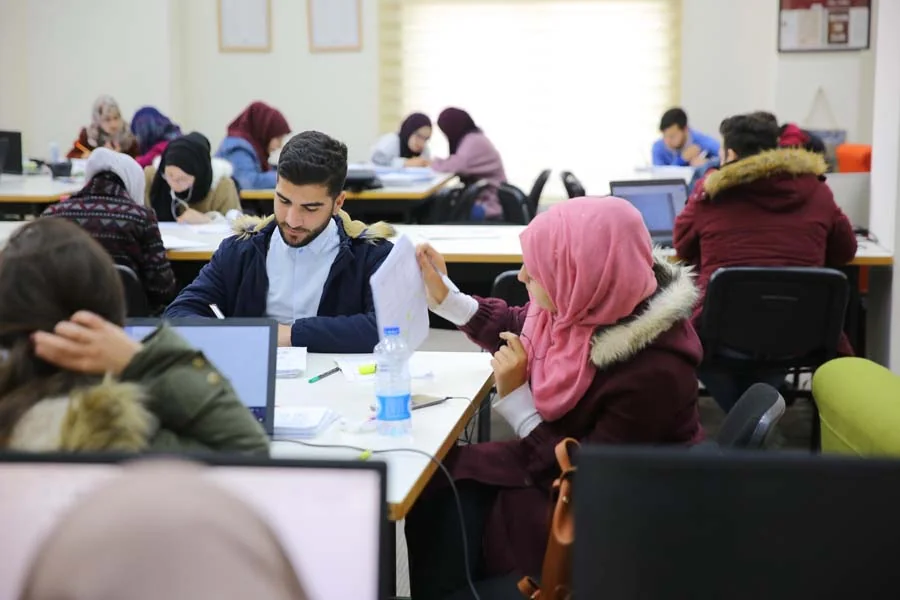
Al-Quds University's strategy for 2024–2030 makes sustainability and social responsibility central to institutional development. It sets objectives involving active learning, critical thought, problem-solving and educational technology, together with the professional development of instructors. Research goals include interdisciplinary collaboration, innovation, postgraduate education and cooperation with institutions elsewhere. Entrepreneurship is addressed through design thinking, student initiatives and startup development. The strategy also covers environmental practices and engagement with the wider community, alongside operational efficiency and financial planning. Its development involved a university questionnaire, external review and stakeholder discussions. An action plan and progress measures support implementation, following endorsement by the Board of Trustees in February 2024. International academic experience, language learning and cultural understanding also appear in the strategic objectives. Global partnership goals include internationalised programmes and wider opportunities for students and staff to gain experience through exchanges and internships.