Visa
About Alvan Ikoku Federal University of Education, Owerri
Teacher education in Owerri
Alvan Ikoku Federal University of Education, Owerri, is based in Imo State, Nigeria. It is named after Alvan Ikoku, the Nigerian educationist and nationalist associated with the advancement of accessible education. The institution’s mission connects teaching, training and research with personal development and positive social change. Its university identity follows an earlier period as Alvan Ikoku Federal College of Education. An official 2026 institutional account records that Stella Ngozi Lemchi served as the college’s final provost before becoming the university’s pioneer substantive vice-chancellor in July 2025. This continuity links the current university with a longer tradition of teacher preparation. Today its educational work encompasses both education-specific qualifications and subject-based study in sciences, arts, vocational fields and other disciplines.
Sources: About the university ↗ · Official account of the pioneer vice-chancellor’s first year ↗
Science and subject teaching
The Faculty of Sciences brings together subject study and the preparation of science educators. Its published offerings include biology, chemistry, physics and mathematics, with education and non-education degree titles appearing within several of these subjects. Integrated Science, Computer Education, Human Kinetics and Health Education also appear in the faculty’s programme list. The faculty describes scientific inquiry, research and collaborative learning as important elements of its purpose. Its teaching interests therefore span the natural sciences alongside areas concerned with physical activity, health and the educational use of computing. The combination reflects the university’s connection between disciplinary knowledge and how that knowledge is taught.
Sources: Faculty of Sciences ↗
Vocational and technology education
The Faculty of Vocational and Technology Education places practical capability, creativity and entrepreneurship within its academic mission. Its programme list includes Technology Education, Industrial Technology, Agriculture, Agricultural Education, Business Education and Home Economics. The faculty describes an approach that combines theoretical knowledge with practical experience and research. Its stated vision emphasises functional vocational and technical education, while its mission identifies creativity, self-reliance and enterprise as developmental aims. This gives vocational learning a defined place within the university’s teacher-education focus: students encounter both occupationally related subjects and education programmes concerned with teaching those subjects to others.
Arts, language and culture
The Faculty of Arts covers language, history, religion and creative expression. Its listed degree areas include Fine and Applied Arts, History and Diplomatic Studies, Igbo, English Studies, Linguistics and education programmes in subjects such as music, French and Christian Religious Studies. Its mission connects teaching and research with languages, performance and the preparation of arts educators and other professionals. The faculty’s stated academic interests include literature, communication and cultural interpretation. These subjects broaden the institution’s teacher-preparation tradition beyond science and technical disciplines, while retaining a connection with educational practice through the education variants of its programmes.
Sources: Faculty of Arts ↗
Undergraduate study
The undergraduate route combines an educational foundation with specialised subject study. The university’s programme description gives a normal structure of four years for students admitted through the Unified Tertiary Matriculation Examination and three years for direct-entry students. It identifies pedagogy, subject knowledge and the integration of technology in education as central emphases. Theory is presented alongside practical experience, with lecture halls, laboratories and libraries forming part of the teaching environment. Applicants are directed to subject-relevant entry qualifications and departmental requirements. The distinction between entry routes is an important feature of the published structure, allowing the university to organise study for students arriving with different educational backgrounds.
Sources: Undergraduate programme ↗
Professional Diploma in Education
The Professional Diploma in Education is directed towards graduates whose earlier qualifications were outside education. Its purpose is to develop pedagogical knowledge and connect subject expertise with classroom practice. The published structure is one academic year divided into two semesters. Educational Psychology, Curriculum Development and Assessment Strategies are identified among the core areas of coursework. Teaching methods, curriculum planning and classroom management are also part of the programme’s stated objectives. Practical teaching and mentorship by educators feature in its description. The university lists a bachelor’s degree or Higher National Diploma among the entry qualifications, positioning the diploma as a further professional-learning route for people who already hold tertiary qualifications.
Sources: Professional Diploma in Education ↗
A holiday-based degree route
The Sandwich Degree Programme offers a different study pattern for teachers and other working professionals. Courses are delivered during holidays so participants can pursue education studies alongside existing work commitments. The programme is intended for practising teachers seeking additional qualifications, people moving into the education sector and those who want to study for an education degree while employed. Its published entry information includes a route for holders of the Nigeria Certificate in Education, Ordinary National Diploma or other relevant qualifications. This holiday-based arrangement adds flexibility to the university’s provision and gives continuing education a place alongside its regular undergraduate route.
Sources: Sandwich Degree Programme ↗
The campus and its learning environment
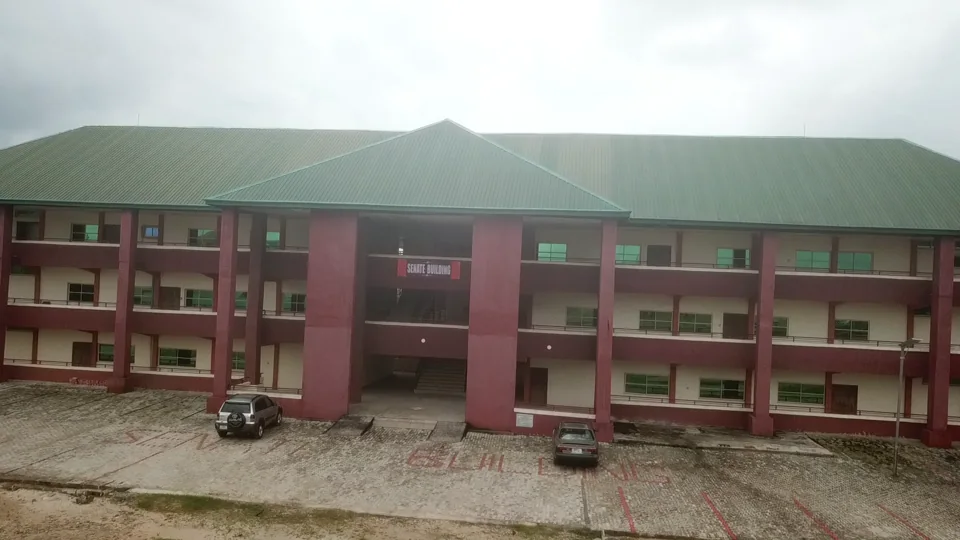
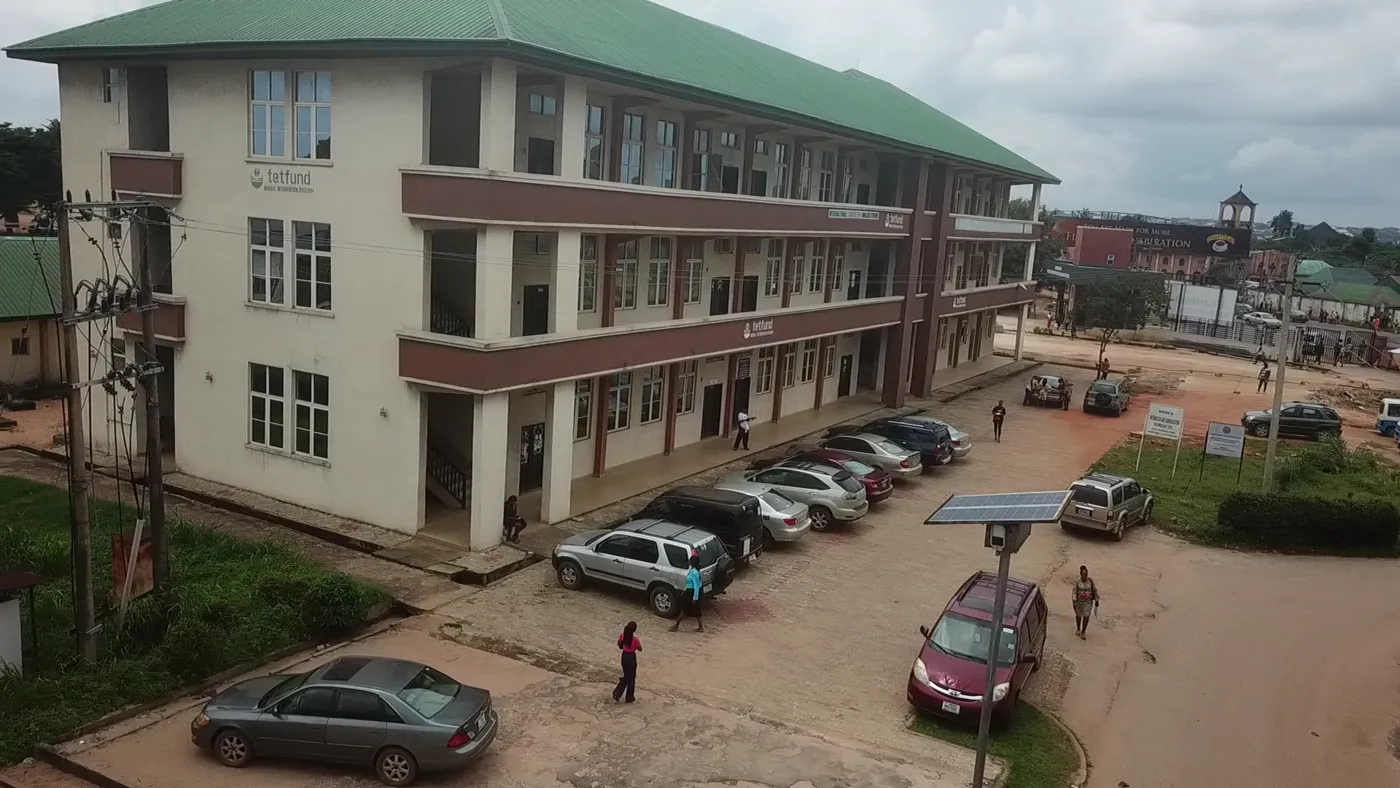
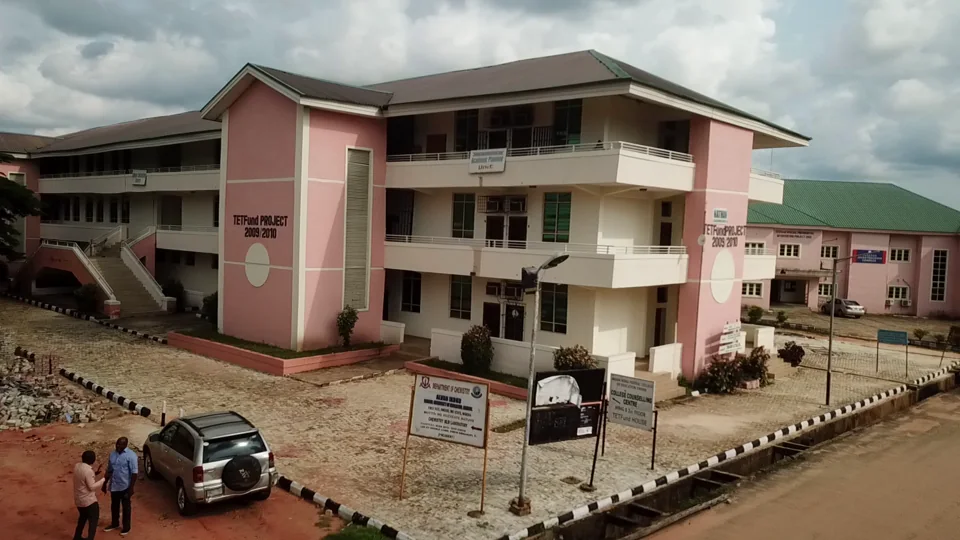
The Owerri campus includes lecture halls, laboratories, libraries and student accommodation. Its official campus description also identifies lawns and green areas used alongside academic and social spaces. Photographs document the chemistry department building and the Senate Building, providing concrete examples of the institution’s physical setting. Beyond formal teaching, the university describes cultural events, seminars, workshops, sport and student organisations as elements of campus life. These activities bring social participation and community engagement into the same environment as subject study. Campus tours, open days and virtual visits are among the ways the university presents its facilities and student setting to prospective students and other visitors.
Sources: University campus ↗