Visa
About Abdullahi Fodio University of Science and Technology
Identity, origins and student support
Abdullahi Fodio University of Science and Technology, Aliero, is a university in Kebbi State, Nigeria. Its official website continues to use the ksusta.edu.ng address associated with its former name, Kebbi State University of Science and Technology, Aliero. The institution's own documents identify the two names as the same university. This continuity matters when reading older academic records and notices: a reference to Kebbi State University does not necessarily describe a different institution.
The university traces its establishment to December 2006 and Kebbi State Law No. 6. Its foundation responded to a shortage of university places for qualified people from the state. Teaching began in January 2008. The official About page also describes services beyond academic departments. Its Student Affairs Division includes guidance and counselling for personal, academic and emotional difficulties, sports administration and postgraduate hostel administration. These responsibilities place student support within the university's administrative structure, alongside the academic schools and the library. They describe institutional functions rather than an assurance that every applicant will receive accommodation or individual financial assistance.
Sources: University About: history and Student Affairs ↗ · Official 2025 admissions notice confirming former institutional name ↗
Scientific and professional academic scope
The university's official academic directory presents a broad science and technology institution. Agriculture encompasses agricultural economics and extension, animal science, crop science, forestry and fisheries, and soil science. Physical science subjects include chemistry, mathematics, statistics, physics and computing-related study. The life sciences cover biochemistry, microbiology, animal and environmental biology, and plant science and biotechnology. This range connects biological and physical science with subjects concerned with food production, natural resources and the environment.
Engineering listings include civil, electrical and electronic, mechanical, and information and communication technology fields. The environmental disciplines include architecture, building, quantity surveying, and urban and regional planning. Education appears through science education, technology education, computer education, and library and information science. The directory also identifies a College of Health Sciences, postgraduate provision, remedial studies and general studies. Medicine and nursing appear among its listed programmes. These are descriptions of the published academic structure, not confirmation that every programme is admitting students in every session. The directory uses several faculty groupings, including Computing; the individual disciplines give a clearer picture of its breadth than a fixed faculty total.
Sources: Academic directory and programmes ↗
Undergraduate entry routes
The admissions page describes two main routes into first-degree study. Applicants entering through the Unified Tertiary Matriculation Examination normally seek admission at the 100 level, while eligible Direct Entry applicants seek entry at the 200 level. The distinction reflects different prior qualifications rather than interchangeable application procedures. The published framework links entry to the appropriate subjects and earlier educational achievement, with requirements varying according to the course being considered.
For the UTME route, the university discusses relevant ordinary-level credit passes, English language, mathematics for science courses, and a suitable examination subject combination. Its Direct Entry information refers to advanced-level study and recognised diploma qualifications alongside ordinary-level requirements. Physical screening is also part of the described process. These published routes explain how the university organises undergraduate admission; session-specific notices remain necessary for deadlines, screening arrangements and any changes in eligibility. An applicant should therefore read the current notice for the intended programme together with the general admissions page. A general description of entry routes cannot establish an individual's admission decision or replace examination-board procedures.
Sources: Undergraduate admissions framework ↗
Responsible use of artificial intelligence
An October 2026 policy sets out the university's approach to artificial intelligence in teaching, learning, research, administration, innovation and community engagement. It takes a human-centred position: AI can support university work, but its use requires safeguards for judgement, integrity, privacy and fairness. The policy covers students, academic and non-teaching staff, researchers, visiting academics, administrators and other people acting for the university. Its scope therefore extends beyond classroom assignments to research and institutional operations.
The document identifies AI literacy, transparent use, protection of sensitive information, and equitable access as institutional objectives. It also addresses fabrication, plagiarism, impersonation and other misconduct involving AI. These concerns place emerging digital tools within the university's existing educational responsibilities rather than treating generated output as automatically reliable. The policy seeks to support useful applications while maintaining the credibility of assessment, research and qualifications. As a policy document, it records expectations and responsibilities; it does not demonstrate that all departments use the same tools or that any particular commercial AI service is endorsed. Its publication nevertheless provides a concrete example of the institution responding to changes in academic practice.
Sources: Policy on responsible use of artificial intelligence, October 2026 ↗
Campus development and institutional activity
The university's October 2025 special bulletin provides a dated view of campus development and administration. It reports a scholarship committee's presentation of findings and recommendations to university leadership on 2 October 2025. The account concerns the management and communication of scholarship payments, including outstanding balances. It should be read as a report about that process rather than a promise of funding to every student. The same bulletin describes support for hostel buildings, solar lighting, inverters, a mini-grid, a recreation centre and maintenance of campus facilities.
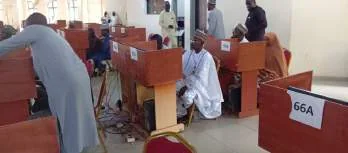
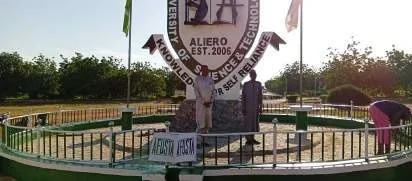
Water supply also appears in the development account, including additional boreholes and maintenance intended to improve supply around hostels. Another report records a computer-based staff promotion exercise held at the E-Library Centre on 7 October 2025. Photographs show participants seated at individual computer stations, while other images document campus grounds and the university monument. Together, these reports illustrate the practical setting behind the academic directory: residential facilities, utilities, administrative systems and digital infrastructure all form part of the institution's operation. The bulletin is a historical snapshot of reported activity in 2025, rather than a current inventory of available rooms, equipment or completed projects.
Sources: AFUSTA Special Bulletin, October 2025 ↗