Visa
About Altamash Institute of Dental Medicine
A dental-education institution in Karachi
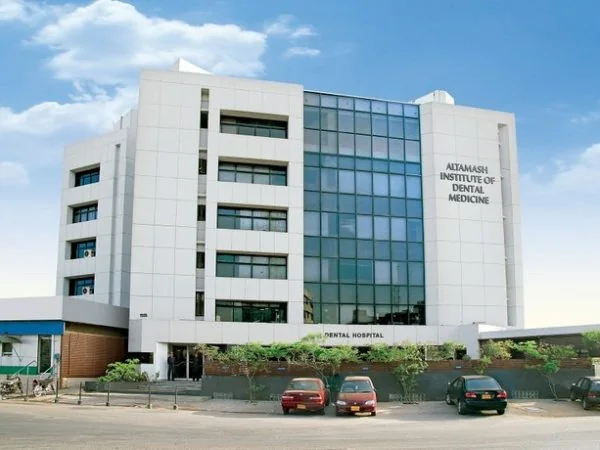
Altamash Institute of Dental Medicine, commonly abbreviated AIDM, is a dental-education institution in Karachi, Sindh. Its published contact address is 2-R Sunset Boulevard in the Defence Housing Authority. Founded by Professor Mohammad Altamash, it combines undergraduate and postgraduate education with research and academic exchange activities. The institute’s account of its purpose emphasises both theoretical study and practical learning, supported by teaching staff and an educational environment intended to encourage students’ personal as well as professional development. Its stated ambition is to develop dental education through changes in teaching methods. Within the wider Altamash organisation, the dental institute has its own academic pages and identity, alongside separately presented nursing, physical therapy and hospital services.
Sources: About Altamash Institute of Dental Medicine ↗
Undergraduate study and learning resources
The institute offers the Bachelor of Dental Surgery programme and identifies Jinnah Sindh Medical University, Karachi, in connection with the degree. Its undergraduate page sets out intended learning outcomes extending beyond subject knowledge. These include using scientific evidence, engaging with research, communicating professionally, working with technology and maintaining self-directed learning. Public-health education and prevention also appear among the programme’s stated educational priorities. The page provides access to study-guide sections for successive years of BDS study. Its first-year resources identify physiology, oral biology, biochemistry and anatomy, together with Islamic studies and ethics. This combination places basic biomedical subjects alongside professional and ethical formation.
Developing teaching and assessment
The Department of Medical Education describes its beginnings in 2017 under the name Dental Education and Research Department. It supports undergraduate and postgraduate training through work on curriculum, teaching, assessment and educational evaluation. Its advisory responsibilities include helping faculty sequence curriculum content and choose teaching and assessment methods that fit programme learning outcomes. Faculty-development workshops and a certificate course in health professions education form part of its stated scope. The department also participates in institutional committees concerned with academic affairs, curriculum, research, examinations and quality enhancement. Alongside this education-focused unit, the institute lists basic-science and dental departments, including anatomy, biochemistry, dental materials, community and preventive dentistry, orthodontics, prosthodontics and periodontology. The organisational structure therefore brings subject teaching together with a department concerned specifically with how education is designed and delivered.
Sources: Departments and the Department of Medical Education ↗
Professional values and scholarly goals
AIDM’s educational goals connect scientific study with professional conduct and continued learning. They call for students to develop familiarity with appropriate scientific resources, understand research principles and participate in scholarly activity. Lifelong learning is a recurring theme, alongside professionalism and ethical responsibility in community settings. The BDS programme objectives similarly place research, reflection, communication and leadership within the institute’s intended educational direction. These objectives describe the qualities the institution seeks to cultivate as students move into professional life. They also explain why research and continuing education appear throughout its academic provision: the institute presents learning as an ongoing responsibility, with evidence and changing professional knowledge informing the development of its educational programmes.
Community engagement as part of education
The institute’s outreach framework distinguishes educational activities from supervised clinical work. It encourages early-stage students to contribute through presentations to schools and community organisations and through the distribution of educational materials. Activities involving clinical care are described separately, with faculty supervision and institutional approval requirements. The community-services page also discusses access-to-care issues and service learning as part of students’ education. A dated example is the November 2017 agreement with Special Olympics and the associated conference involving screening and volunteer training. Another reported initiative is a heatwave relief camp providing drinking water, refreshments and shaded rest areas, supported by staff, house officers and volunteers. Together, these examples show several forms of engagement, from public information and practical assistance to organised professional collaboration.
Quality enhancement and educational priorities
The Quality Enhancement Cell presents educational improvement as an institutional responsibility spanning teaching, research, student learning and staff development. Its published statement also identifies the college’s technical and physical facilities, including its teaching hospital, as areas for continuing attention. A particular emphasis is the movement from a predominantly teacher-centred approach towards education that responds more closely to students’ learning needs. The statement places faculty development and changing teaching methods within that ambition. Read alongside the medical-education department’s curriculum and assessment responsibilities, they describe how AIDM frames its internal work on the design and development of dental education.
Sources: Quality Enhancement Cell ↗
Continuing education and simulation workshops
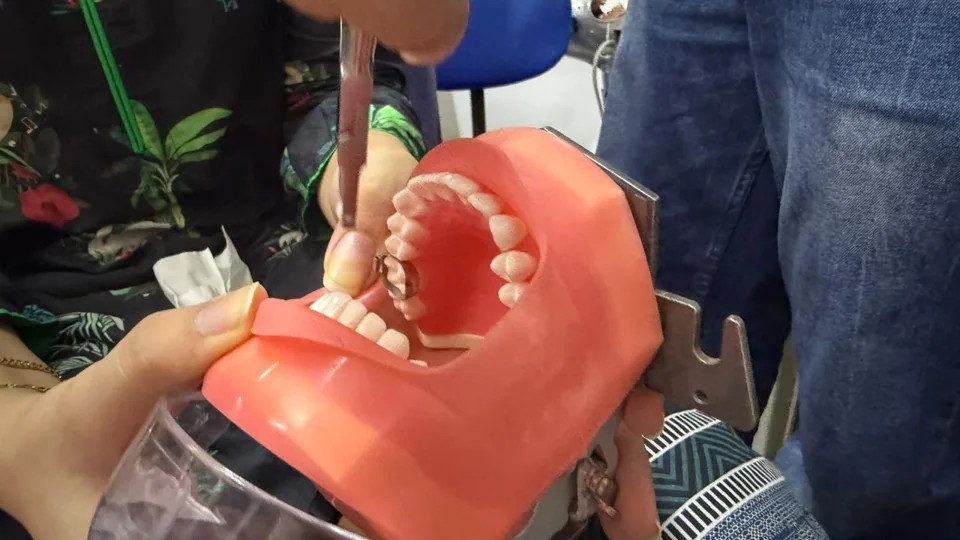
AIDM describes a continuing dental education programme involving conferences, seminars, workshops and study-group sessions across the academic year. Its stated subject areas include orthodontics, prosthodontics, operative dentistry, periodontology, implant dentistry and oral and maxillofacial surgery. Speakers from Pakistan and abroad contribute to these activities. A separate institute report provides a specific example of practical education: an orthodontics workshop for final-year BDS students used phantom heads for simulated learning. Faculty facilitated the session in a dedicated training laboratory. The distinction is visible in the published workshop photograph, which shows a dental model being used for practice. Such simulation activities provide an educational setting for practising subject skills, alongside the lectures and discussions described in the continuing-education programme.
Sources: Continuing dental education ↗ · Orthodontic simulation workshop ↗
A platform for publishing research
The Altamash Journal of Dentistry and Medicine adds a publishing component to the institute’s research environment. Established in 2021, it describes itself as a multidisciplinary, peer-reviewed journal covering dentistry and medicine. The institute’s journal page states that it is published online twice a year and provides links to the journal’s submission information, current issue and earlier issues. Its stated purpose is to make research-based information available across these related disciplines. This gives the institute a scholarly publication channel alongside its teaching programmes, faculty development and continuing-education activities.