Visa
About Alrafidain University College
A Baghdad institution with a broader university identity
Alrafidain University College is the directory name of the Baghdad institution whose official website now presents it as Al-Rafidain University. The university dates its establishment to 23 November 1988. Its stated mission combines subject knowledge and applied education with research, teamwork, independent learning and community partnerships. The main building is on Palestine Street, while other premises serve different parts of its academic activity. Institutional objectives include community service and volunteering, staff development, cooperation with other universities, and improvements to administrative systems and educational infrastructure. These are the university’s stated priorities for its development. The site’s continued use of older college terminology on departmental pages reflects its institutional history alongside its current university branding.
Sources: A Baghdad institution with a broader university identity ↗
Civil engineering and learning through projects
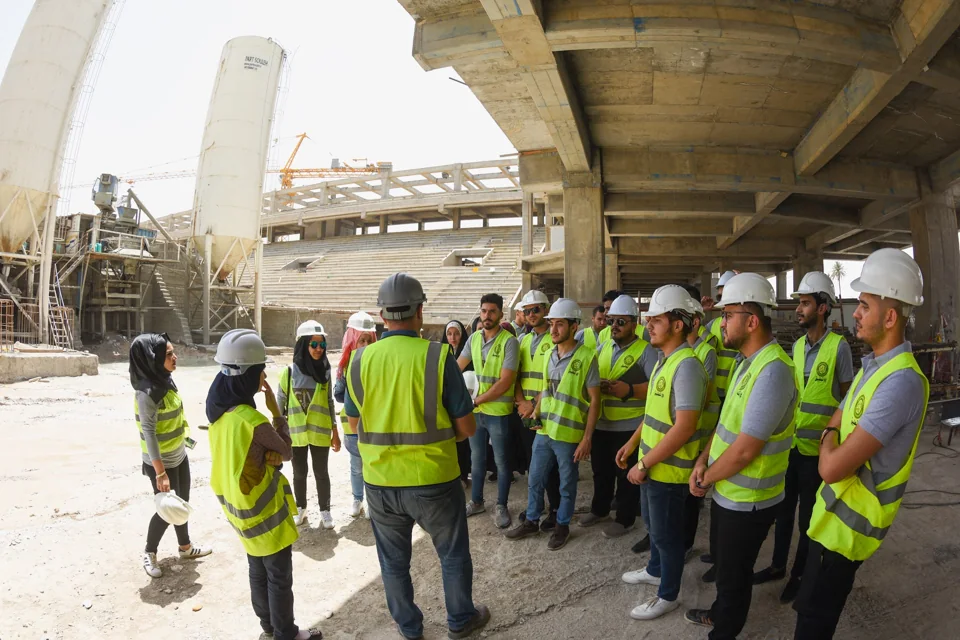
The Civil Engineering Department was established in 2014. Its four-year programme leads to a bachelor’s degree in civil engineering and covers the built environment through structural engineering, construction materials, roads, bridges, dams, water-treatment infrastructure and steel structures. Soil conditions, including weak and gypsum-bearing soils, form another part of the department’s description of its field. The department connects classroom study with practice through construction-site visits, additional lectures and presentations about engineering projects and technologies. Its published learning outcomes include identifying engineering problems, preparing designs within constraints, carrying out measurements and experiments, and interpreting results. Communication, professional responsibility and working effectively in teams also appear in those outcomes. The emphasis therefore extends beyond calculations to explaining decisions and understanding their wider consequences.
Sources: Civil engineering and learning through projects ↗
Business administration and organisational decisions
Business Administration began in the 2003–2004 academic year, with evening study introduced in 2007. The department describes its establishment as part of the institution’s expansion into modern administrative specialisms. Its programme leads to a bachelor’s degree in business administration. The published objectives bring theory and application together, with particular attention to the relationship between education and the public, private and service sectors. Later stages of study include specialisation in areas such as banking management, industrial management and inventory management. Field research and studies of organisational problems are part of its proposed links with industry and services. The department also identifies information technology in educational administration, curriculum updating, and faculty participation in conferences and workshops as elements of its academic development.
Sources: Business administration and organisational decisions ↗
Accounting knowledge and professional ethics
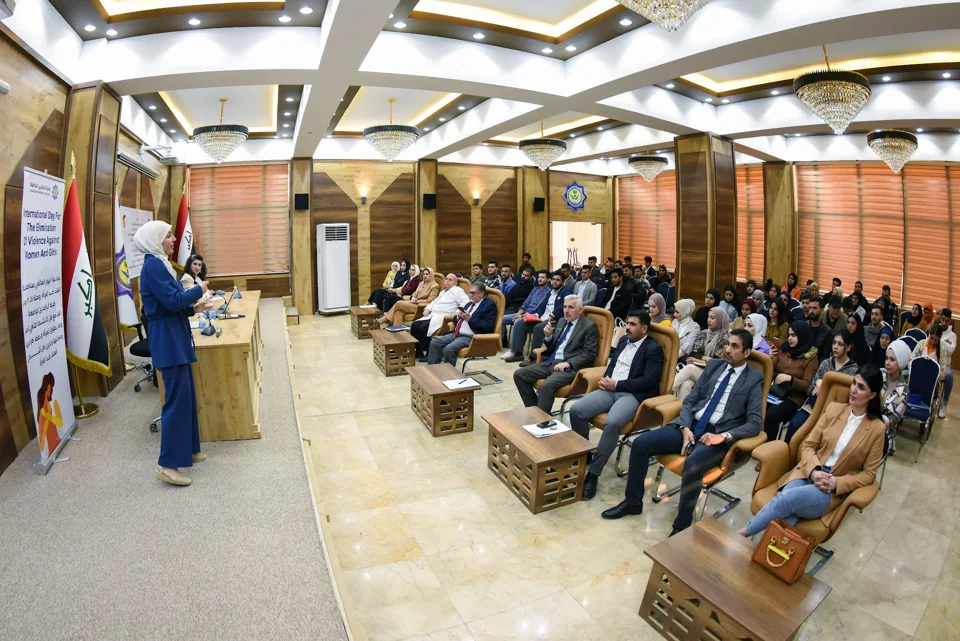
The Accounting Department traces its establishment to the 1998–1999 academic year. It offers a Bachelor of Science in Accounting and describes its educational foundation as both academic and applied. Its objectives include giving students a broad understanding of accounting subjects together with supporting courses. Accounting and auditing ethics receive explicit attention in the department’s mission and objectives, rather than appearing only as an incidental professional consideration. The department also identifies continuing education and courses for people already working in organisations as ways of serving the community. Research, participation in scientific conferences and seminars, and wider community engagement are additional stated activities. Its description places accounting within different organisational settings, including productive and service organisations, while keeping the subject’s specialist knowledge at the centre of the programme.
Computer engineering technologies
The Computer Engineering Technologies Department dates its foundation to the 2005–2006 academic year. Its four-year course addresses computer networks, digital communications, computer electronics, electronic control systems and software systems. The department describes a division into two branches from the third year: computer communications networks engineering and computer electronics engineering. This structure gives students a shared foundation before the later distinction between network-oriented and electronics-oriented study. Its academic aims include technical problem-solving, applied research and links with industrial and service organisations. The engineering faculty’s published mission also emphasises critical thinking, practical skills and professional ethics. Within that framework, the department presents computing as an engineering field that connects physical electronic systems, communications infrastructure and the software used to operate them.
Sources: Computer engineering technologies ↗
Biological sciences and laboratory study
The Biological Sciences Department was established for the 2024–2025 academic year. Its published description specifies a four-year annual study system leading to a bachelor’s degree in biological sciences. Specialist laboratories support the practical side of individual subjects alongside theoretical teaching. The department’s stated objectives give particular weight to accuracy in laboratory work and the reliability of test results. It also identifies the use of departmental laboratories in research by faculty and specialists as part of its scientific contribution. Cooperation with related institutions and departments forms another element of its mission. This description positions laboratory activity as both a teaching resource and a setting for research, with the development of specialist scientific knowledge connecting the two functions.
Technical support behind practical education
The institution’s Centre for Laboratories and Workshops provides a further view of the practical support behind its courses. Its published staff profiles include backgrounds in software engineering, information systems, telecommunications, computing, electrical and electronic engineering, geology and civil engineering. The profiles describe laboratory work in areas including engineering geology, soil mechanics, environmental sanitary engineering, asphalt and traffic. Other entries refer to building materials, concrete and sanitary laboratories, alongside computing and networking expertise. These descriptions illustrate the range of technical disciplines supporting practical education across the institution. The centre is presented separately from the academic department pages, showing how laboratory and workshop personnel contribute to teaching facilities rather than constituting an additional degree programme of their own.