Visa
About Ahl Al Bayt University
Origins in Karbala
Ahl Al Bayt University is a university in Karbala, Iraq. Its institutional history describes an earlier distance-learning initiative intended to serve Iraqis living in different countries. An online university website began operating in January 2000, offering study in fields including administration, law, Arabic literature and Islamic law. The initiative maintained examination offices in several cities outside Iraq.
Following the changes in Iraq in 2003, the university leadership moved to Karbala and sought approval to establish a campus-based institution. The university dates this establishment to 2004. It initially had colleges of law, Islamic law and arts, with jurisprudence and Arabic literature among its early subjects. Additional departments followed, including Quranic sciences, religious tourism, journalism and English. Its history also records the acquisition of land for new buildings in 2007 and the introduction of the College of Pharmacy in 2016.
Educational direction
The university's vision and mission page, updated in February 2026, sets out an educational direction combining academic knowledge, professional preparation and service to society. It identifies critical thinking and digital skills as priorities and discusses the use of modern teaching methods and artificial intelligence in education. These statements describe the university's intentions for its development.
Its strategic objectives include updating academic programmes, supporting applied research and innovation, improving academic and administrative systems, and extending scientific cooperation. Community initiatives and developmental projects also feature in the plan. The university links this agenda to national development and to the preparation of graduates who can continue learning as technologies change. Physical and digital infrastructure, staff development, quality processes and institutional transparency are further areas it identifies for attention.
Sources: University vision, mission and objectives, updated February 2026 ↗
Education and teacher preparation
The College of Education presents a group of programmes centred on teaching and subject-based educational study. Its 2026–2027 programme listing includes Islamic education, art education, mathematics education, English-language education and Arabic-language education. The college's account of its development dates its establishment to the 2024–2025 academic year, initially with three departments and morning study.
The college describes its mission in terms of preparing teaching and administrative personnel and connecting scientific and educational work with values and responsibility towards society. Its objectives include keeping students engaged with developments relevant to their academic subjects and educational preparation. The faculty's reports also record examination activity and an art exhibition and scientific conference involving its mathematics and art education departments. These activities place subject learning alongside opportunities for academic and creative participation.
Sources: College of Education ↗
Engineering subjects and academic aims
The College of Engineering lists two undergraduate pathways for 2026–2027: artificial intelligence engineering and oil and gas engineering. Its departmental structure follows these two areas. This gives engineering study at the university a combination of a computing-oriented field and a field connected with energy resources and their associated technologies.
The college's stated vision concerns engineering education and scientific research, while its mission connects the preparation of engineers with innovation and the needs of society. Its news reports provide examples of academic engagement beyond the programme listings. Among them are seminars introducing students to the Society of Petroleum Engineers and discussing its role in developing student skills. The college also publishes reports of staff research and postgraduate academic achievement. These are presented as individual academic activities within the faculty.
Sources: College of Engineering ↗
Islamic sciences and its subject areas
The College of Islamic Sciences identifies Quranic sciences, Islamic jurisprudence and religious tourism among its areas of study. Its mission combines theoretical and applied knowledge in the humanities with specialised Islamic knowledge. The college describes educational and advisory roles as part of the preparation it intends to provide for its students.
Its objectives include developing specialist teaching and research capacity and studying Islam's civilisation, beliefs and legislation through academic methods. The faculty explicitly refers to moderation, tolerance, dialogue and recognition of others in its approach. Religious tourism forms part of this educational setting alongside Quranic studies and jurisprudence. The faculty's institutional account therefore brings together textual and legal study, educational purposes and a field particularly relevant to the university's location in Karbala.
Sources: College of Islamic Sciences ↗
Law, public understanding and student creativity
The College of Law offers a bachelor's programme in law and describes the spread of legal knowledge as a central part of its mission. Its objectives refer to justice, the rule of law and public understanding of rights and obligations. The college connects legal education with the wider community, including public institutions.
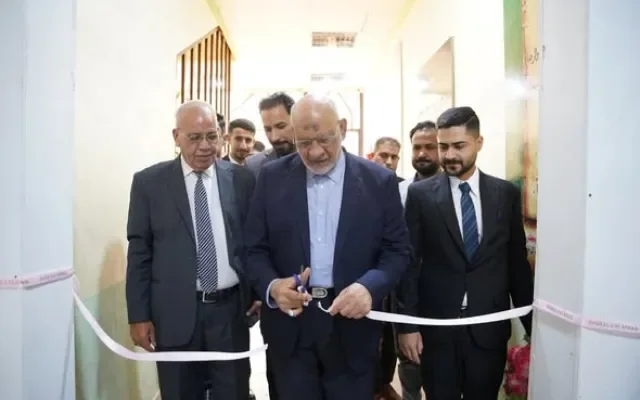
Student activities also include creative work. During the university's twentieth scientific and cultural week in April 2026, the law college opened an art exhibition attended by university representatives, faculty and students. The official report describes student works expressing ideas about justice and law through different artistic approaches. This provides an example of legal themes being explored through visual expression as well as academic discussion, with the exhibition forming part of a larger programme of university cultural activity.
Sources: College of Law ↗ · Law college art exhibition, April 2026 ↗
Libraries and access to specialist material
The university describes a library system comprising a central library, college libraries and electronic library resources. It publishes a catalogue of books available in the central library on its website and identifies continued development of the university library database as a way to assist academic researchers.
College electronic libraries bring together specialist reference books relevant to particular disciplines. The university's library page provides separate links for areas including dentistry, pharmacy, medical and health technologies, law, Islamic sciences and arts. The structure connects shared university resources with subject-specific collections, giving library users routes into materials associated with their own field of study.
Sources: University libraries ↗
Scientific exchange during the cultural week
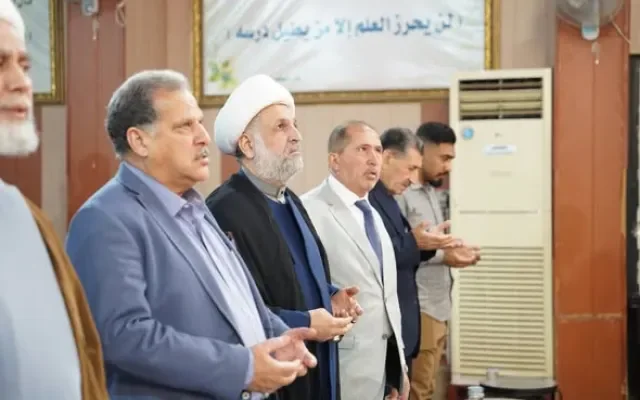
The College of Islamic Sciences held its twentieth annual scientific conference on 13 April 2026 as part of the university's cultural week. The official report was published the following day. The programme included an opening ceremony, a documentary on university scientific activities and contributions from university and college representatives.
Fourteen research papers were presented and discussed by academics from the college and other institutions. The event concluded with recognition for researchers and high-achieving students. This is a specific example of the university's use of its annual cultural programme for scholarly exchange as well as public ceremonies and exhibitions. It also shows participation by researchers from outside the college alongside its own academic community.
Sources: Islamic Sciences twentieth annual conference, April 2026 ↗