Visa
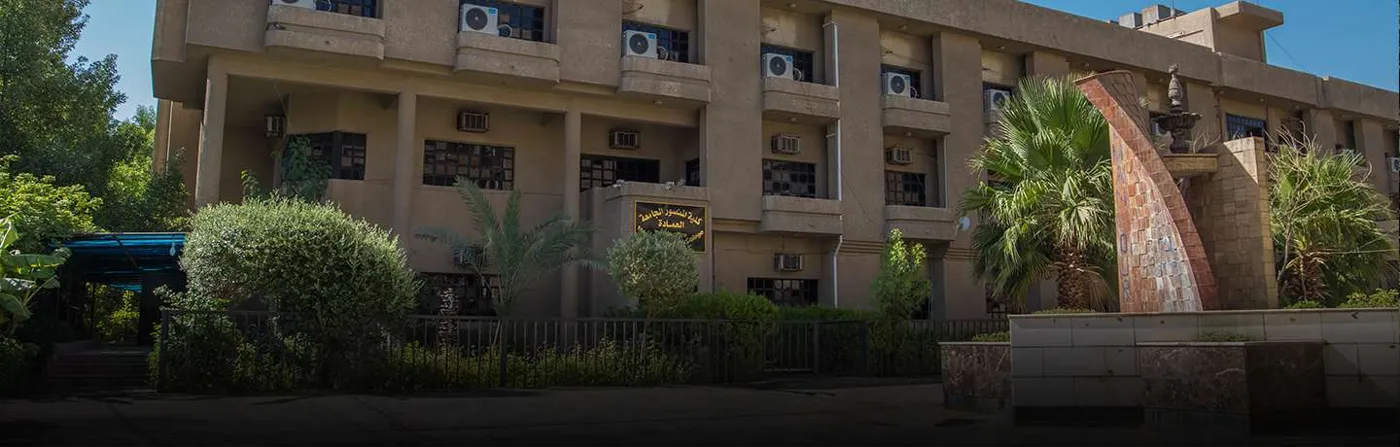

About Al Mansour University College
A Baghdad college established in 1988
Al Mansour University College is a private higher education institution in Baghdad, Iraq. The Iraqi Association for Libraries and Information established the college in 1988, and teaching began on 1 October that year. Its official institutional account describes a public-benefit educational purpose, combining academic knowledge with applied experience and the development of students’ skills. The college’s published address places it in the Karrada area, near Al-Andalus Square.
The institution’s history gives a prominent place to scientific and technological development. It describes revising study plans in response to advances in knowledge, particularly information and communications technology, and building connections with academic institutions outside Iraq. Research dissemination is another strand of this history: the college launched its refereed Al-Mansour journal in 1998. Its institutional account also records conferences organised with Iraqi and Arab scientific and professional organisations, linking the college’s teaching role with the circulation of scholarly work.
Sources: College history ↗
Learning, teamwork and community engagement
The college’s mission brings together higher education, research, training and continued learning for graduates. Its stated values are learning, the quality of university performance, teamwork and academic integration. These ideas also shape a strategic statement organised around the principle that the college serves society.
The objectives call for modern teaching methods and training that develops students’ professional skills. They also include scientific and cultural relationships with universities locally, regionally and internationally. Within the institution, the strategy places emphasis on evaluating academic performance, clarifying job responsibilities and attracting specialist teaching expertise. Beyond the campus, it proposes scientific, social and cultural seminars connected with the development of Iraqi society. The published framework therefore combines educational improvement with external engagement, presenting research and training as activities that support the college’s wider community role.
Computer engineering and technical systems
The Computer Engineering Department describes a four-year Bachelor of Science programme organised into two semesters each year. The curriculum includes compulsory specialist subjects alongside elective courses. Its academic account connects the department’s development with changes in computer hardware and software, giving the programme a focus that spans physical systems and the software used to operate them.
Areas identified in the department description include software, operating systems, electronic design, information-technology applications and networks. It also discusses computer-aided design and manufacturing, microprocessors, automation, control and monitoring systems. These subjects establish the technical range of the programme rather than limiting computer engineering to programming alone. The department presents the scientific foundations of the degree as preparation for further academic study as well as for work involving computer systems in research, industrial and production settings.
Sources: Computer Engineering Department ↗
Civil engineering and the built environment
Civil Engineering is described as a four-year bachelor’s programme covering several connected branches of engineering. The department identifies structural engineering, materials engineering, environmental engineering, construction engineering, geological engineering, water resources, transport and surveying within its teaching remit.
The department’s introduction connects these fields with the construction and maintenance of the built environment and the development of new building materials. Its curriculum is intended to bring the different branches together over the course of the degree. Students therefore encounter a programme concerned with structures, materials, land, water and movement, reflecting the combination of disciplines identified in the official departmental account. Completion of the programme’s requirements leads to the bachelor’s degree in Civil Engineering.
Sources: Civil Engineering Department ↗
English language, literature and translation
The English Language Department offers a four-year course leading to a bachelor’s degree in English. Its description gives equal visibility to language development and literary study. The subjects it identifies include language, phonetics, drama, translation and conversation, creating a combination of spoken communication, textual interpretation and practical language work.
The department also describes using language laboratories to support pronunciation and fluency. This practical component accompanies the study of linguistic and literary material rather than replacing it. The programme’s stated educational aims include developing students’ language and literature skills for activities such as teaching and translation. Its published account presents the range of subjects as preparation for using English across different professional settings.
Sources: English Language Department ↗
Business administration and decision-making
The Business Administration Department provides a four-year programme leading to a bachelor’s degree in Business Administration. Its academic description focuses on management in public bodies and private organisations, with particular attention to information technology and quantitative methods.
The department links contemporary management education with changes in technology and administrative practice. It aims to develop creative thinking and the ability to make reasoned management decisions in response to workplace problems. Information systems and quantitative approaches are presented as tools that contribute to this decision-making process. These themes give the programme a defined emphasis on the methods used to understand organisational problems and choose administrative responses, alongside the broader development of management skills.
Sources: Business Administration Department ↗
Digital media and changing communication
The Digital Media Department explains its creation in relation to the growth of electronic communication. Its introduction points to newspapers moving from print to electronic publishing and to the expanding use of social media. The exchange of information, news and opinions through digital platforms forms the context for the department’s academic focus.
This account places electronic media within a changing communications environment. It emphasises the need for specialist study of media that reaches audiences through online channels and plays a role in public discussion. Digital communication thus provides a distinct subject area alongside the college’s language, business and engineering departments.
Sources: Digital Media Department ↗
The central library and study resources
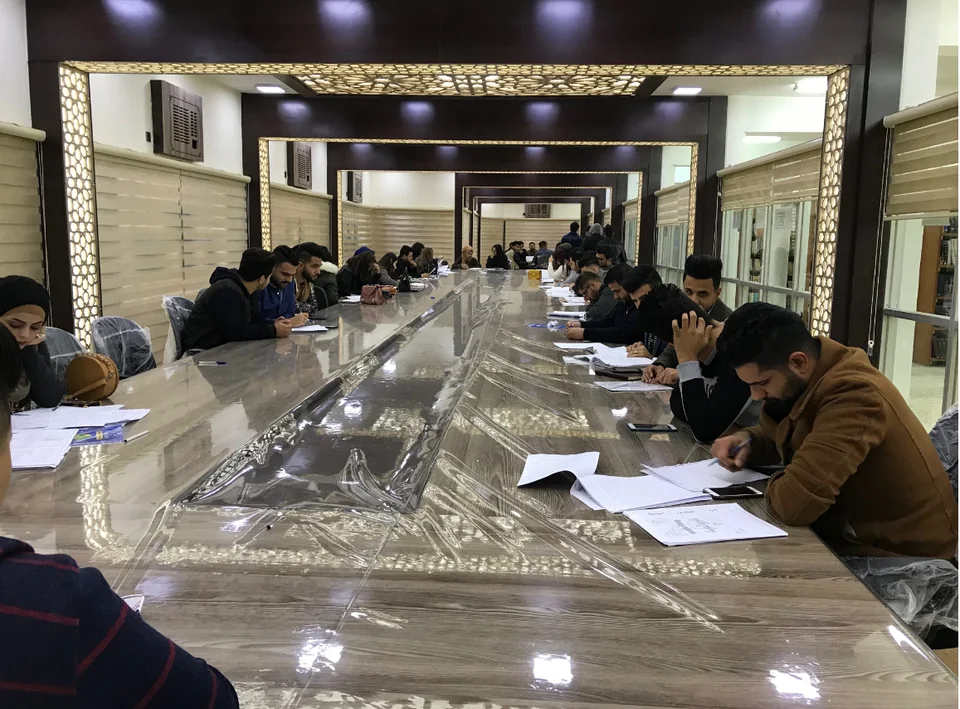
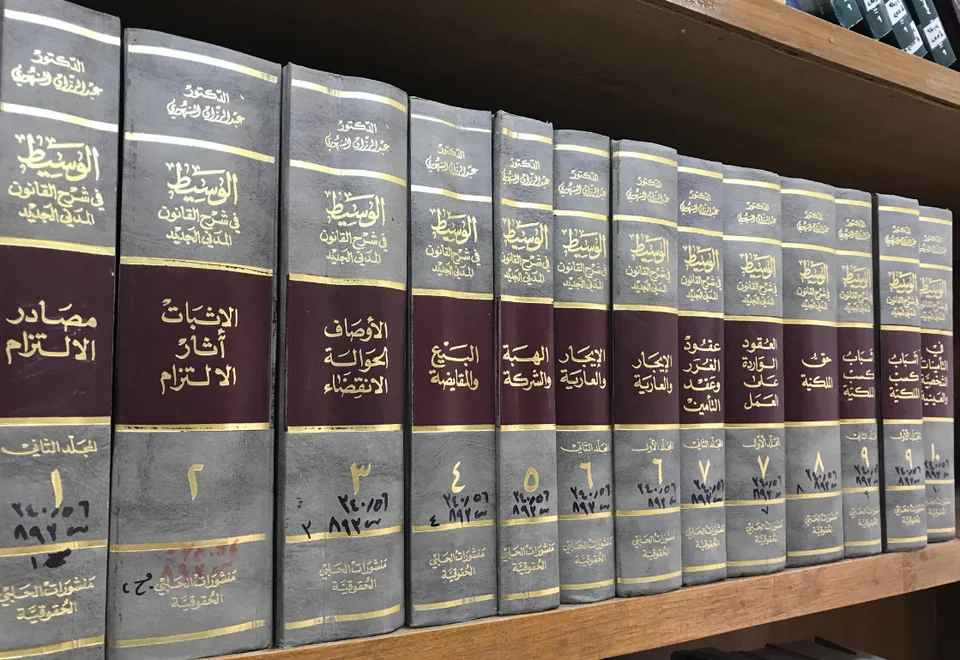
Al-Mansour Central Library brings together printed and electronic books, postgraduate theses and dissertations, journals and educational films. Its published description also lists compact-disc resources, reflecting a collection that extends across several formats. The library website provides routes to its electronic catalogue, digital sources and open-access materials. Official library photographs show shelved reference works and students studying around long shared reading tables, illustrating the library’s place within the college’s learning environment.
Sources: Al-Mansour Central Library ↗