Visa


About Almaarefa University
A private university in Riyadh
Almaarefa University is a private higher education institution in Riyadh, Saudi Arabia. Its educational purpose connects university learning with the development of a knowledge economy and service to society. The institution describes its approach as combining teaching and learning with modern educational technologies, while encouraging scientific work and creativity. Health-related education forms an important part of its identity, alongside engineering, computing and business.
The university’s institutional development has involved changes in both name and academic scope. Its current university identity continues an earlier college organisation rather than marking the beginning of all its teaching activity. Across these stages, its stated purpose has remained linked to preparing graduates who can contribute knowledge and professional skills to national development.
Sources: About the University ↗
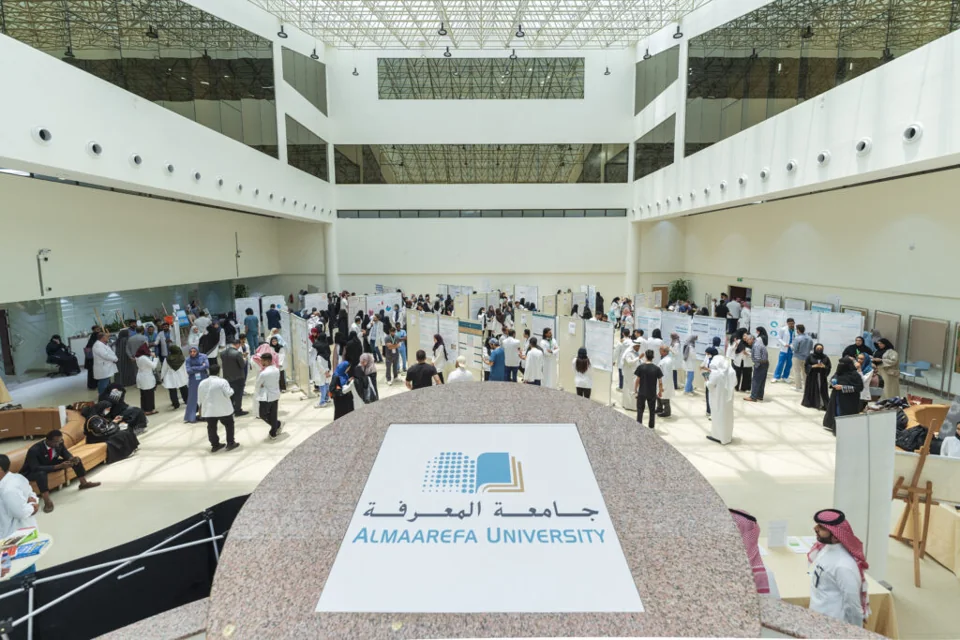
From college to university
The university traces its beginnings to Almaarefa College in 2009. Its historical account describes the initial focus as medical and engineering sciences. In 2014, a restructuring expanded the range of disciplines and the institution became Almaarefa Colleges for Science and Technology. This intermediate stage is part of the history of the present university.
In August 2018, the Saudi Council of Ministers approved its transformation into Almaarefa University. The chronology therefore distinguishes the original college, the later group of science and technology colleges, and the subsequent university. These dates help explain why earlier institutional documents can use a college name while the current website uses the university title.
Sources: University History ↗
Mission and institutional values
Almaarefa’s published mission brings together community development, innovative education, research and support for a sustainable knowledge economy. Its vision links education and scientific research with sustainable development at a regional level. These are institutional aims that guide the university’s description of its academic work.
The university lists seven core values: merit, accountability, ambition, equity, respect, adaptability and focus. Accountability concerns responsibility for decisions and actions, while equity addresses fairness and equal opportunity within the organisation. Respect includes appreciation of diversity, and adaptability concerns responding to change through innovation. The values connect organisational conduct with the broader educational mission rather than describing a particular degree curriculum.
Sources: Vision, Mission and Values ↗
An academic portfolio across several fields
The university’s academic organisation includes colleges of medicine, pharmacy, medical sciences, engineering and computer science, and business administration. Its undergraduate listings span medicine and surgery, pharmacy, nursing, respiratory care, emergency medical services, anaesthesia technology and health information systems. Computing and engineering offerings include computer science, information systems and industrial engineering.
The business portfolio lists business analytics and artificial intelligence, operations and supply chain management, accounting and finance. Postgraduate offerings displayed by the university include clinical pharmacy, cybersecurity, and emergency and disaster nursing. This combination places professional health education alongside technical and organisational subjects. The institution also provides electronic access points for academic administration, electronic learning and its digital library.
Pharmacy education
The College of Pharmacy describes a Doctor of Pharmacy programme supported by scientific teaching in classrooms and laboratories. Its dean’s account emphasises professional conduct, scientific activity, creativity and research within pharmaceutical education. Students are directed to programme information, college objectives and the study plan as parts of understanding the course of study.
The published outline begins with preparatory studies in science, general subjects and English. The college’s website also identifies a Master of Clinical Pharmacy programme as part of its portfolio. At college level, the relationship between teaching facilities, scientific coursework and research is central to the stated educational approach. Its description gives pharmacy a distinct academic home within the wider university.
Sources: College of Pharmacy ↗
Engineering and computer science
The College of Engineering and Computer Science contains departments of industrial engineering, computer science and information systems. Its educational approach links technical knowledge with practical application. The college discusses digital transformation, artificial intelligence, cybersecurity, data science and software engineering as important contexts for developing its academic work.
The college also stresses analytical thinking, problem solving, teamwork, professional communication and continuing learning. Collaboration with training organisations and industrial and technical partners forms part of its stated approach to programme and curriculum development. Research and applied work are presented alongside classroom teaching, with the aim of connecting engineering and computing education to practical problems and sustainable development.
Sources: College of Engineering and Computer Science ↗
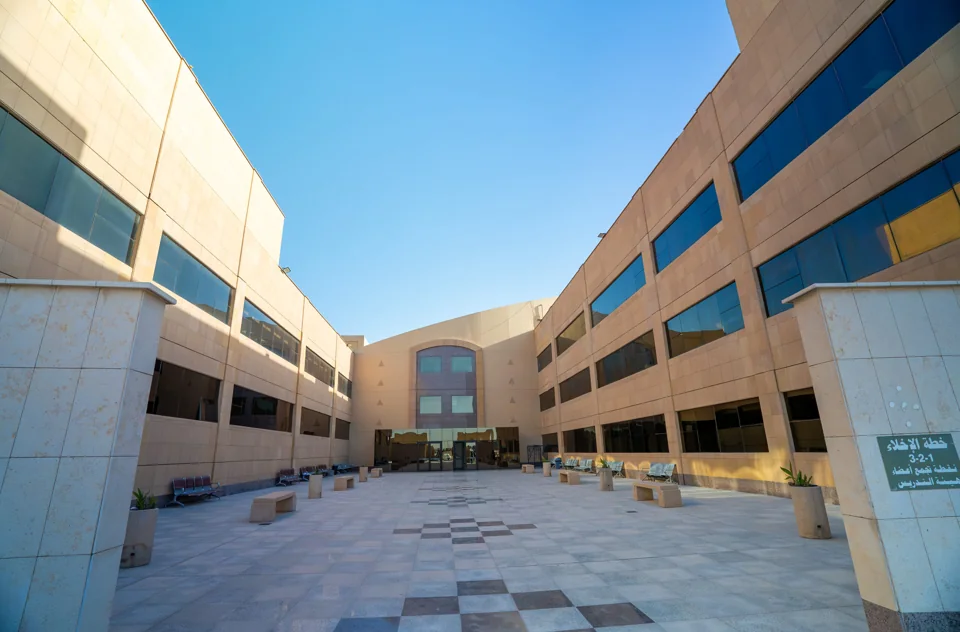
Industrial engineering
The industrial engineering programme combines mathematics, physics and computing with the study of production and service systems. Four areas receive particular attention: manufacturing systems, industrial process systems, human factors, and quality, safety and maintenance systems. This gives the subject a scope extending from technical processes to the people and organisational systems involved in production.
The published study plan includes a general preparatory year followed by college and specialist requirements. Preparatory subjects include English, mathematics, computing skills, chemistry, physics, Islamic studies and Arabic language skills. Later study incorporates core industrial engineering courses, a graduation project and practical summer training. The project and training components provide opportunities to bring together knowledge developed across the programme.
Sources: Industrial Engineering ↗
Information systems
The Information Systems programme concentrates on collecting, storing and transforming data into useful information within organisations. Its description distinguishes this emphasis from studying computing technology in isolation: students consider which technologies can address an organisation’s business problems and how systems can be developed to meet those needs.
Areas of study include programming, systems analysis and design, systems development, project management, database systems, information security, business administration, and information systems strategy and management. The programme also discusses technical support, integrating security solutions and electronic commerce. Its academic focus sits at the intersection of computing and business, combining technical understanding with attention to organisational requirements and the management of information resources.
Sources: Information Systems ↗