Visa
About Alliance College of Australia
A Canberra theological college and its successor
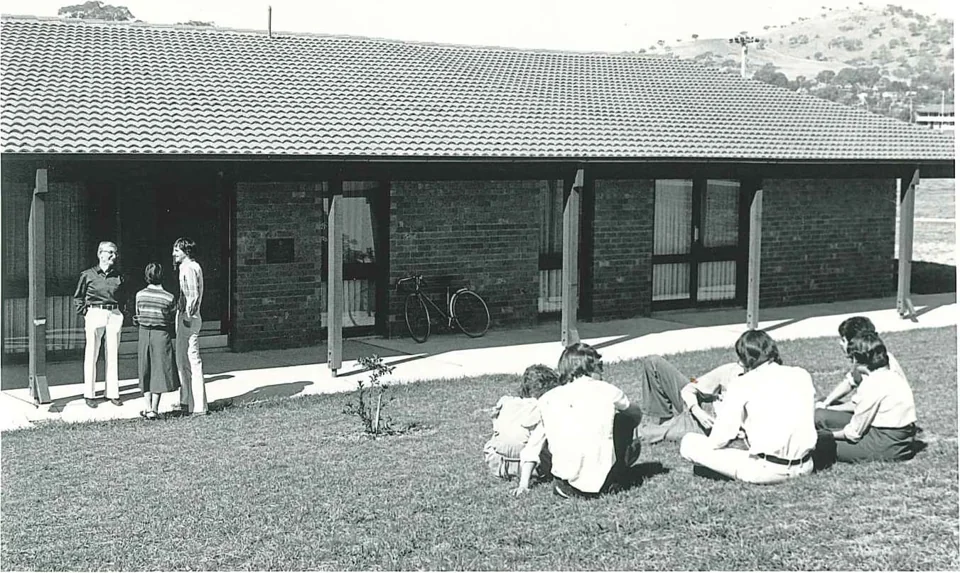
Alliance College of Australia belongs to the history of Christian theological education in Canberra. Its earlier names included Alliance College of Theology and Canberra College of Theology. The Christian and Missionary Alliance established the theological college in 1970 to prepare people for local church ministry and mission work. Extension teaching preceded a dedicated Canberra college center in 1974 and permanent premises in Waramanga in 1977.
A review in 2006 redirected its educational model toward formal qualifications alongside leadership development and local church teaching centers. Partnership with the Australian College of Ministries, known as ACOM, later expanded to higher education. The Alliance became a formal ACOM member in 2016, and the college transitioned into the Alliance Institute for Mission identity in 2017. Its continuing educational work is therefore described through that successor relationship.
Sources: Alliance College of Theology ↗
The Alliance context and local beginnings
The college developed within the Christian and Missionary Alliance of Australia, a Christian movement with an emphasis on local churches and overseas mission. The denomination's own history links theological education to the distinctive doctrinal and practical preparation it wanted for its workers. Reverend John Harvey led the initial theological education by extension work, which reached students beyond a single classroom.
Full-time study began in rented premises in Fyshwick, Canberra, in 1974. The move into the Alliance's own Waramanga building followed in 1977. This history explains why Canberra and Waramanga are central to the college's identity even though its later educational partnerships extend beyond the Australian Capital Territory. The denomination also records Russell Warnken's appointment as principal of Canberra College of Theology in 1995, preserving a direct connection between that historical name and the Alliance's training activity.
Sources: The Christian and Missionary Alliance of Australia ↗
A place within a broader educational partnership
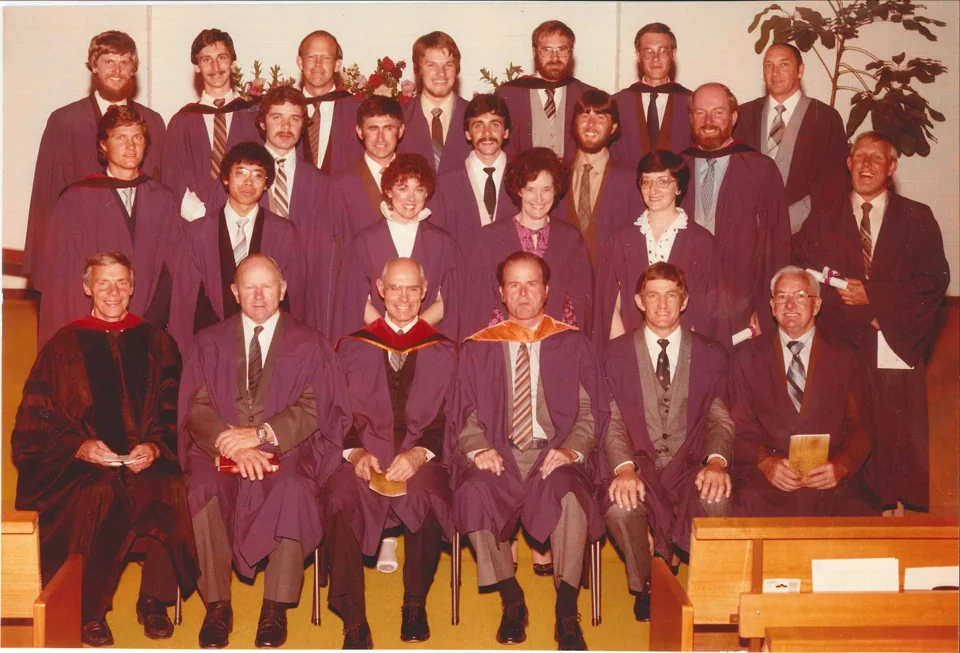
ACOM identifies the Canberra Alliance college as one of four historical college traditions that contributed to its present educational community. The others are the Churches of Christ theological college in New South Wales, Kenmore Christian College in Brisbane, and Stirling Theological College in Melbourne. These histories came together at different stages rather than representing one institution founded at a single moment.
The Alliance's participation in 2016 brought a particular focus on intercultural engagement and mission training. ACOM's broader teaching model combines distance study with selected in-person and online learning experiences, spiritual formation groups, and facilitated units. Its history describes staff and facilitators working across Australia and partnerships with other training organizations. This national framework provides the setting for the Alliance educational tradition's continuation, while the former college's Canberra origins remain a distinct part of the story.
Sources: History ↗
The Alliance Institute for Mission today
The Alliance Institute for Mission is now presented among ACOM's schools and institutes. Its specific focus is preparation for cross-cultural ministry, including both shorter periods of service and longer-term intercultural work. This gives the successor a defined educational purpose within the wider college.
ACOM lists two mission-focused graduate courses through the Institute: the Graduate Certificate in Intercultural Ministry and the Master of Intercultural Ministry. Their current online delivery differs from the former Canberra college's early residential and full-time history. The Christian and Missionary Alliance contributes its own experience of local and overseas mission to the Institute's educational work.
Sources: Alliance Institute for Mission ↗
Graduate certificate study
The Graduate Certificate in Intercultural Ministry is designed for people who already hold a tertiary qualification in a field outside theology and want specialist study connected with intercultural ministry. The published course comprises four units totaling 36 credit points, with indicative completion periods of half a year full time or two years part time. Its delivery is online through ACOM and the Alliance Institute for Mission.
The course plan combines Scripture in community and mission, an introduction to intercultural mission, and spiritual preparation for intercultural ministry. Another component offers study of living faiths or ministry in Muslim contexts. The educational emphasis includes examining intercultural information, reflecting on complex situations, and communicating ideas to different audiences. ACOM also identifies progression from this certificate to the master's course. These details describe the successor Institute's present curriculum rather than a historical qualification issued independently by the former Canberra college.
The master’s curriculum and learning process
The Master of Intercultural Ministry offers a longer specialist route for cross-cultural ministry education. Its published structure is eight units and 72 credit points, with indicative durations of one year full time or four years part time. The course is listed under the Alliance Institute for Mission and delivered online.
Subjects include missiological hermeneutics, anthropology for Christian mission, intercultural communication, biblical theology of mission, spiritual preparation, and mission fieldwork. A capstone brings a further element of focused study. Elective choices include living faiths, global community development, and team ministry skills. ACOM's learning arrangements include Moodle-based materials and assessments, scheduled facilitated learning events, and support from a Student Engagement Manager. Its course description connects relevant mission and pastoral units with supervised vocational placement, linking academic work, local practice, and reflection within the student's setting.
Sources: Master of Intercultural Ministry ↗
The historical institutional name
The Australian Business Register records Alliance College of Australia as an entity associated with the Australian Capital Territory postcode 2611. Its historical trading names include Canberra College of Theology Chinese Program and a related Perth centre. The recorded ABN was cancelled from December 31, 2017.
This administrative record complements the educational history: the old college name should be understood within its institutional transition, while current Institute courses are presented through ACOM. The cancellation date concerns that registered entity and is not a statement that the wider Alliance's theological teaching ceased.
Sources: Australian Business Register: Alliance College of Australia ↗