Visa


About ACAP University College
From applied psychology to ACAP University College
ACAP University College began in Sydney in 1983 as the Australian College of Applied Psychology. Its institutional history describes a small upstairs office on Broadway where founder Cliff Moore offered short diplomas in counselling and psychotherapy. The original aim was to make applied psychology available to a wider public through practical, experiential education. That emphasis on understanding people remains an organizing theme of the institution.
The college’s history records expansion into human resources, performance psychology, management and leadership during the early 2000s. Psychology and social work subsequently became part of its educational provision. It adopted the Australian College of Applied Professions name in 2021 to reflect work beyond its original field. In 2024 it became a University College and rebranded as ACAP University College in November of that year. The present name therefore follows several stages of institutional development while retaining the familiar ACAP identity.
Sources: The ACAP story ↗
Study areas and an applied approach
ACAP’s stated approach connects the study of human behaviour with professional education. Its institutional account identifies psychology, counselling, social work and criminology among its undergraduate study areas, alongside postgraduate provision in practical legal training, coaching and business administration. These offerings place helping professions, organizational work and law-related preparation within the same institution.
The About page describes integrity, equity and social justice as values informing the organization’s conduct and its educational philosophy. Its applied model emphasizes the connection between learning and professional contexts. The different courses retain their own requirements and structures, while the shared institutional theme concerns human relationships and the use of knowledge in practice. This gives the college a recognizable focus across disciplines that lead into quite different working environments.
Sources: The ACAP story ↗ · About ACAP ↗
Learning through supervised placements
Work Integrated Learning connects selected ACAP courses with practical experience in workplaces and community settings. The institution uses terms including placement, field education and professional experience for this form of learning. Students apply ideas encountered in their academic work while developing practical capabilities under supervision. Placement arrangements are linked to the requirements of the particular course and discipline.
The published placement information identifies settings that can include counselling services, schools, community organizations, health and human services, coaching environments, legal practices and corporate workplaces. Supervised experience is intended to help students understand professional environments, learn from practitioners and develop working relationships. The institution also invites organizations to become placement partners and publishes information for prospective hosts. This creates a connection between the taught programme and organizations able to provide an appropriate practical setting, with course and industry standards shaping the placement experience.
Sources: Work Integrated Learning ↗
Student engagement and learning support
ACAP provides a Student Engagement Team at each campus as a principal contact for administrative questions during study. Educators remain the recommended point of contact for academic questions about a student’s work. The institution’s Learning Hub brings together online resources, webinars, advisers, study-skills assistance and library resources. Its published description also addresses managing study alongside disabilities, health conditions and caring responsibilities.
Other support includes short-term confidential counselling and social work services for students. These can address study-related or personal concerns and practical welfare matters. Careers and employability provision includes individual coaching, an employability toolkit, networking strategies, pre-placement support and online material. The IT helpdesk supplies guides for the student portal, assessments and other systems. Together these services cover several distinct parts of student life: academic development, administration, personal support, technology and preparation for professional settings.
Sources: Student support services ↗
Sydney and Melbourne learning environments
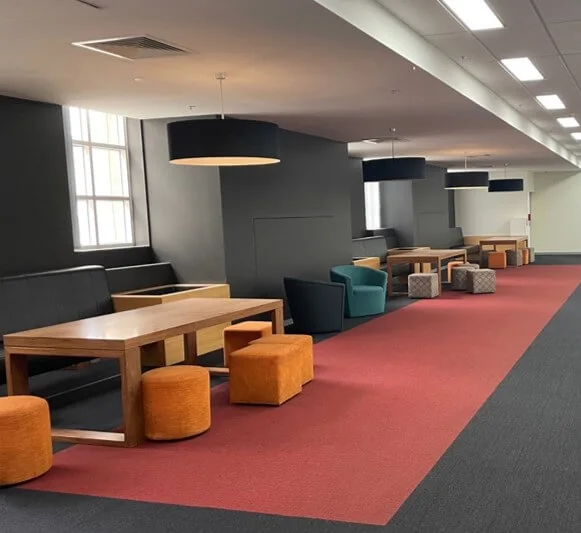
The Sydney campus is at 255 Elizabeth Street, opposite Hyde Park in the central business district. Its official campus description identifies library and study areas, student lounges, kitchen facilities and support teams. The location is presented as close to public transport. Student events and social activities form part of the campus experience alongside formal learning.
In Melbourne, the published address is Level 3 of the Kmart Centre at 222 Bourke Street. The campus page describes a contemporary library designed as a learning hub and multiple breakout spaces, including lounges and study areas with charging points. Student Engagement and Learning Support teams are based on site. Both campus descriptions emphasize facilities for studying and spending time between classes, giving students places to work independently and meet others within a city-centre setting.
Sources: Sydney campus ↗ · Melbourne campus ↗
Scholarship and the development of teaching
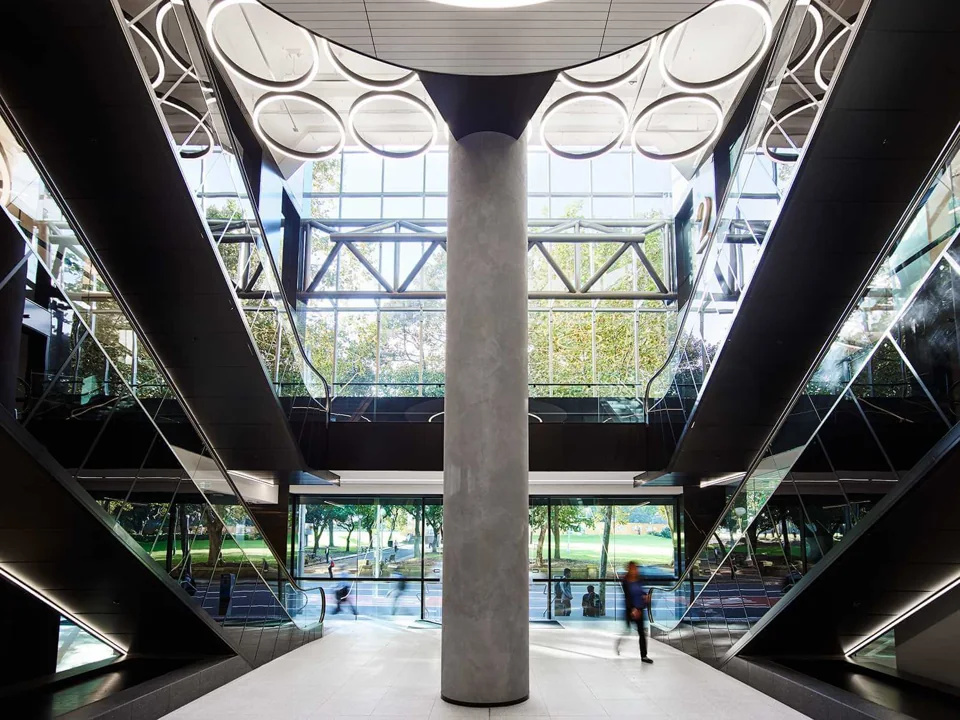
ACAP’s scholarship framework uses Ernest Boyer’s four categories: discovery, integration, application, and teaching and learning. This recognizes original research, synthesis across fields, the application of disciplinary expertise, and the public sharing and evaluation of educational practice. The institution also emphasizes engagement with social, civic and ethical questions.
Permanent academic teachers are expected to undertake scholarly activity that informs teaching, encourages enquiry and reflection, develops professional capability and supports dialogue with colleagues and professional communities. The Scholarly Activity Framework is integrated with annual performance development planning, with staff maintaining evidence of their activity. The published model recognizes contributions ranging from peer-reviewed research and professional standards work to literature reviews, conference presentations and collaborative efforts to remain informed about developments in a field. Scholarship is consequently connected with both disciplinary knowledge and the continuing improvement of education.
Sources: Scholarship and capability ↗