Visa

About Allama Iqbal Open University
Open education from Islamabad
Allama Iqbal Open University is based in sector H-8, Islamabad, Pakistan, and was established in May 1974 under Act XXXIX of Parliament. It initially carried the name People's Open University and was renamed in 1977 to honour Allama Muhammad Iqbal during the centenary of his birth. Its founding purpose was to extend education to people unable to leave their homes or employment for full-time study. That purpose continues to shape its distance-learning model, which combines study materials with tutorials, workshops and communication technologies. The university operates Spring and Autumn semesters and describes provision ranging from school-level qualifications to undergraduate and advanced research study.
Sources: University history and educational model ↗
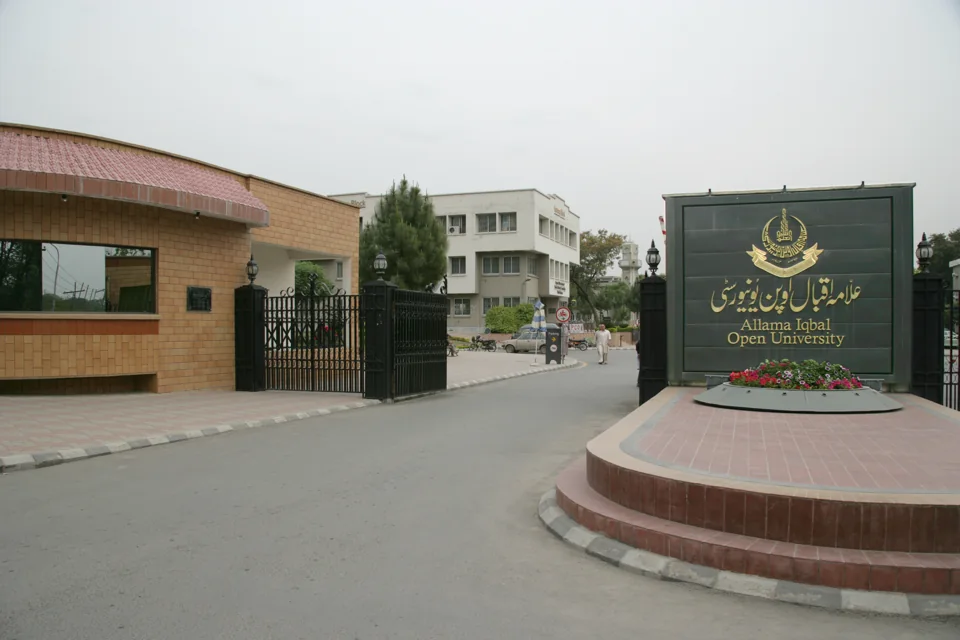
Regional support for distance learners
The Directorate of Regional Services coordinates the university's network outside the Islamabad campus. Its responsibilities connect regional offices with academic departments, tutors and local educational authorities. Regional support includes organising tutorials, arranging workshops, allocating students to tutors and helping to coordinate examinations. The directorate also describes counselling, programme information and the handling of student enquiries and complaints. Its historical account dates the regional network's beginnings to 1976, with early offices in Multan, Quetta and Karachi. Digital services now form part of that support, including tutor registration, the AAGHI learning management system, online enrolment and video-conferencing facilities. Regional campuses also provide study spaces, computer facilities and libraries.
Sources: Regional Services ↗
Preparing courses for independent study
Academic Planning and Course Production coordinates the work needed to turn an academic course into usable learning material. The office began in 1979 as the Course Progress Coordinating Office and was upgraded and renamed in 1986. It schedules writing, reviewing, editing and printing in collaboration with teaching departments, while coordinating media production alongside printed materials. Its duties include course codes, coordinator records and orders for printing or reprinting study resources. An editing cell checks language, explains technical terms and reviews the arrangement of exercises, paragraphs and tables. Revision meetings and production schedules connect academic decisions with the preparation of books, study guides and assignments for each semester.
Broadcasting and educational media
The Institute of Educational Technology produces audiovisual resources for the university's distance-taught courses. Its published description includes television and radio programmes as well as non-broadcast materials for individual study and small-group teaching. Programme producers work with course teams, while designers, illustrators, cartographers, calligraphers and photographers contribute the visual elements. An engineering department operates television and radio studio equipment and supports audiovisual systems on the main campus and in the regional network. An archive keeps classified master copies for duplication and reuse. This organisation places media production within course development, linking the academic content students study with the technical work required to deliver it in different formats.
Library resources for learning and research
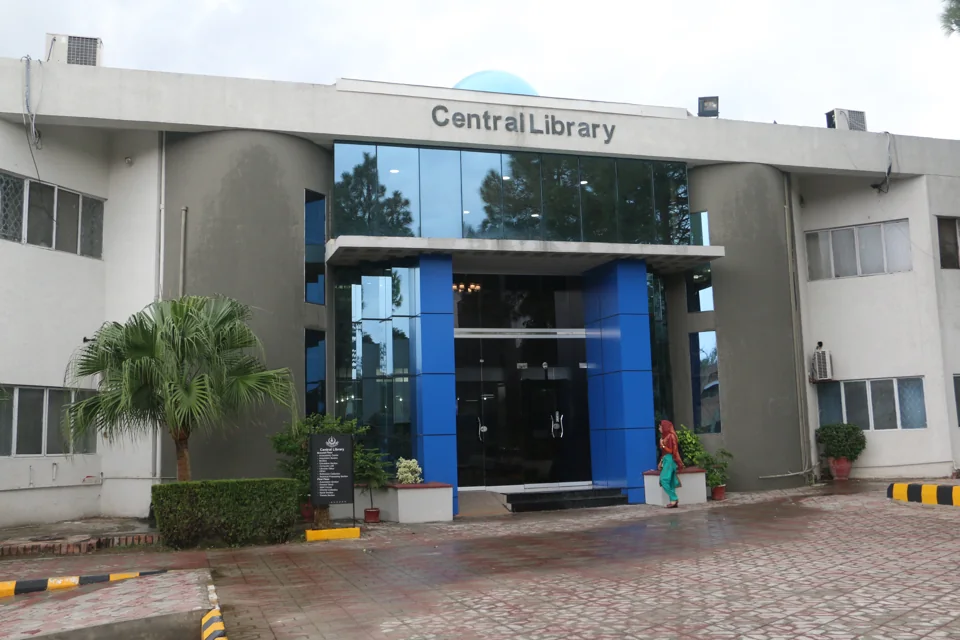
The Central Library supports both research and the preparation of teaching materials. Students attending campus workshops and seminars can also use its facilities. Its collections include printed and non-print resources, periodicals and theses, serving readers from the university and researchers from outside it. The South Asian Distance Education Resource Center adds audiovisual and other specialised materials related to distance learning. The library also describes internet access and facilities for using audiovisual equipment. Its role therefore extends across several parts of the university's work: supporting faculty who develop courses, providing resources for researchers and assisting students whose programmes bring them to the central campus.
Sources: Central Library ↗
Teacher education and educational research
The Faculty of Education was established in 1984, developing from an Institute of Education created in 1976. Its departmental structure reflects the range of work involved in teaching and educational organisation. Published units include elementary and secondary teacher education, science education, special education, early childhood education and care, and educational planning, policy studies and leadership. Distance, non-formal and continuing education is another named field. The faculty page also identifies centres concerned with social reconstruction and lifelong learning. These areas place preparation for classroom teaching alongside the study of educational systems, inclusion and learning beyond conventional school settings, reflecting the university's broader interest in extending educational participation.
Sources: Faculty of Education ↗
Science and applied academic fields
The Faculty of Science dates its establishment to 1982. Its published departmental directory includes chemistry, biology, mathematics, physics, statistics and computer science. Applied fields include agricultural sciences, environmental sciences, engineering and technology, and nutritional sciences and environmental design. The faculty describes development from undergraduate and functional courses toward a broader range of advanced scientific and professional study. Its subject organisation gives natural science, quantitative work and technology distinct places within the university. Agriculture, nutrition and environmental study also connect scientific teaching with practical fields relevant to communities and livelihoods, complementing the university's established provision in education, humanities and social sciences.
Sources: Faculty of Science ↗
Research coordination and knowledge exchange
The Office of Research, Innovation and Commercialization was established in 2015. Its stated role is to connect university research with educational, social, economic and commercial sectors. The office describes support for a research culture involving both faculty and students, with attention to innovation, entrepreneurship and university–industry relationships. Dissemination through journals, conferences, seminars and training is included in its remit. Applied research and technology transfer appear among its development objectives. This provides an organisational framework for moving between research activity and engagement with users of knowledge, while linking research more closely with teaching across the university's academic fields.