Visa

About Allama Iqbal Medical College
From Lahore Medical College to AIMC
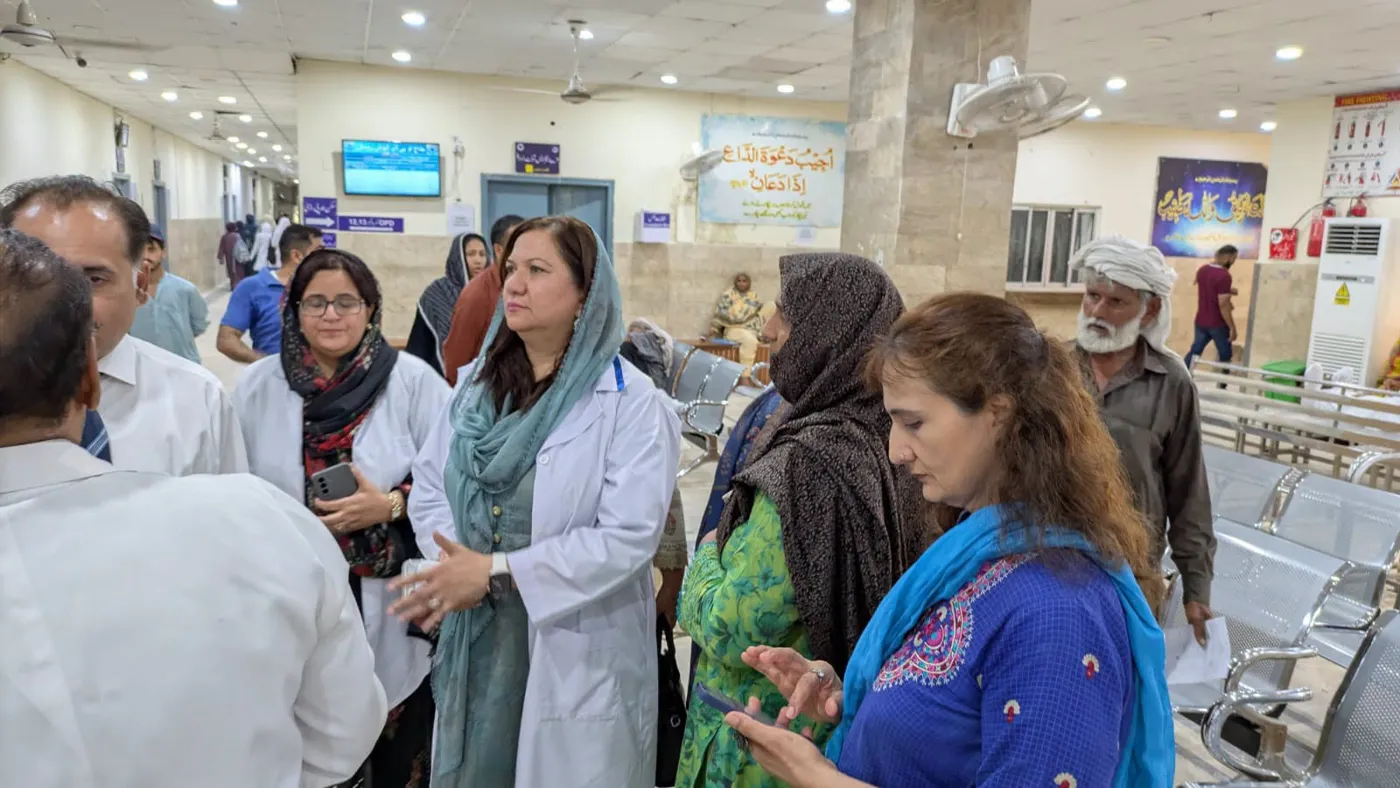
Allama Iqbal Medical College is a medical teaching institution in Lahore, Punjab, Pakistan. It was established as Lahore Medical College on 2 May 1975, with its first students beginning classes that August. The college adopted the name Allama Iqbal Medical College two years later, commemorating the centenary of the philosopher and poet. Its early teaching took place in borrowed premises at the Postgraduate Medical Institute.
The permanent college complex developed during the following decade and was inaugurated in May 1989. The college moved to its present campus in 1990. Services Hospital had initially been associated with the institution; Jinnah Hospital was subsequently developed as its dedicated teaching hospital, with outpatient services beginning in 1994. This history connects the college’s academic development with the growth of its teaching-hospital facilities.
Anatomy and the foundations of medical study
The Department of Anatomy teaches students in the early years of MBBS and contributes to teaching in physiotherapy, medical laboratory technology and nursing. Its subject areas include general, microscopic, developmental and gross anatomy, together with neuroanatomy. The department describes an integrated curriculum delivered through lectures, demonstrations, group discussions, dissection and microscopic study of tissues.
Learning activities extend beyond formal lectures. The department describes drawing and labelling anatomical structures, practical identification exercises, peer teaching, small-group work and self-directed study. Its histology laboratories support microscopic anatomy, while models and museum resources provide additional ways to study structures. World Anatomy Day activities include quizzes, model-making and poster competitions. These activities combine scientific observation with opportunities for students to explain and represent what they learn.
Sources: Department of Anatomy ↗
Biochemistry and links with clinical understanding
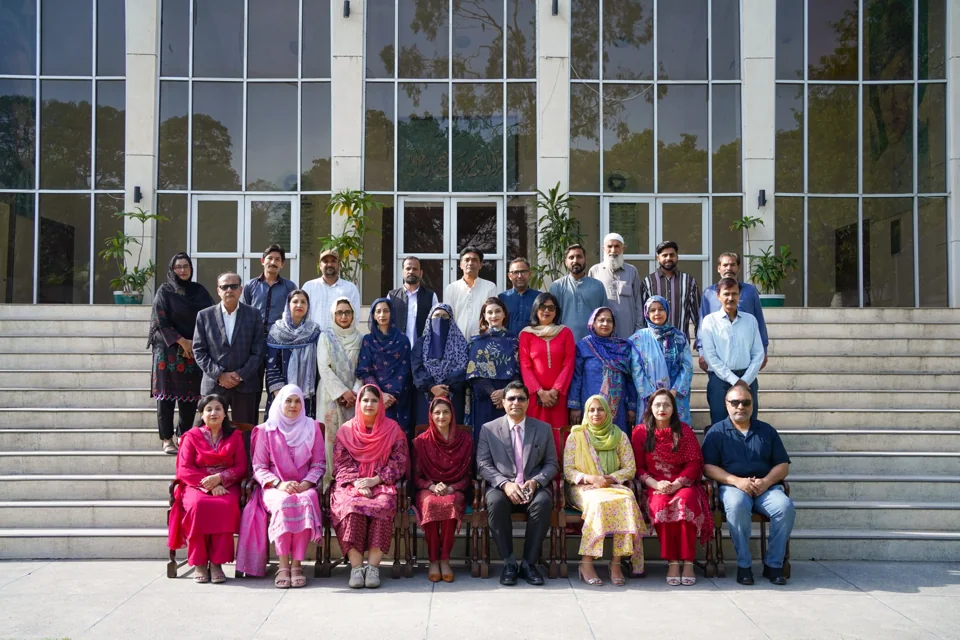
Biochemistry is one of the college’s basic-science departments. It presents molecular and metabolic knowledge as a foundation for understanding health and disease, with teaching that connects biochemical principles to clinical questions. Structured lectures, laboratory assignments and tutorials form its teaching framework. The tutorials encourage participation and give students opportunities to test their knowledge in simplified clinical settings.
The department’s teaching contribution includes MBBS and allied programmes such as medical laboratory technology, physiotherapy and nursing. Its published account describes presentations, written assessments, verbal examinations and practical laboratory work. Research-related activities include discussion of primary scientific literature through a journal club. The department identifies protein structure and function, enzyme mechanisms, metabolic pathways, signal transduction and nucleic-acid biology among the areas explored in its account of research engagement.
Sources: Department of Biochemistry ↗
Community medicine and field experience
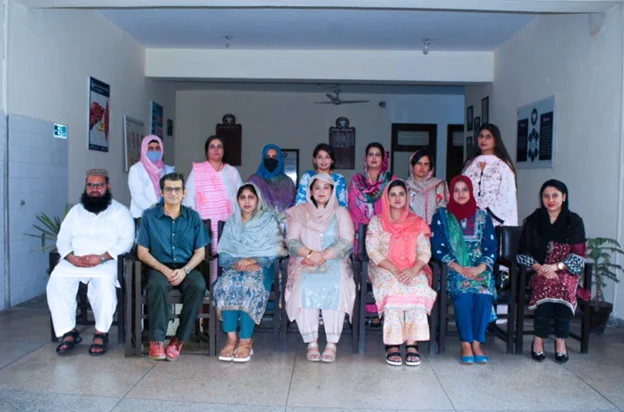
Community Medicine combines public-health teaching with field experience and research training. Its department describes lectures, small-group discussions and field visits as ways to develop communication skills and understanding of community health. Students are guided through small research projects as part of learning to frame questions and work with evidence.
The field-training programme includes visits to basic health units, rural health centres, schools, maternal and child health services, rehabilitation organisations and family-planning services. These experiences introduce students to different parts of the health system and the communities they serve. Journal-club meetings provide another setting for analysing scientific literature and communicating findings. The department also describes workshops in research methodology and health education, and student preparation of public-information materials in Urdu and English.
Sources: Department of Community Medicine ↗
Medical education and academic support
The Department of Medical Education supports curriculum development, evaluation, faculty learning and student guidance. Its published departmental report describes curriculum-management, quality-assurance and research-advisory functions. Faculty-development workshops have addressed teaching methods, assessment, curriculum design and the use of technology in medical education.
The department reports organising the first Allama Iqbal Medical Education Conference in February 2024 and a second conference in February 2025. It also organised a student scientific conference in October 2024 with oral presentations and posters. Other reported initiatives include coordinating integrated modules with basic-science departments, improving digital-library access, providing student orientation and introducing a structured mentorship programme. Basic life-support workshops are described as small-group educational activities for undergraduate students.
Sources: Department of Medical Education ↗
Research administration and ethical review
The Office of Research, Innovation and Commercialization is the college’s central research-support office. It assists faculty, students, clinicians and researchers with external funding and the management of funded projects. Its work covers proposal development, administrative and technical support, monitoring, completion reports and audit. The office also seeks to connect researchers with collaborators, industry partners and funding organisations.
The college and Jinnah Hospital share an Ethical Review Board concerned with research involving human participants. Its published structure distinguishes a main committee for experimental projects from a subcommittee for observational studies. The board identifies dignity, rights and welfare as central to its work. Its submission information covers clinical trials, observational and retrospective studies, and surveys, placing ethical review alongside the institution’s research activity.
Sources: Office of Research, Innovation and Commercialization ↗ · Ethical Review Board ↗
Arts and student participation
The Iqbalian Fine Arts Society provides opportunities for creative activity alongside medical study. Its account describes an art gala that grew from a small painting exhibition into interclass competitions in painting, calligraphy, sketching, cartoons, digital art, handicrafts and flower arrangement. Poster contests have addressed public themes including health awareness, the environment and peace.
The society also describes drama performances, photography activities, visits to museums and galleries, and meetings for creative discussion. A street-art festival in 2016 brought visiting artists and AIMC students together to paint walls around the college colony and lecture-theatre complex. These activities illustrate a student community that includes visual expression, performance and cultural participation as well as the formal medical curriculum.
Sources: Iqbalian Fine Arts Society ↗