Visa

About Alkauthar Islamic University
A religious education centre in Islamabad
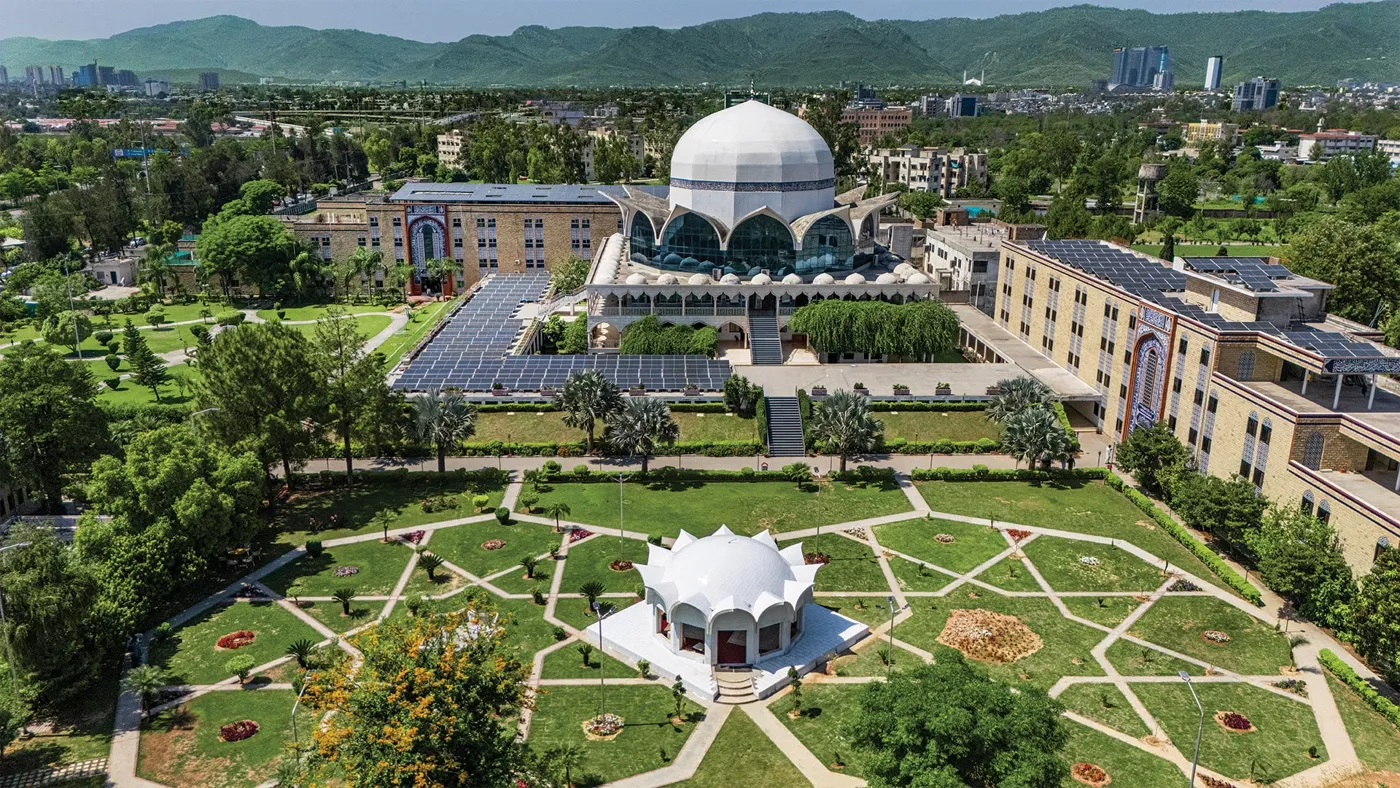
Alkauthar Islamic University is listed under the institutional name Jamiatu Al Kauthar, also written Jamia tu Al-Kauthar. The institution describes itself as a religious education centre in Islamabad, Pakistan. Al-Khoei Foundation established it in 1992, and regular academic and educational activities began in 2002. Its address is Faiz Ahmad Faiz Road in sector H-8/2. The institution's stated purpose combines religious learning with contemporary fields of education. Its aims include preparing religious scholars, preachers and researchers who can communicate Islamic teachings in contemporary languages and engage with questions facing Muslim communities. It presents moral formation and research as parts of that educational mission.
Sources: History and aims ↗
A staged seminary curriculum
The published education system sets out a nine-year course organised into general, higher and advanced phases. The general phase occupies three years and introduces Islamic jurisprudence, Quranic studies, Hadith and other fields, with particular attention to English. Students entering this phase are expected to have completed preparatory religious study. The four-year higher phase is described as a period of specialisation, including Islamic law and jurisprudence through texts such as Rasail and Makasib. The advanced phase spans two years: an introduction to research methods followed by the preparation of a substantial dissertation. The academic fields named on the page include Islamic law, Quran and Hadith, preaching, economics and English language. This structure places extended textual study before specialised research work.
Sources: System of education ↗
Assessment across individual subjects
Al Kauthar's examination rules require students to pass each subject separately. Progress is checked through regular tests and an assessment at the end of the academic year. The published scheme allocates 40 percent to work completed during the academic period, including one-hour tests, quizzes and assignments, with the remaining share assigned to the end-term examination. It also describes oral and written examinations at the end of semesters. The grading table sets 60 percent as the pass threshold and distinguishes higher bands up to A Plus for marks of 90 percent or more. The emphasis on passing individual subjects connects continuing classroom assessment with the formal examinations used to evaluate progress.
Sources: Assessment and examinations ↗
Preparation before admission
The admission page describes a selection process involving a written test, a viva and an interview. It identifies academic ability, general knowledge and reasoning among the matters considered. Its stated preparation includes four years of basic religious education, with prior study at an institution affiliated with Wafaq ul Madaris Al Shia and a minimum mark of 60 percent. The preparatory subjects cover Tajweed, elementary spoken Arabic, religious rulings, beliefs, Arabic grammar and logic. Arabic grammar receives particular attention because the Quran and Hadith are studied in Arabic. The logic component addresses principles of inference and demonstration. The institution names Karachi, Islamabad, interior Sindh and Skardu among the areas used for testing.
Sources: Admission preparation ↗
Library resources
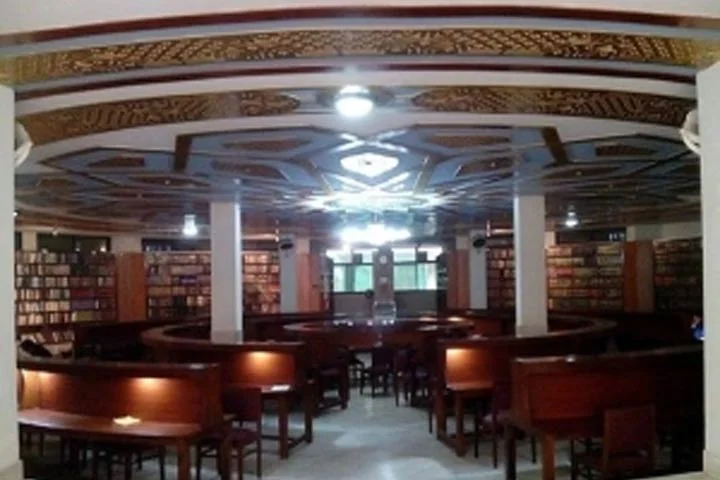
The library supports teaching and research with books connected to the subjects taught at Al Kauthar and a wider collection extending from medieval to modern topics. The institution describes access for students and faculty as well as intellectuals from outside the seminary. Its library photograph shows a dedicated reading space with shelving around the room and desks arranged for individual study. The library therefore forms part of the institution's provision for reading and research alongside formal classroom teaching.
Sources: Library ↗
The mosque and its architectural detail
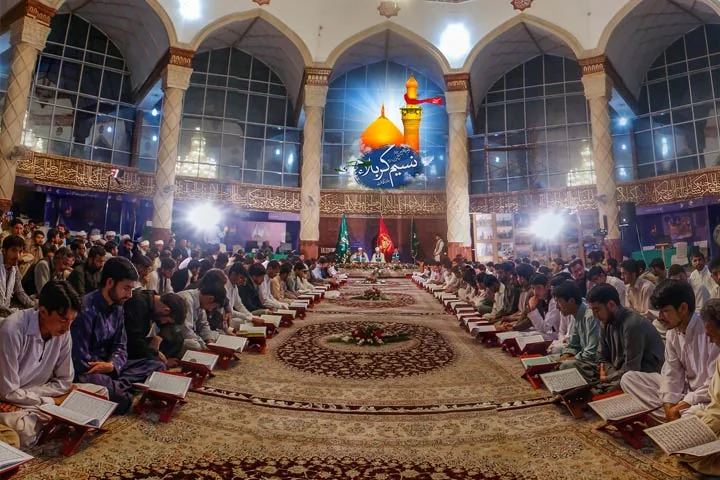
The campus mosque is an important part of Al Kauthar's physical setting. Its published architectural description gives the dome a height of 100 feet above ground and a diameter of 50 feet. The interior includes rosewood calligraphy associated with Surah Dahar, together with writings of Surah Yaseen, the names of Allah and references to the Fourteen Masumeen. Rosewood and cedar are among the materials identified in its decorative work. A large chandelier hangs in the centre of the prayer hall. The institution's photograph shows people gathered with open books within this interior, linking the building's religious use with its richly decorated architectural setting.
Sources: Mosque ↗
A historical link with Najaf
Al Kauthar records the establishment of a campus in Najaf, Iraq, in 2010 under the name Madrasa Syeda Fatima Zahra. The campus account connects this development with further religious study after completion of the Islamabad course, particularly Dars-e-Kharij within the Najaf hawzah. It describes research-oriented study, ethical instruction, group discussions and opportunities to learn in the company of senior religious scholars. Accommodation is also included in its description of the campus. This historical extension reflects the institution's interest in connecting its own preparatory and specialised teaching with the advanced scholarly traditions of Najaf.
Sources: Najaf campus history ↗
Quranic translation and commentary
Dar ul Quran Al Karim is associated with Al Kauthar's work on Quranic translation and interpretation. Its published account identifies Balagh ul Quran as an Urdu translation accompanied by a short commentary. A further project, Al Kauthar Fi Tafseer il Quran, provides an Urdu commentary on Quranic verses. The institution dates work on that commentary from 1990 to November 2014 and records the first complete ten-volume edition in November 2014. These publications give a concrete example of the research and religious scholarship described in the institution's educational aims, extending its activity beyond the delivery of classes into the preparation and circulation of substantial written works.
Sources: Dar ul Quran Al Karim ↗