Visa


About Aljanad University for Science and Technology
A private university in Taiz
Aljanad University for Science and Technology is a private university in Taiz, Yemen. Its official contact address places it on Al Musalla Street in Taiz Governorate. The university was established during the 2018–2019 academic year and formally opened on 2 October 2018. Its institutional history records Ministry of Higher Education authorisation number 11 of 2018. Its academic organisation brings together medical sciences, engineering and information technology, and administrative sciences and humanities. The university describes its development around teaching, scientific research and community service. Its founding account also emphasises laboratories, teaching equipment and classrooms, alongside cooperation with other higher education institutions through agreements and shared activities.
Sources: About Aljanad University ↗
Engineering and digital fields
The College of Engineering and Information Technology presents a range of subjects connecting the built environment with computing and technical systems. Its published departmental directory includes civil engineering, architecture, mechatronics and interior design. On the computing side, it lists information technology, networks and cybersecurity, and artificial intelligence and data science. The directory also identifies departmental academic leadership and a connection with the university's engineering research and consultation centre. This combination gives the college a scope extending from the design of physical spaces and structures to digital information, connected systems and emerging approaches to working with data.
Administration, languages and humanities
The College of Administrative Sciences and Humanities groups business-related study with language, law and communication fields. Its published programme directory lists management information systems, business administration, international business administration, and accounting and finance. English language and translation, Sharia and law, marketing communication and advertising, and health administration also appear in that directory. These subjects give the college a different emphasis from the university's engineering and medical units. Organisational management and financial information sit alongside the communication and language subjects through which institutions engage with wider audiences. The college page also introduces members of its academic staff and departmental leadership.
Training and skills development
Aljanad's Training and Skills Development Center extends the university's activities into skills-based and vocational learning. Its stated purpose is to offer varied training that responds to the needs of the labour market, with a particular interest in young people. The centre identifies computing and information technology, English language, women's development, and subject reinforcement and school curricula among its areas of work. Its published objectives include developing the training environment, following technological changes and improving the performance of its own trainers and employees. It also seeks to expand local and international partnerships. The centre presents practical training as a way of connecting the university's educational resources with people seeking additional skills.
Engineering research and consultation
The university also operates an Engineering Research and Consultation Center under the supervision of its engineering college. The centre describes its work as a combination of technical consultation, research and training. Its listed areas include architectural work, structural work, surveying and roads, soil and geological investigations, and interior design. Its mission brings together university expertise, equipment and partnerships in support of research and community development. Published objectives include undertaking engineering, architectural and civil projects and supporting research projects relevant to the university and its surrounding community. Through this centre, engineering activity is organised around both academic investigation and the practical technical questions addressed by its specialist areas.
Laboratory staff development in 2026
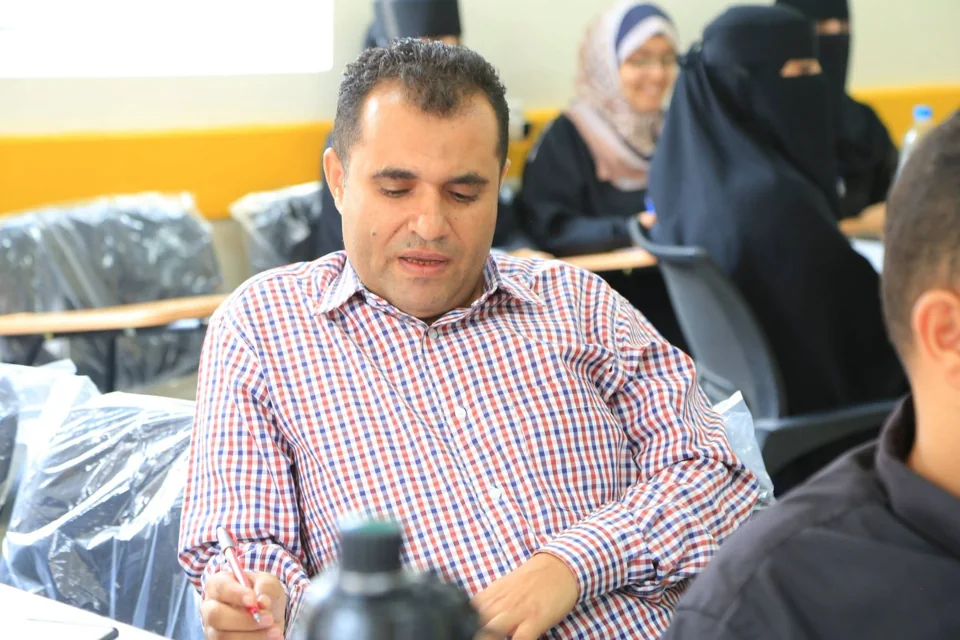
A university report published on 20 September 2026 documents training organised by the College of Medical Sciences in cooperation with the Training and Skills Development Center. The programme concerned strategies for reducing biological risks in laboratories and was directed at teaching assistants and technical staff. Its subjects included identifying hazards, assessing risks and selecting suitable measures to reduce them. Participants also examined biosafety and biosecurity, responses to incidents and methods of investigation. The programme incorporated practical activities, case studies and training simulations. Further topics included the hierarchy of controls, managing change, safety culture, near misses, root-cause analysis and corrective and preventive actions. The report places this activity within the college's professional development work for academic and laboratory personnel.
Sources: Laboratory biological-risk training, 20 September 2026 ↗
Planning across academic and administrative units
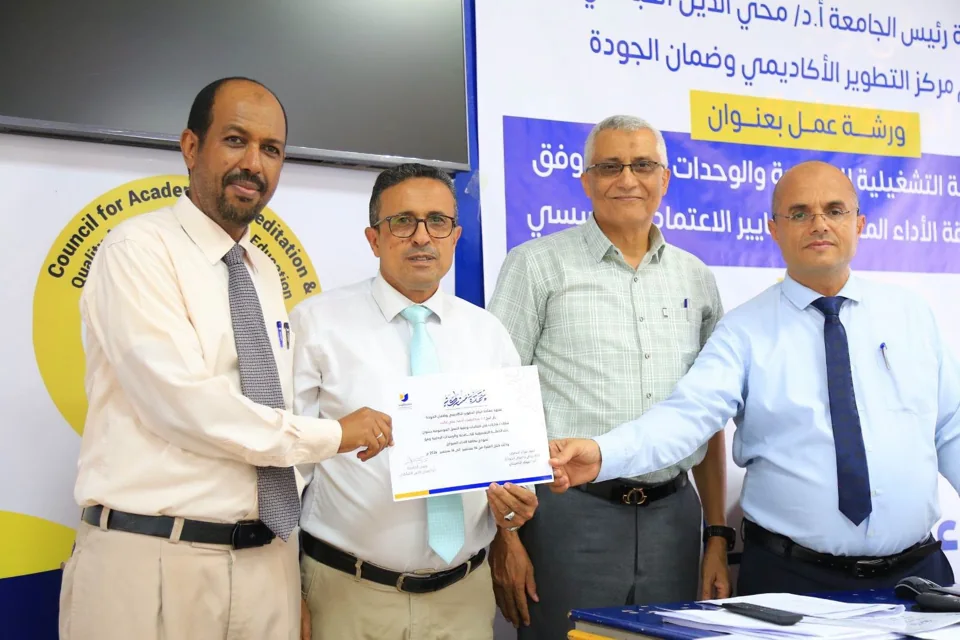
A separate report dated 16 September 2026 records the completion of a three-day workshop on operational planning. Organised through the university's academic accreditation and quality assurance centre, it involved academic and administrative leaders, including college deans, department heads and managers. The workshop used the Balanced Scorecard approach to connect strategic objectives with programmes, activities and performance indicators. Practical sessions addressed the preparation of plans that could be implemented and measured, together with arrangements for monitoring and evaluation. Participants were recognised at the closing session. The event illustrates the university's documented work on planning across its educational and administrative units, with attention to the relationship between institutional strategy and everyday implementation.
Sources: Operational planning workshop, 16 September 2026 ↗
Student services and participation
The university identifies transport, accommodation and libraries among its student services, with provision coordinated through student affairs and other university offices. Its service pages also identify the university identity card and a channel for student complaints. Extracurricular activities fall under the supervision of the Deanship of Student Affairs. The published activities description covers cultural, religious, artistic and recreational participation by students from different colleges and specialisations.
Sources: Student services ↗ · Student activities ↗