Visa
About Algiers 2 University
University introduction and history
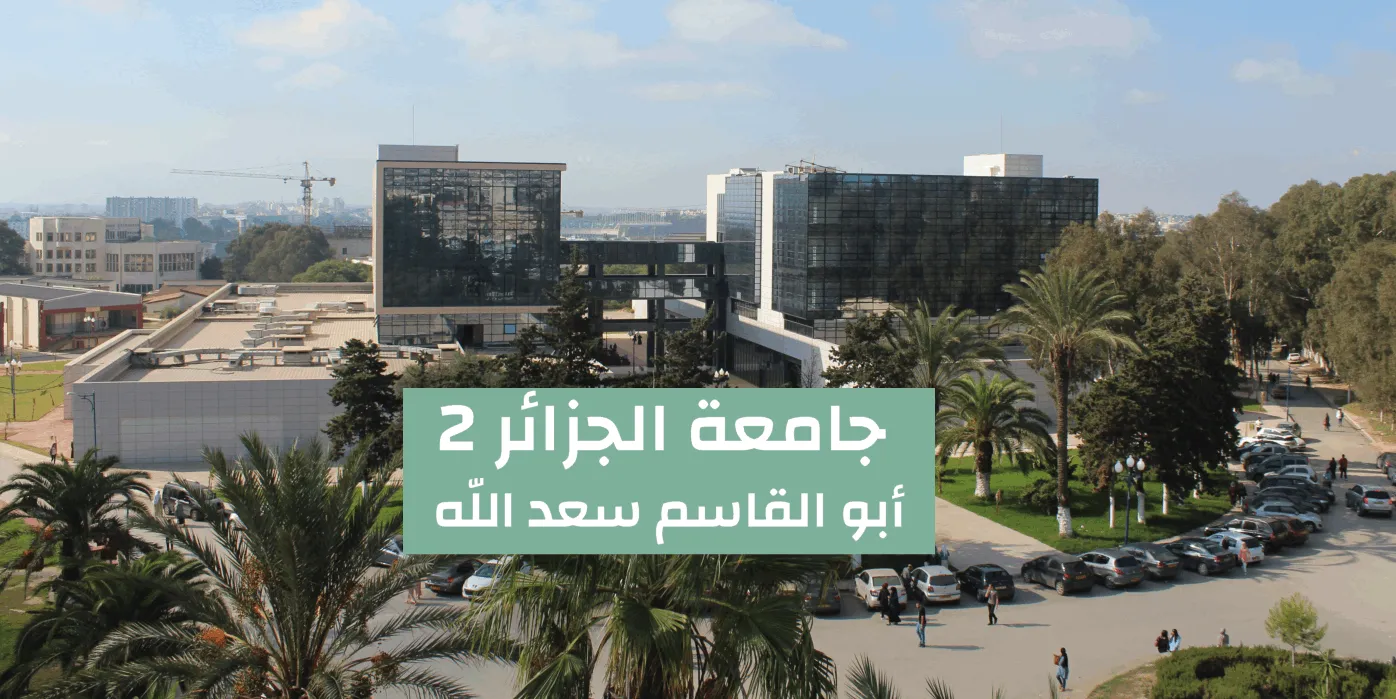
Algiers 2 University is the Abou El Kacem Saadallah University in Algiers, Algeria. Its identity is distinct from the other institutions created through the division of the former University of Algiers. The university's introduction records its establishment under Executive Decree 09-340 of 22 October 2009, initially as the University of Bouzareah. Its name changed to Algiers 2 under a decree dated 14 July 2010, and it adopted the name of historian Abou El Kacem Saadallah on 1 November 2014. The institution identifies sites at Bouzareah, Beni Messous and Ben Aknoun. Its academic character centres on humanities, social sciences, languages, translation and archaeology. The principal contact address is 2 Djamel Eddine El Afghani Street in Bouzareah. This combination of disciplines gives the university a substantial role in the study of language, society, history and cultural heritage.
Sources: University introduction and history ↗
Published academic specialisms
The university's published specialism directory illustrates the breadth of these fields. Historical subjects include ancient civilisations, medieval history, modern Algeria, Ottoman history and sub-Saharan Africa. Philosophy encompasses Arabic and Islamic thought, logic and philosophy of science, and modern and contemporary Western philosophy. Language provision covers French, English, Spanish, German and Italian, with pathways in literature, civilisation, linguistics and teaching. Arabic studies include literature, criticism, linguistics and language education, while Turkish and Russian also appear in the directory. Translation pathways connect Arabic with several foreign languages and include written and interpreting specialisms. In the social sciences, the directory lists psychology, education, sociology and speech-language studies. Archaeological subjects range from prehistory through ancient and Islamic archaeology to conservation and restoration. These published areas bring textual, social and material approaches to human experience into the same university setting.
Sources: Published academic specialisms ↗
Intensive Language Teaching Centre
The Intensive Language Teaching Centre was established in 2011. Its introduction describes language support for university students who wish to strengthen existing knowledge or explore other languages and cultures. Chinese, Japanese and Turkish are among the examples it gives of wider language interests. The centre also addresses people outside the university and organisations seeking continuing language education for their employees. Teaching is provided by a pedagogical team including local and international instructors. Its role therefore extends beyond the degree departments: language development can support an existing course of study, an individual's interest in another culture or an organisation's training needs. The centre's current website also publishes course-registration information and separate contacts for English, French and European and Asian languages.
Sources: Intensive Language Teaching Centre ↗
Central Library technical services
The Central Library's technical-services description explains how collections are prepared for discovery and use. Cataloguing, classification and indexing are carried out through a networked library-management system. Arabic-language books are processed using bibliographic standards, Dewey classification and Arabic subject headings. Foreign-language work includes French, Italian, English, German and Spanish material, with staff drawing on national and shared catalogues when preparing records. Separate work covers periodicals and reference resources such as dictionaries and encyclopaedias. The digitisation office photographs title pages and contents pages and attaches PDF versions to catalogue records, helping students and researchers understand a book's contents before consulting it. The collections include books, journals, university dissertations, theses and reference materials. This organisational work supports the university's language and humanities disciplines through both bibliographic description and practical assistance in finding relevant documents.
Sources: Central Library technical services ↗
Research laboratories
A research-laboratory directory published in September 2026 identifies several strands of scholarship. They include analytical anthropology and psychopathology, the sociology of organisations and management, and questions of civilisation and Algerian history. Other groups address education, training and work; manuscripts; applied linguistics and language teaching; and discourse, language didactics and interculturality. Historical research includes Ottoman heritage in Algeria and the development of the central Maghreb through the Ottoman period. Language and cognition, including development and disorders, form another listed area. The range shows how the university's research combines disciplinary specialisation with themes crossing education, history, language and social organisation. The directory provides links to individual laboratories and scientific activities, giving these research groups a visible place alongside the university's academic specialisms.
Sources: Research laboratories ↗
Italian-language cultural meeting, 26 October 2026
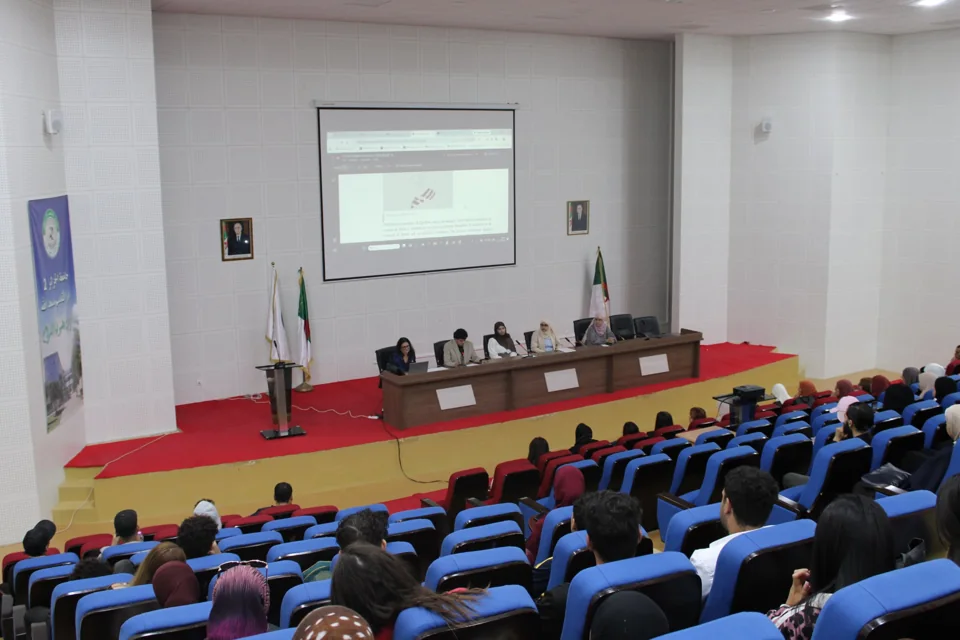
A cultural and scientific meeting held on 26 October 2026 brought Italian-language study into an international setting. Algiers 2 hosted Italy's ambassador to Algeria and writer Amara Lakhous in the Moufdi Zakaria lecture hall in Building D. The programme included discussion with Lakhous and Francesco Leggio of the University of International Studies of Rome about languages, writing and translation. Another session considered Italian culture and identity, including migration literature and creativity across languages. The university's report presents the encounter as part of the twenty-sixth Week of the Italian Language in the World, involving teachers and students of Italian alongside invited cultural representatives.
Sources: Italian-language cultural meeting, 26 October 2026 ↗
Italian Language Week meeting, 21 October 2026
An earlier meeting on 21 October 2026 was organised by the Italian department of the Faculty of Foreign Languages in the same lecture hall. Three academic sessions considered renewing Italian-language teaching, students' literary and linguistic creativity, and the language's cultural heritage. Discussion also addressed digital technologies, artificial intelligence and contemporary teaching approaches, alongside media and cultural diplomacy. The university's account describes participation by teachers, students and representatives of the Italian Cultural Institute. Together with the later October meeting, this provides a dated example of language teaching supported by academic discussion and cultural exchange, with students encountering subjects beyond their regular classroom work.
Sources: Italian Language Week meeting, 21 October 2026 ↗