Visa
About Ahmed Draia University
A university rooted in Adrar
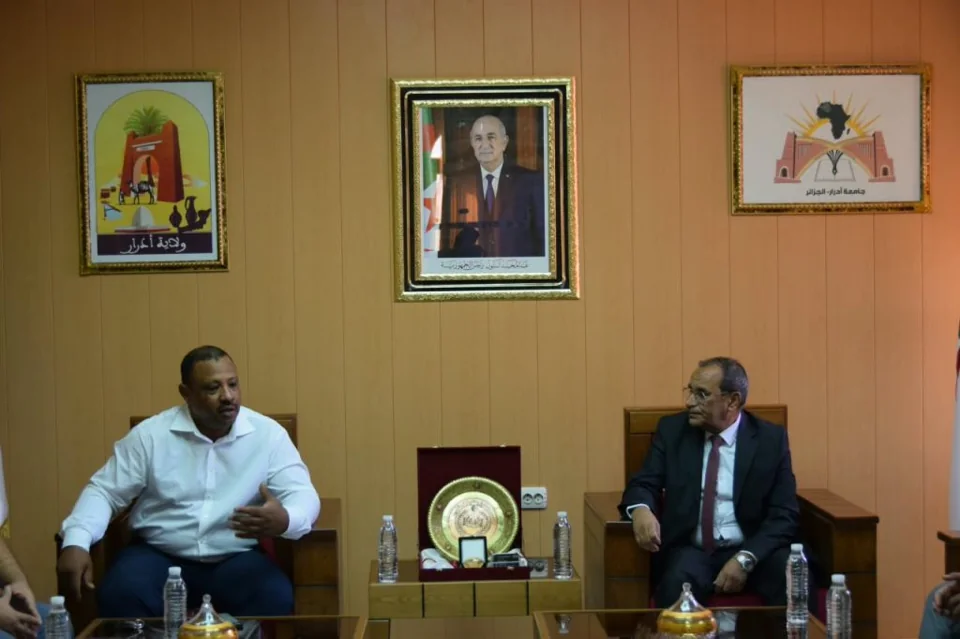
Ahmed Draia University is a public university in Adrar, Algeria. It is also known as the University of Adrar and has previously used the African University designation. Its institutional presentation traces the beginnings of higher education in the wilaya to 1986, when the National Higher Institute of Sharia was created. The establishment developed into the University of Adrar under an executive decree dated 18 September 2001, subsequently amended in 2004.
The university's development has combined teaching, research and the expansion of academic and administrative structures. Its stated objectives include scientific creativity, the use of research findings, quality in higher education and cooperation with other universities and research organisations. It also identifies partnerships with economic and social sectors as part of its mission. This places the institution within both a regional educational setting and a wider network of national and international academic relationships.
Sources: University presentation and institutional development ↗ · Official university homepage: identity and current structure ↗
Doctoral education and research coordination
Scientific research and advanced academic training are coordinated through a university vice-rectorate responsible for third-cycle education, university habilitation and postgraduate matters. Its published responsibilities include monitoring postgraduate and specialised postgraduate training and ensuring that relevant academic procedures are followed. This work links advanced study with the university's research organisation.
The vice-rectorate follows the activities of research units and laboratories and prepares reports in coordination with faculties and institutes. It also supports activities intended to make use of research results, maintains the operation and archives of the university scientific council, and gathers and publishes information about research undertaken at the institution. The page provides notices and links relating to doctoral competitions, habilitation and research projects. Together, these functions show how the university supports advanced academic work through administrative coordination as well as individual research activity.
Sources: Vice-rectorate for doctoral training and scientific research ↗
Cooperation and academic exchange
The vice-rectorate for external relations, cooperation, communication and scientific events manages another part of the university's academic environment. Its mandate includes developing links with the surrounding social and economic community and initiating partnership programmes. It also promotes exchange between universities and cooperation in teaching and research.
Scientific meetings are a further responsibility, alongside communication activities and the monitoring of professional development opportunities for teachers. Its public page brings together notices about conferences, study days and cooperation programmes. It also provides documents associated with short scientific stays, training abroad and participation in international academic events. These services form an organisational route through which researchers and doctoral students can engage with opportunities beyond their own departments. The remit connects local partnerships, academic mobility and the exchange of research knowledge rather than treating international cooperation as a separate activity.
Sources: External relations, cooperation and scientific events ↗
Manuscripts as an academic resource
The university's Algerian Manuscripts Portal is associated with the Laboratory of Algerian Manuscripts in Africa. It presents a project devoted to identifying, cataloguing and improving access to manuscript heritage. The portal's mission describes the importance of inventories and catalogues in enabling researchers to locate and study manuscripts that might otherwise remain difficult to find.
Its objectives include creating a bibliographic map of places where manuscripts are preserved, both within Algeria and abroad. The project also seeks to identify the locations where Algerian scholars worked and to document their contribution to the transmission of knowledge between intellectual centres. The website provides a manuscript catalogue, images, news, rare-item features and sources and references. Examples presented on the portal include manuscripts preserved in Adrar collections and material held in Kano, Nigeria. This gives the university a research resource connecting regional heritage with wider scholarly networks.
Sources: Algerian Manuscripts Portal: mission and objectives ↗
Energy research and scientific meetings
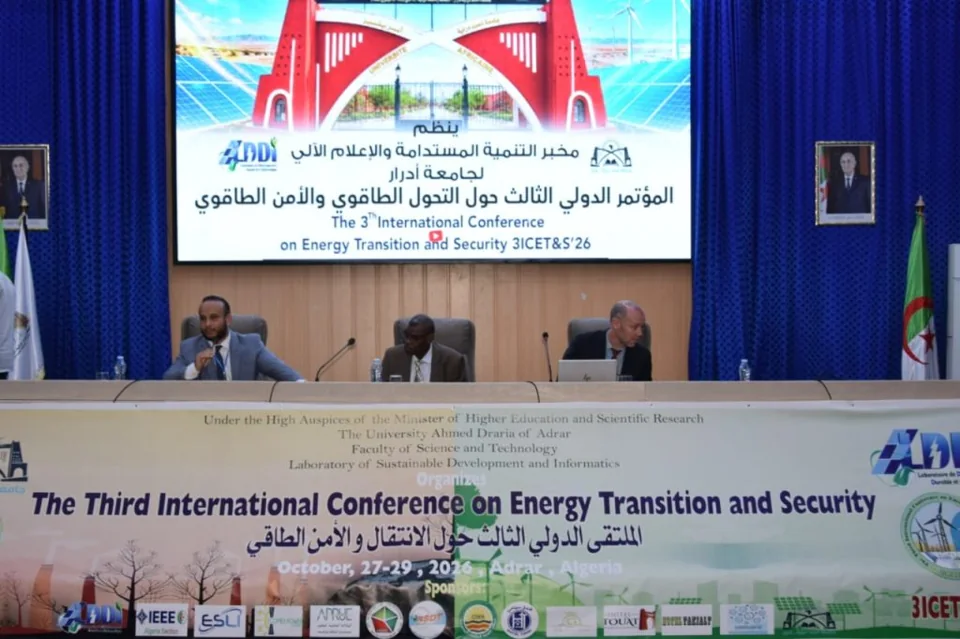
Ahmed Draia University hosted the third International Conference on Energy Transition and Security in October 2026. Its official report records the opening on 27 October, with the programme running through 29 October. The event was organised by the Laboratory of Sustainable Development and Informatics within the Faculty of Science and Technology and brought together researchers from Algeria and other countries.
Subjects identified in the programme included renewable energy, green hydrogen, hybrid energy systems, electric vehicles and the use of artificial intelligence in industrial and environmental systems. A remote opening contribution by Belkacem Haba discussed energy consumption and cooling in data centres as artificial intelligence develops. Other topics included monitoring photovoltaic installations and diagnosing faults. The meeting linked scientific presentations and research discussion with questions relevant to energy use and technological development, providing a concrete example of the university's scientific exchange activities.
Sources: Third international energy transition and security conference, October 2026 ↗
Water heritage and the Foggara research project
A separate university report dated 25 October 2026 describes work on water sciences and traditional irrigation systems, centred on the Foggara heritage of the Touat region. The university reported a positive assessment by UNESCO experts of its proposed chair project and recognised project leader Youssef Boutadara and his research team. The report presents this as part of efforts to connect local water heritage with international academic cooperation.
The project concerns the knowledge involved in obtaining, distributing and managing water in a desert environment. Its account emphasises research, documentation and the transmission of traditional expertise, alongside opportunities to exchange knowledge about water management and sustainability. The university relates the work to the protection of cultural and engineering heritage and to contemporary questions of water scarcity and climate change. The initiative illustrates a research direction in which the surrounding region's historical practices become subjects for scientific investigation and cooperation.
Sources: Water sciences and Foggara heritage irrigation project, October 2026 ↗