Visa
About Alfaisal University
A nonprofit university in Riyadh
Alfaisal University is a private nonprofit research university in Riyadh, Saudi Arabia. Its institutional history identifies the King Faisal Foundation as its founder in 2002, while the College of Business records admitting its first students in autumn 2008. The university brings together undergraduate and graduate education across business, engineering and advanced computing, medicine, pharmacy, science and general studies, and law and international relations. Its mission connects student-centred education with research and service to society. This places the development and application of knowledge alongside classroom learning, with an emphasis on contributions to Saudi Arabia and engagement with the wider academic community.
Sources: About Alfaisal University ↗ · University vision and mission ↗
Engineering and advanced computing
The College of Engineering and Advanced Computing combines established engineering disciplines with programmes concerned with digital systems. Its academic directory includes architectural, electrical, industrial, mechanical and biomedical engineering, alongside architecture and software engineering. Advanced computing offerings include artificial intelligence, cyber security, and data science and engineering. The college also lists graduate study in engineering and systems management, applied artificial intelligence and cyber security. Industrial engineering brings engineering decisions together with questions of management, while mechanical engineering addresses the design and manufacture of physical products. Research and teaching laboratories, undergraduate research projects and student design work are presented as parts of the college's educational setting.
Sources: College of Engineering and Advanced Computing ↗
Business education
The College of Business offers undergraduate business administration and graduate business study. Accounting, finance, human resource management, marketing, and operations and project management appear among its academic areas. The marketing description emphasises the analysis and interpretation of information about customers and organisations. Operations and project management concerns how organisations coordinate resources and implement solutions in competitive business settings. Alongside degree education, the college provides executive education directed towards professional development for individuals and organisations. Its published mission links intellectual development with professional and personal competencies. The combination gives the college a role in both university education and continuing learning for the business community.
Sources: College of Business ↗
Library resources and information skills
The Hassan Abbas Sharbatly e-Library supports study through electronic resources and computer facilities. The university acknowledges support from the Sharbatly family and the Hassan Abbas Sharbatly Foundation in developing these resources. Library learning support extends beyond providing access to material. Its information-literacy programme addresses recognising an information need, finding suitable sources, evaluating them critically and using them effectively in academic work. Information-skills classes can be arranged with academic staff, while library tours introduce students to services. Subject guides organise databases, catalogues, background information and websites by area of study. Together, these services connect access to scholarly material with the practical skills needed to select and use it.
Sources: Hassan Abbas Sharbatly e-Library: About ↗ · Library information literacy programme ↗
Academic planning and advising
Academic advising is organised as a partnership between the student, an academic advisor and a university counselor. Advisors assist with the transition into university during orientation and can help with timetable adjustments during the initial course-change period. They also maintain information about progress towards major and degree requirements. Counselors provide guidance on educational goals, university policies and other sources of support. Students are expected to prepare for advising meetings, understand their programme requirements and keep their own advising records. The published framework therefore assigns responsibilities to both sides of the relationship, making academic planning an ongoing activity rather than simply a registration formality.
Sources: Academic advising ↗
Community engagement
Alfaisal's social-responsibility work is organised around volunteering, community partnerships and continuing engagement. The university describes collaboration with students, alumni, faculty, staff, government bodies, businesses and nonprofit organisations. Representatives in colleges and departments help coordinate activity, while participation, volunteer hours and beneficiaries are recorded. Its selection criteria for initiatives include practical relevance, measurable participation and attention to social, environmental or economic challenges. Published examples span health awareness, school outreach in science and technology, recycling, financial literacy and professional community education. These activities are framed as part of the university's service mission, with links to Saudi Vision 2030 and the United Nations Sustainable Development Goals.
Sources: Social responsibility ↗
Student associations and shared interests
Student life includes a university student council, college-based professional associations and clubs formed around academic and personal interests. The published directory lists medical, engineering, science, pharmacy, business and law student associations. More specialised groups include robotics, data analytics and artificial intelligence, game development, finance and management consulting. Other organisations focus on Model United Nations, writing, art, languages, volunteering and community service. Sports interests are represented through groups for basketball, volleyball, equestrian activity and chess. This range allows the extracurricular environment to extend across professional subjects, cultural expression and recreation, alongside the individual academic programmes followed by students.
Sources: Student clubs and associations ↗
A multidisciplinary engineering project
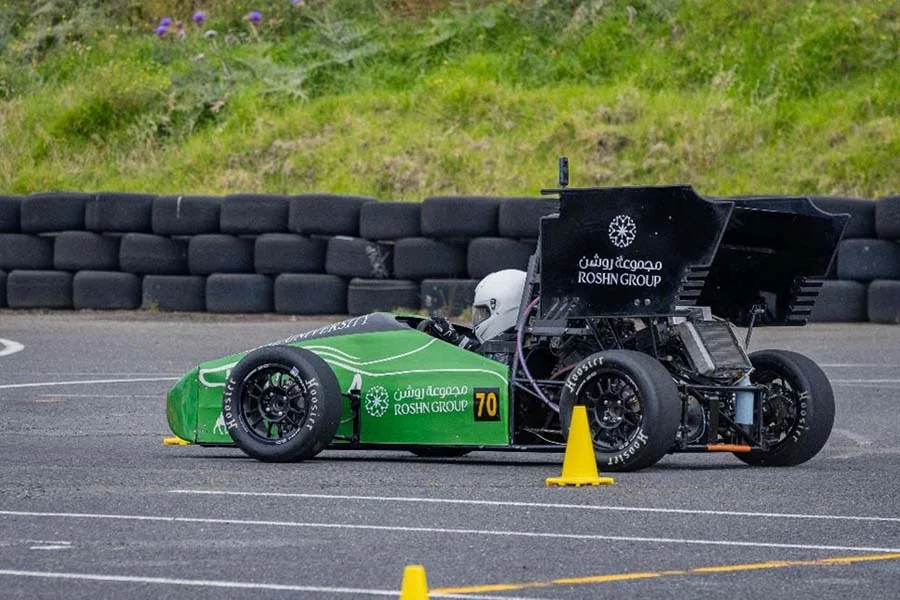
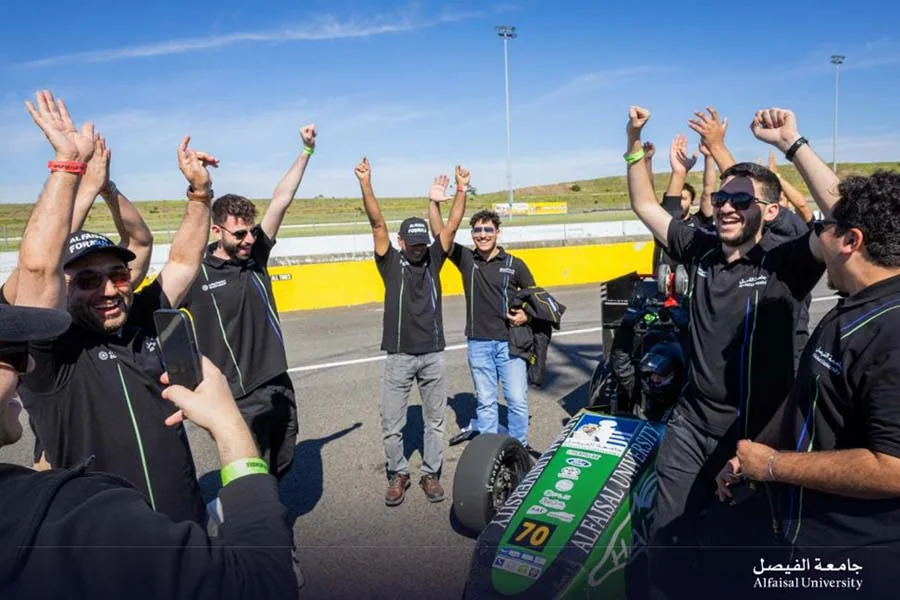
A December 2025 university report illustrates how these academic interests can come together outside conventional classes. Alfaisal's Formula Student team participated in a competition in Australia, with engineering students joined by members studying medicine and law. The team was mentored by the director of the university's Automotive Center, and its listed responsibilities included engines, vehicle dynamics, driving, business and public relations. The report describes support from ROSHN and experience shared between returning and newer members. The project provides a concrete example of collaboration around a working vehicle, combining technical development with the organisational work needed to participate in an international student event.
Sources: Formula Student team in Australia, December 2025 ↗