Visa

About Alexandria Higher Institute of Engineering and Technology
Foundation and location
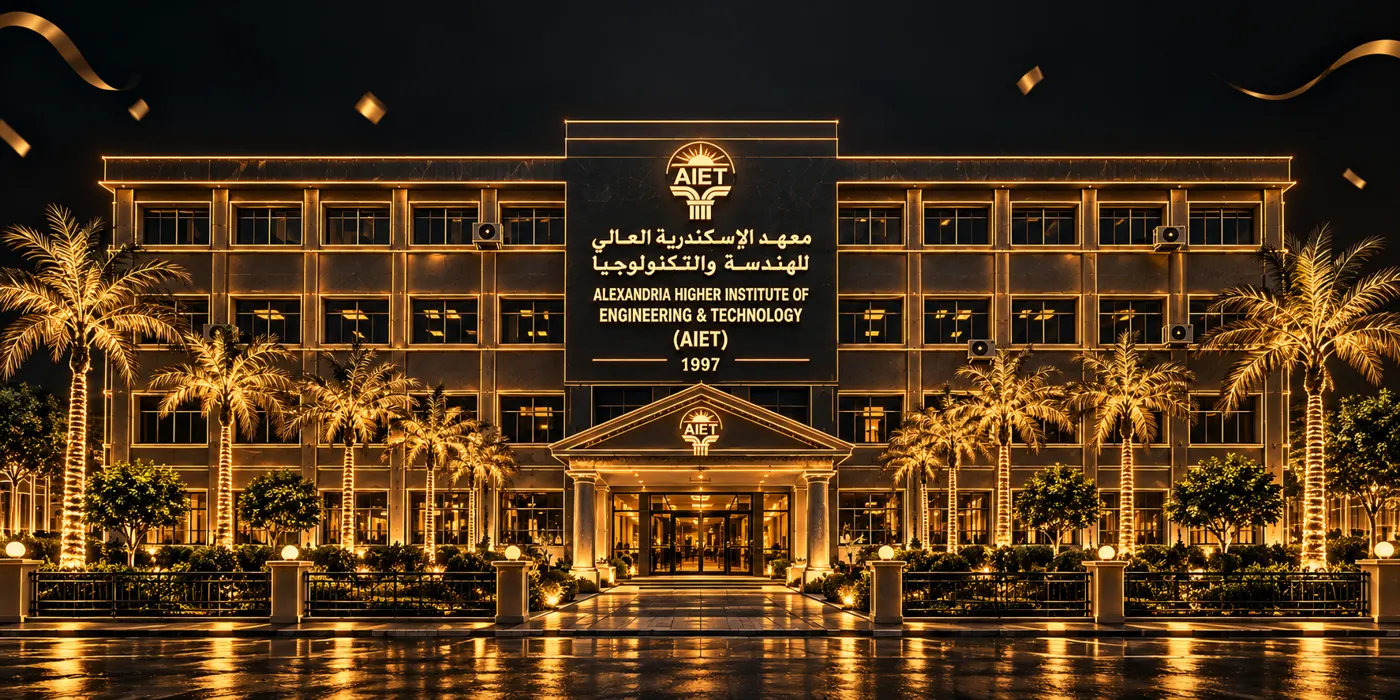
Alexandria Higher Institute of Engineering and Technology, commonly abbreviated AIET, is a private engineering institute in Smouha, Alexandria, Egypt. Its official introduction places it close to Sidi Gaber railway station. The institution was established under Ministerial Decision 1103 of 24 September 1997, initially with departments in electronics and communications, computer engineering and mechatronics. Industrial engineering was added under Decision 1323 of 24 October 1999. Its founder was Mohamed Abdel Fattah Ragab. The institute describes an educational approach combining theoretical concepts with practical applications, alongside scientific, cultural, artistic and sporting activities. Its four departments form the core of its engineering bachelor's provision. The institute also maintains dedicated training and research units, connecting academic work with industrial experience and scholarly activity.
Sources: Institutional foundation ↗ · Official institute introduction ↗
Industrial engineering
The industrial engineering department brings production technology together with the management of manufacturing operations. Its introduction discusses planning, implementation and management in both the production of goods and the delivery of services. Quality systems and engineering economic studies are included among its stated areas of interest. The department connects these subjects with supply chains, project management and the organisation of industrial activity. Practical application is described through institute laboratories and field training in companies. Its programme mission emphasises technological innovation, research and sustainable development as educational aims. This places the subject at the intersection of technical production decisions and the wider organisation of resources, processes and services.
Sources: Industrial engineering ↗
Mechatronics engineering
Mechatronics is presented as an integrated approach to mechanics, electronics and automatic control. The department also explains its relationship with computer engineering, particularly where computation contributes to product design and manufacturing systems. Its educational mission refers to designing and building modern mechatronic systems, encompassing mechanical, electrical, electronic and computer-control components. Electromechanical microsystems are also mentioned. The department identifies applications ranging from robotics and modern vehicles to energy systems, refrigeration and hydraulic equipment. These examples illustrate the breadth of the field rather than a separate degree for each application. Teaching is supported by laboratory practice and opportunities for industrial training, allowing the department to connect its account of integrated systems with practical engineering environments.
Sources: Mechatronics engineering ↗
Computer engineering
The computer engineering department combines the study of hardware with software and its applications. Its introduction describes programming, networks, databases, protection systems, expert systems and industrial control among the areas associated with the discipline. It also addresses the design, maintenance, analysis and testing of computer devices and systems. Mobile applications, websites, intelligent systems and robotics appear in its account of the field's applications. The department's mission stresses keeping academic work aligned with developments in computer engineering and linking study with practical skills. Laboratory activity and field training are described as routes for applying this knowledge. The resulting subject coverage extends from components and equipment to the software, connections and interfaces through which computer systems are used.
Sources: Computer engineering ↗
Electronics and communications
Electronics and communication engineering concerns electronic technologies and systems for transmitting data. The department links its subject to communication networks, control systems and the design and manufacture of equipment. Its description also refers to fixed and mobile communications, broadcasting and network management as application areas. Study combines compulsory and optional courses, with practical work supported through laboratories and industrial training. The programme's stated mission includes technological creativity, engagement with scientific and research developments, and contributions to community service and sustainable development. These are presented as educational objectives. The department therefore sits alongside computer engineering and mechatronics while maintaining its own emphasis on electronic devices and the movement of information through communication systems.
Supervised industrial training
AIET's training guide describes industrial field training as a compulsory component of its educational arrangements. It distinguishes the older sixty-day requirement from the forty-five-day requirement applying to students admitted from the 2024–25 academic year. Training begins after the first specialist year. Students attend an introductory preparation course and complete documentation covering their experience. The assessment process draws on academic supervision, the host organisation's evaluation and institute committees involving teaching staff and industry representatives. Students also provide feedback about their placement. The guide describes both externally arranged opportunities and training organised through institutional cooperation. Reports and presentations allow students to explain what they learned, while feedback from workplaces informs the institute's understanding of practical engineering needs.
Sources: Industrial training ↗
Library and research support
The institute's digital library provides searches for books and academic theses, alongside links to electronic knowledge resources. Its subject categories cover mathematics, physics, chemistry, mechanics, energy, electronics, communications, computer hardware and software, and industrial engineering. Separate searches organise theses by academic qualification, and the library page links to the Egyptian Knowledge Bank and library-use instructions. Research activity has an additional organisational home in the Scientific Research Unit, established by the institute's board in 2018. Its remit includes encouraging conference participation, journal publication and funded research projects. It also supports student research and creative activity and participation by graduation projects in competitions. The unit presents applied research and community-related problems as priorities within its institutional mission.
Sources: Digital library ↗ · Scientific Research Unit ↗
Dated examples of industry engagement
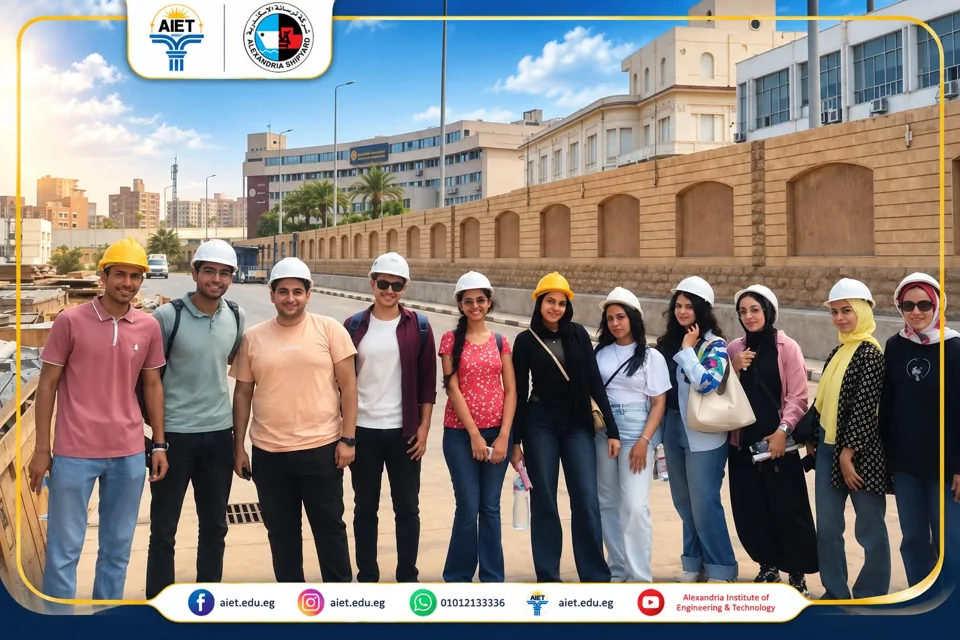
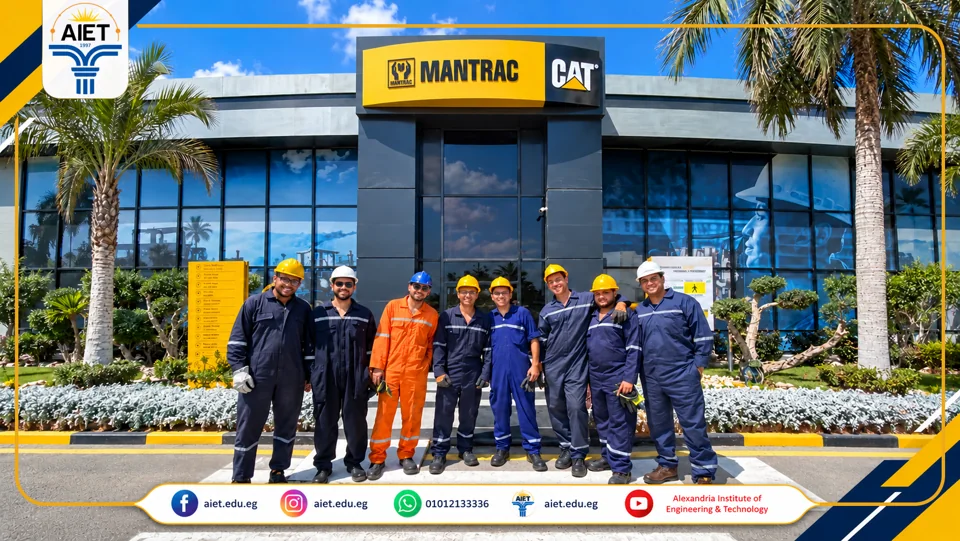
Two official reports document summer field training during the 2025–26 academic year. One records cooperation with Mantrac as an industry partner. Another describes training with Alexandria Shipyard, involving thirty-four second- and third-year students from mechatronics and electronics and communications. The shipyard report connects the experience with industrial workplaces and engineering applications related to the students' studies. These completed activities provide concrete examples of the institute's training arrangements and its cooperation with organisations beyond the classroom.
Sources: Mantrac summer training, 2025–26 ↗ · Alexandria Shipyard training, 2025–26 ↗