Visa
About Aleksander Zelwerowicz National Academy of Dramatic Art in Warsaw
A theatre academy in Warsaw
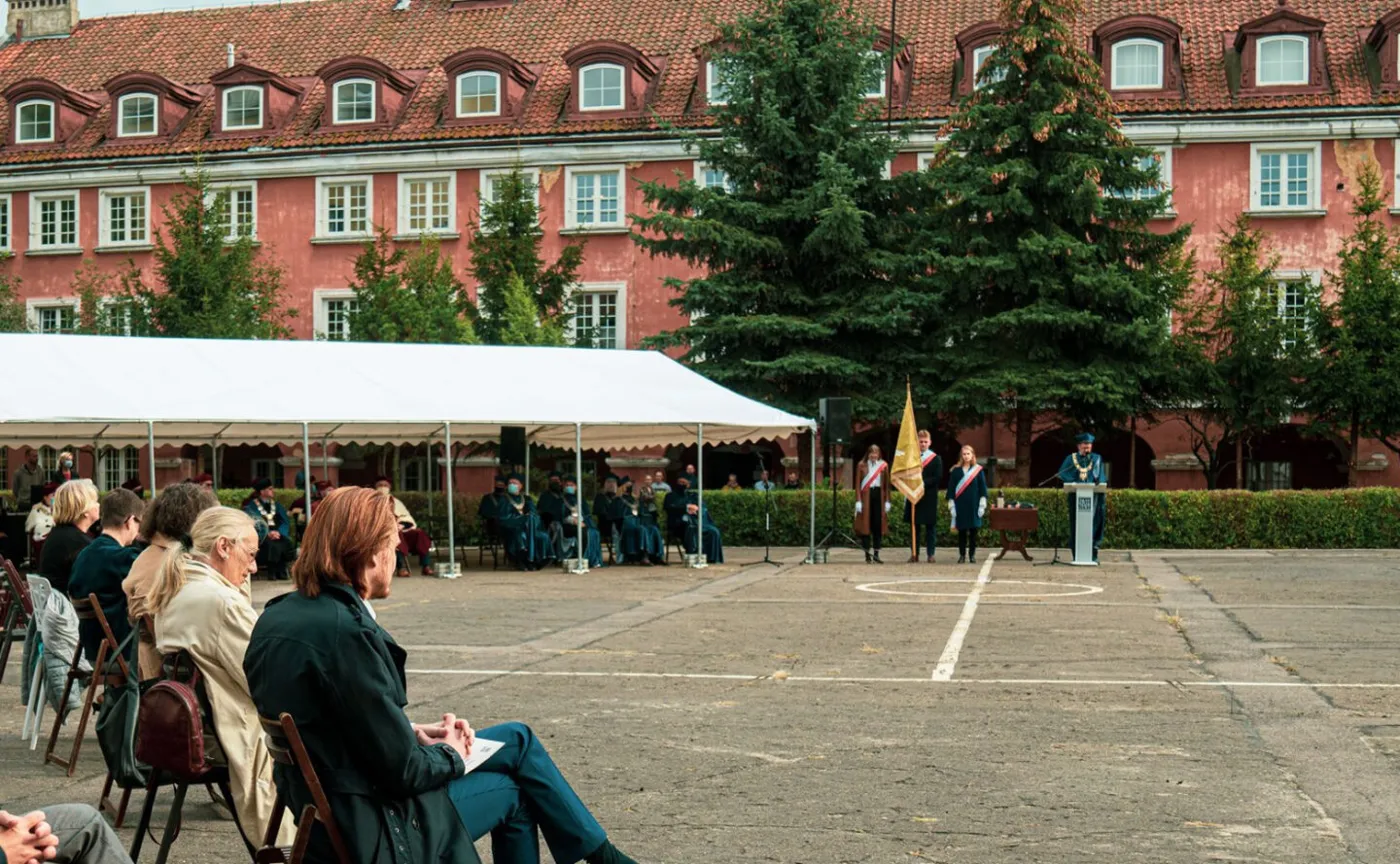
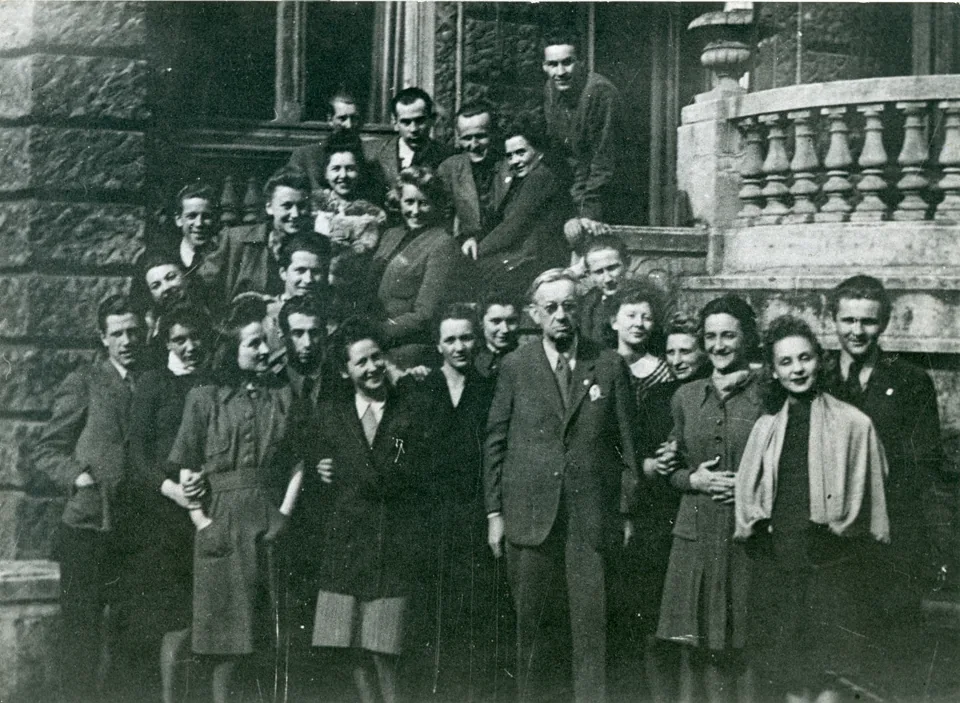
The Aleksander Zelwerowicz Theatre Academy is an institution of higher artistic education in Warsaw, Poland, with its published address at Miodowa 22/24. Its history identifies the State Institute of Theatre Art, established in 1932, as its institutional starting point. Aleksander Zelwerowicz developed acting education, while Leon Schiller shaped directing. Professional training was accompanied by a broad education in the humanities.
After wartime underground teaching, the institute resumed public activity in Łódź in 1945. A state higher theatre school replaced it in 1946 and moved to Warsaw in 1949. The school entered Collegium Nobilium and received Zelwerowicz's name in 1955. The academy name followed in 1996. These changes connect its current identity with successive forms of theatre education.
Sources: A theatre academy in Warsaw ↗ · Official academy identity and address ↗
Acting as sustained practical study
The acting programme offers two specialisations: dramatic acting, and acting and singing. Both are full-time integrated master's courses lasting ten semesters. Students progress from introductory exercises and elementary acting tasks to dialogue in prose and verse, the development of a role and participation in a diploma production. Practical training is therefore organised as a sequence of increasingly extended artistic tasks.
The curriculum also includes speech technique, voice work, rhythm, dance, song and camera work. Acting and singing adds subjects such as work with an accompanist, solfège, vocal ensembles and musical-theatre roles. Historical and theoretical study covers theatre, drama, literature, music, film, philosophy and cultural anthropology. Elective work includes stage combat, acrobatics, interpretation and radio drama. The published approach combines craft, individual invention and reflection on professional ethics.
Directing and artistic responsibility
Directing is presented as a practical programme with a tradition dating to the department created by Leon Schiller in 1933. The academy identifies Schiller, Bohdan Korzeniewski and Zygmunt Hübner as important figures in shaping its educational profile. Since the 2007–2008 academic year, its master's course has been organised over five years, or ten semesters.
Its account of the intended graduate combines professional artistic preparation with humanistic knowledge and the director's own creative experience. The fields discussed include dramatic and musical theatre, television productions and film. Screenwriting, adaptation and dramaturgy are also identified as related forms of work. These descriptions explain the scope of the programme's educational aims, connecting the interpretation of material with artistic responsibility and participation in contemporary culture.
Theatre studies and the humanities
Theatre Studies, known as Wiedza o Teatrze, has existed at the academy since 1975. Its programme places Polish and international theatre history alongside contemporary performance and the cultural contexts in which theatre operates. Literature, philosophy, anthropology, music, cinema and the history of ideas extend that framework beyond the analysis of individual productions.
Undergraduate pathways include criticism, history and theory, and production and curatorship. Master's pathways address criticism and performance studies, and organisation and production. Practical subjects include directing, work with actors and creative writing. Students also encounter theatre practitioners through workshops and meetings. The programme explicitly combines humanistic study with experience of theatrical processes, including how theatres function as organisations. This creates a route through theatre education centred on interpretation, scholarship and cultural activity rather than acting alone.
Sources: Theatre studies and the humanities ↗
A shared library system
The academy's library is organised as a unified information system linking its main Warsaw library with the library of its Białystok branch. It serves teaching and research and is accessible to students, employees and readers from outside the academy. The Białystok library originated in 1975, when a local puppet-theatre acting studio became an external department of the Warsaw school.
A shared online catalogue supports access to the collections, and the academy cooperates with the NUKAT national union catalogue. The library's information page also identifies electronic research resources and databases covering scholarly publications and the humanities. Specialist equipment includes a computer, scanner, magnification tools and adapted furniture for readers with disabilities. These services connect physical collections with information discovery and support readers using the academy's resources in different ways.
Sources: A shared library system ↗
Specialist collections for theatre research
The collections reflect the breadth of theatre education. Subjects include drama and theatre history, contemporary theatre, cinema, biographies, puppetry, acting, directing, dance, stage design and costume. Literature, philosophy, psychology, sociology and other humanities provide related material. The library describes collecting, cataloguing and sharing these resources as parts of its teaching, research and public information responsibilities.
Special collections preserve documentation of diploma productions, undergraduate and master's theses, musical scores, song texts, theatre reviews and press cuttings. Audiovisual holdings document classes, productions and institutional life as well as theatre, film and music used in teaching. Typescripts include plays and stage adaptations, with children's plays and records of puppet-theatre activity represented at Białystok. Such materials allow written scholarship to be studied alongside records of performance and practical training.
The beginning of an academic year
On September 30, 2026, the academy held the inauguration of its new academic year at Warsaw's Teatr Współczesny. Its report published part of the rector's address, bringing together students, teachers, administrative and technical employees, guests and representatives of cultural and educational institutions. The venue was a theatre outside the academy's own premises.
The address presented theatre education as an encounter between people, combining youthful ambition with experience and craft. It emphasised listening, experimentation, patience and the repeated work of rehearsal. It also acknowledged the contributions of technical staff, librarians, administration and others whose work supports teaching and performance. As a dated institutional occasion, the inauguration illustrates how the academy expresses its educational values to its community at the start of a teaching year.
Sources: The beginning of an academic year ↗