Visa
About Aleksander Gieysztor School of Humanities in Pultusk
Institutional history and present identity
The directory name Aleksander Gieysztor School of Humanities in Pultusk refers to the Polish institution whose present official identity is the Aleksander Gieysztor Academy in Pułtusk, a branch of Vistula University, formally the Academy of Finance and Business Vistula. Its own history begins in 1994, when the Academic Educational and Scientific Society ATENA established the Wyższa Szkoła Humanistyczna. The school adopted Aleksander Gieysztor's name in 2002 and became the Aleksander Gieysztor Academy of Humanities in 2006. The current branch continues to use his name rather than presenting the earlier school as a separate operating university. Based in the Mazovian town of Pułtusk, it gives its contact address as Mickiewicza 36B. Its educational offering includes first-cycle, second-cycle and long-cycle studies, alongside postgraduate provision. The institution's humanities background remains visible in its historical research and in the social and educational subjects offered locally.
Sources: Institutional history and present identity ↗
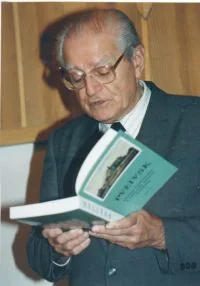
Aleksander Gieysztor, patron
The academy's patron was closely involved in its early teaching. Aleksander Gieysztor, who lived from 1916 to 1999, lectured on the history of European civilisation at the school between 1994 and 1999. The institution formally took his name on 22 March 2002. A medieval historian, he completed his history studies at the University of Warsaw in 1937 and defended his doctorate at the underground university in 1942. His research centred on medieval Poland, with particular attention to Warsaw and Mazovia. He later directed Warsaw University's Historical Institute from 1955 to 1975. His work also connected scholarship with cultural institutions: he directed Warsaw's Royal Castle between 1980 and 1991 and twice served as president of the Polish Academy of Sciences. These connections explain the academy's continuing emphasis on his academic and cultural legacy.
Sources: Aleksander Gieysztor, patron ↗
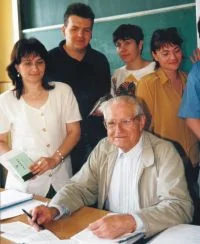
Administration, first-cycle programme
Administration is presented as a Polish-language, three-year first-cycle programme at the Pułtusk branch, organised through part-time weekend study. Its practical profile combines legal, social and economic subjects rather than treating administration simply as office procedure. Constitutional and administrative law sit alongside civil law, public finance and local government. Students also encounter European Union law, public procurement, taxation and employment law. The curriculum includes ethics and sociology, giving institutional decision-making a wider social setting. Digital tools, artificial intelligence and intellectual property introduce questions associated with changing administrative practice. Communication, negotiation and mediation are included with group work and practical exercises. Placements appear in semesters three through six, while the diploma seminar occupies the final two semesters. This combination connects the programme's classroom subjects with supervised practical experience and the development of a final academic project concerning administration and its public responsibilities.
Pedagogy, first-cycle programme
The first-cycle pedagogy programme approaches education through pedagogy, psychology, sociology, history, philosophy and teaching theory. Its practical orientation includes understanding educational and care processes, choosing methods of professional work and considering the needs of people at different ages. The published curriculum introduces developmental psychology, special education, educational history and human rights, alongside interpersonal communication. Students study research methods and participate in placements and diploma seminars. Two areas described on the programme page are social prevention and rehabilitation, and care and educational pedagogy. The former addresses prevention and work with young people and adults; the latter considers support for children, families and adults with particular care needs. The course description also emphasises ethical reflection, sensitivity to social difficulties and the ability to work with both individuals and groups. These themes link the study of educational theory with the planning and assessment of practical educational activities.
Sources: Pedagogy, first-cycle programme ↗
Andrzej Bartnicki Main Library
The Andrzej Bartnicki Main Library supports the academy's teaching and scholarly work through collections, reading spaces and information services. Its published library guide distinguishes consultation on site, borrowing and interlibrary loans. Reference material is available in the reading rooms, while other items can be requested from storage with assistance from library staff. Current periodicals and bound journal collections complement books and teaching materials. The online catalogue brings together records for books, journals, electronic documents and educational resources; traditional catalogue tools are also described. Interlibrary arrangements allow readers to request material held elsewhere, extending the resources available for individual projects. The guide describes cooperation with academic libraries, public libraries and collections maintained by learned societies and other institutions. Reading-room access and lending serve different purposes, supporting both focused consultation of material kept in the library and longer work with items eligible for borrowing.
Sources: Andrzej Bartnicki Main Library ↗
Institute for Research in History
Historical research is organised through the Institute for Research in History, whose published areas range from early medieval archaeology to twentieth-century regional history. Mazovia is a major focus, together with medieval Central and Eastern Europe, Christianity in Poland and the histories of national minorities. The institute also identifies museum education and ethnohistory among its interests. Its publication record includes a five-volume history of Mazovia, works on Pułtusk and studies of local communities. Research and scholarly meetings have addressed the Reformation and the relationship between material and intangible heritage. Archaeological activity described by the institute extends across Mazovia and Podlasie and includes work connected with the Warsaw Ghetto. Collaboration with cultural institutions links this scholarship to public collections and interpretation. Named partners include the Mazovian Museum in Płock, the Museum of Independence, the Warsaw Ghetto Museum and Pułtusk's Regional Museum, reflecting the institution's sustained regional and historical orientation.
Sources: Institute for Research in History ↗