Visa

About Albanian University
A Tirana institution with a wider academic history
Albanian University is a private, independent and secular institution of higher education in Tirana, Albania. Its institutional history records its opening in the 2004–05 academic year, initially with a programme in dentistry. Pharmacy, architecture, law and political science were added in the following academic year, and the subject range subsequently expanded further. The university previously used the name U.F.O University and adopted Albanian University in the 2010–11 academic year. Its account of this early development connects teaching with conferences, publishing and research. The first UFO Dental conference was part of the institution’s initial academic activity, while UFO Press developed a publishing role alongside its growing programmes. These foundations help explain the university’s combination of medical, technical, economic and social-science subjects.
Sources: Institutional history ↗
Libraries across the university’s buildings
Albanian University describes library provision in three Tirana buildings: on Bulevardi Zogu I, Rruga e Durrësit and Rruga e Kavajës. The libraries provide places for study and internet access, with collections that include academic books, reference works, dictionaries, journals, conference material and other publications. The different locations have subject strengths related to the programmes they serve. The Rruga e Durrësit collection includes medical literature alongside architecture, economics, law, political science, psychology and journalism, while the Rruga e Kavajës collection has a particular connection with architecture and engineering. Departmental mini-libraries supply more specialised reading. The university also describes access to online collections with assistance from library staff, connecting physical holdings with electronic resources for study.
Sources: University libraries ↗
Engineering and practical laboratory work
The Engineering Department was established in 2010 within the Faculty of Applied and Economic Sciences. Its published undergraduate provision includes electronic engineering, computer engineering, information technology, mechatronics and electrical engineering. The departmental description also identifies science master’s study in electronic engineering and information technology, together with a professional master’s pathway in energy systems. The teaching approach combines scientific theory with practical and laboratory activities intended to develop technical analysis and problem-solving skills. Listed facilities include computing and simulation laboratories, network-infrastructure facilities, and laboratories for physics, chemistry, electrical technology and electronics. The subject descriptions relate computing to computer systems and networks, electronics to electronic and telecommunications systems, and mechatronics to the integration of mechanical processes with automated control. Additional laboratories address analogue and digital electronics, electrical and electronic measurement, automation and control, electrical machines and electronic installations. The department also describes an electronic scientific library with books and research materials for its subjects.
Sources: Engineering Department ↗
Psychology as an academic field
The General Psychology Department, part of the Faculty of Social Sciences, welcomed its first students in 2006. Its programme description covers undergraduate General Psychology and postgraduate pathways in school and clinical psychology. The department presents teaching, research and community service as connected parts of its work. Its research areas include clinical, cognitive, occupational, health, social and developmental psychology, as well as educational processes. The undergraduate course combines general formation, specialist subjects, complementary study and electives, with a practical placement included in the final year. Postgraduate descriptions give attention to research methods, professional ethics, cultural diversity and assessment. The department’s stated mission connects psychological education with social responsibility and services for communities with particular needs.
Sources: General Psychology Department ↗
How research is organised
The university’s research policy places responsibility for its central research strategy with the Academic Senate. That strategy is then developed through faculty and departmental plans for each academic year, covering basic and applied research, development projects and other creative activity. A Research Coordination Office brings together work across the faculties and departments, promotes projects and supports links with institutions inside and outside Albania. The policy also seeks to involve students in research methods and, where appropriate, in study groups and projects led by academic units. Departments organise teaching and research within their subject fields and report through their faculties. This structure connects institutional planning with the more specialised work undertaken by academic staff and students.
Sources: Research policy and organisation ↗
Publishing through OPTIME
OPTIME is Albanian University’s scientific journal and a platform for academic discussion and publication. Its introductory account describes a publication concerned with research, teaching theory and academic practice, with contributions welcomed from public and private higher-education institutions in Albania and abroad. The journal’s organisation includes academics and researchers from different disciplines and from the international academic community. The university directs readers to an online edition hosted on the Albanica platform. This publishing activity provides a channel through which the institution’s academic work can reach readers beyond individual departments. Its stated scope reflects the university’s multidisciplinary setting and its interest in cooperation with researchers from other institutions.
Sources: OPTIME scientific journal ↗
International academic exchange in practice
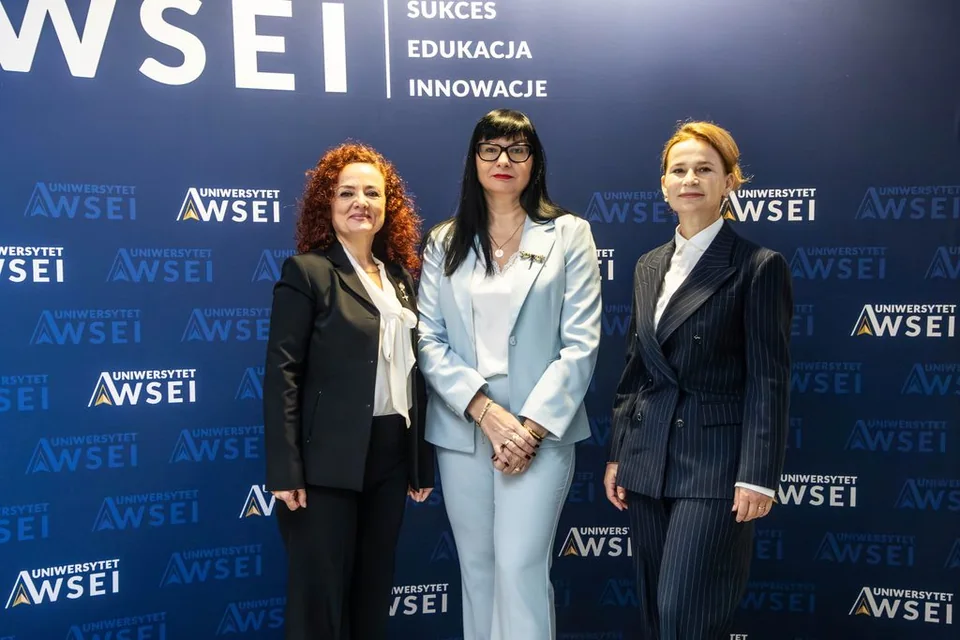
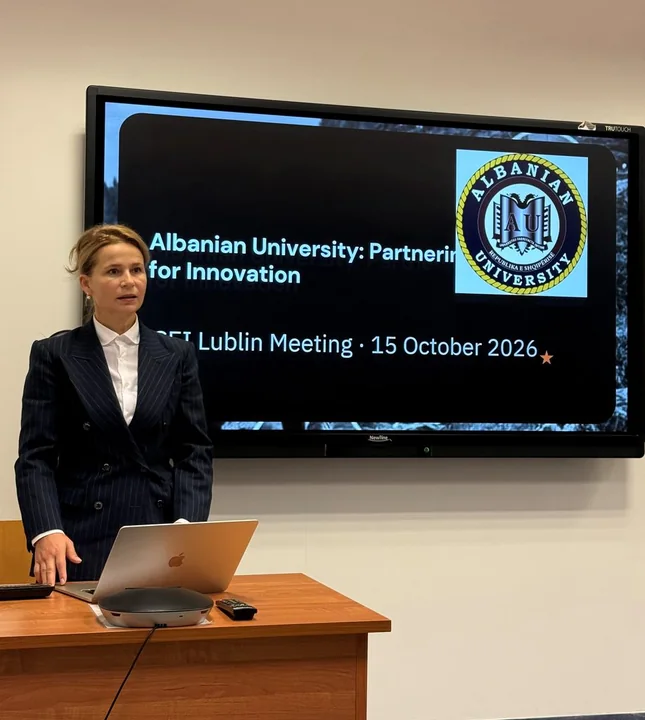
A dated example of international cooperation is the visit by Albanian University academics Dhurata Lamçja and Rezana Balla to WSEI University on 15 October 2026 under Erasmus+ staff mobility. According to the university’s report, the visitors presented Albanian University’s teaching and research activity. Discussions concerned possibilities for joint research, scientific publications, participation in European Union-funded projects and wider student mobility. The report presents the visit as an exchange of experience and an opportunity to identify further areas of cooperation. It therefore illustrates the practical work behind internationalisation: staff meet their counterparts, explain their institution’s priorities and explore projects that may develop through continued collaboration.
Sources: Staff mobility at WSEI University, October 2026 ↗