Visa

About Agricultural University of Tirana
An agricultural university rooted in Albania’s development
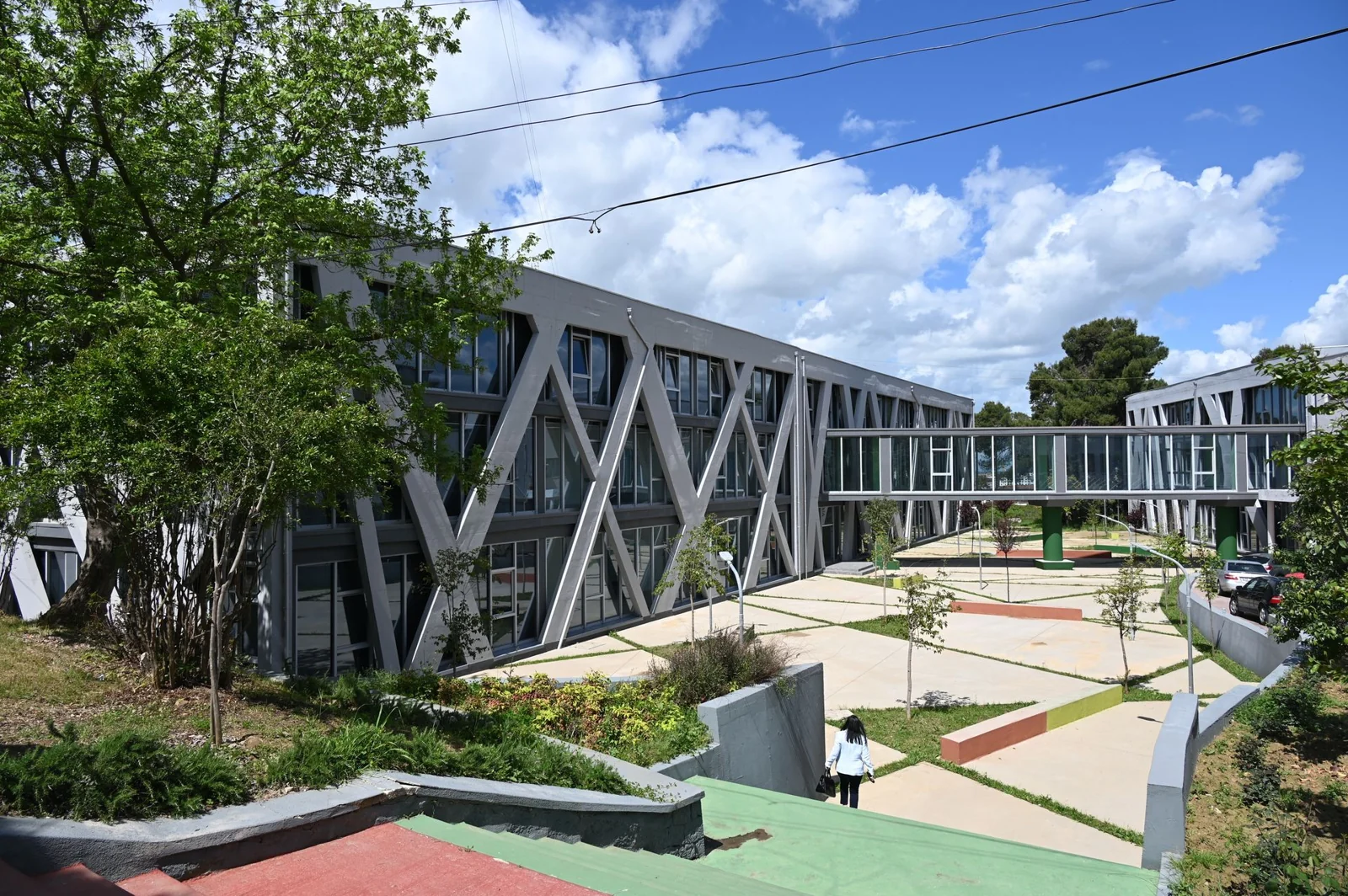
The Agricultural University of Tirana is an Albanian university based at Kodër-Kamëz, Tirana. Its Albanian name is Universiteti Bujqësor i Tiranës, commonly abbreviated UBT, while its English-language pages also use AUT. Its education and research span agriculture, the environment, food, forestry, veterinary medicine and the economic activities associated with rural development.
The institution began as the Higher Agricultural Institute on 1 November 1951, with agricultural science teaching delivered through its Faculty of Agronomy. Initially located at Laprakë, it moved in 1956 to Kodër-Kamëz, where the university remains based. Forestry expanded the institution’s academic structure in 1959. Its historical account describes subsequent development in agricultural economics, environmental science, natural resources and food biotechnology. International cooperation supported academic rebuilding and development during Albania’s transition in the 1990s. These successive stages explain the university’s combination of a long agricultural tradition and a broader contemporary life sciences identity.
Sources: University history and legacy ↗
Agriculture, natural resources and digital methods
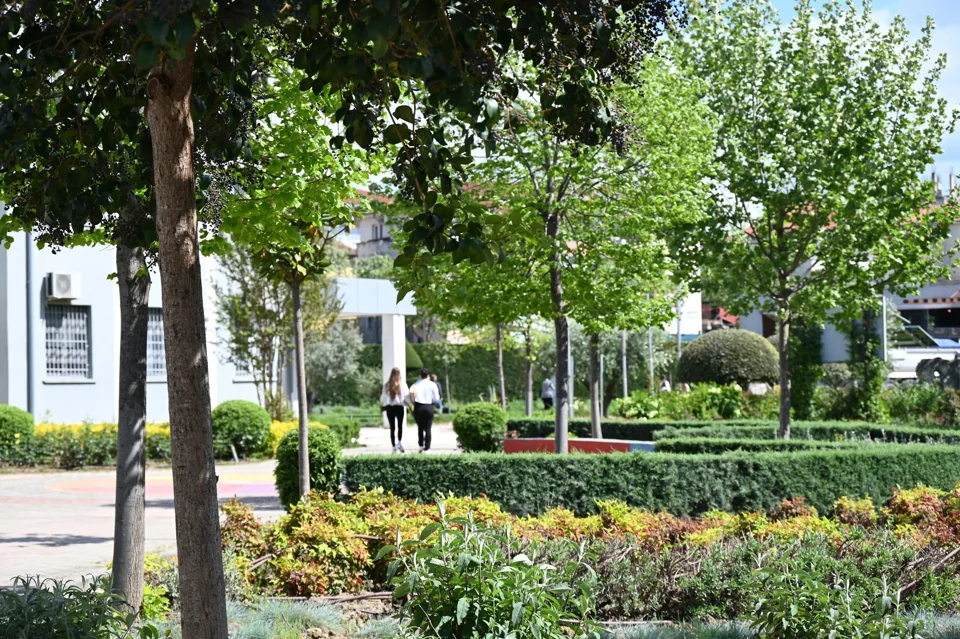
The Faculty of Agriculture and Environment brings together teaching and research relating to agricultural production and environmental management. Its fields include plant cultivation, animal husbandry, food security and the use of information technology in agriculture. Its stated purpose connects innovation with the conservation of water, land and biodiversity.
The faculty’s departments cover environment and natural resources, plant protection, agronomic sciences, animal science, horticulture and landscape architecture, and aquaculture and fisheries. Its official introduction describes programmes developed within the UBT 2030 process in environmental and water engineering, agricultural science and food security, and information technology in agriculture and the environment. Laboratories, digital resources and practical fields support this combination of scientific knowledge and applied work. The breadth of subjects links the management of production with the resources and ecosystems on which it depends.
Sources: Faculty of Agriculture and Environment ↗

Food science and the wider production chain
The Faculty of Biotechnology and Food focuses on food technology, biotechnology, quality and safety. Its mission treats the food chain as a connected system, from processing raw materials of plant and animal origin through packaging, storage and marketing. Education is described as combining scientific knowledge, practical skills and ethical responsibilities.
Academic units include chemistry, food science and biotechnology, agro-food technology and the Food Research Center. Chemistry provides theoretical and practical grounding in inorganic, organic and analytical methods. The other units connect that scientific base with processing, investigation and the application of food management and quality systems. The faculty also identifies human nutrition and interdisciplinary work in agro-industry and life sciences within its academic vision. This places the transformation and assessment of agricultural products alongside their primary production in the university’s educational scope.
Sources: Faculty of Biotechnology and Food ↗
Forests and animal health
The Faculty of Forestry Sciences addresses the management, conservation and sustainable development of forests and natural resources. It emphasises climate change, biodiversity and the use of resources, with practical skills and interdisciplinary work forming part of its educational approach. Its departments include forests, wood industry, and physics and applied sciences. The wood-related field extends to processing, furniture and interior design, linking forest resources with subsequent uses of timber.
The Faculty of Veterinary Medicine connects education, research and services concerning animal health and welfare with public health and food safety. Its stated approach follows the One Health principle, which considers relationships between animals, people and the environment. Its academic organisation includes clinical subjects, veterinary public health, preclinical modules and morphofunctional modules. The published descriptions identify subjects such as pathology, pharmacology, parasitology, virology and immunology. Together, these areas provide a scientific and practical basis for studying animals and their relationships with food systems and society.
Sources: Faculty of Forestry Sciences ↗ · Faculty of Veterinary Medicine ↗
Economics, agribusiness and rural communities
The Faculty of Economics and Agribusiness traces its establishment to 1971 as the Faculty of Agrarian Economics. Its mission extends across teaching, research, training and the provision of expertise in areas relevant to the economy and rural development. Agribusiness management, rural development policy, finance, accounting, auditing, marketing, agrotourism and business informatics are among its stated fields.
The faculty’s departmental structure includes economics and rural development policies, finance and accounting, agribusiness management, rural tourism management, mathematics and computer science, and foreign languages. These units connect agricultural activity with business organisation, information systems, public policy and services in rural areas. The foreign languages department provides supporting teaching across the university, including English for Specific Purposes and medical terminology. This economic and social dimension complements the biological, technical and environmental subjects taught elsewhere at AUT.
The AUT-BOKU transformation programme
The AUT-BOKU 2030 strategy sets out a programme of reform supported by BOKU University in Vienna. The official strategy describes support during 2024–2028 and connects academic and scientific development with the transfer of knowledge. It presents reform as a response to changes in Albania’s agricultural economy and the knowledge and skills needed within life sciences.
On 26 March 2026, the university announced that its Academic Senate had approved a reorganisation of its academic offer for the 2026–2027 year after a two-year collaborative process. The announcement emphasised interdisciplinary study, innovation and the integration of theory and practice. It also identified further work on doctoral education and administrative restructuring. This records an approved direction of institutional change, connecting the university’s established fields with its plans for future development.
Sources: AUT-BOKU 2030 strategy ↗ · Academic Senate academic-offer reform announcement,26March2026 ↗