Visa
About Akademia e Studimeve Albanologjike
A historical academy and its continuing research
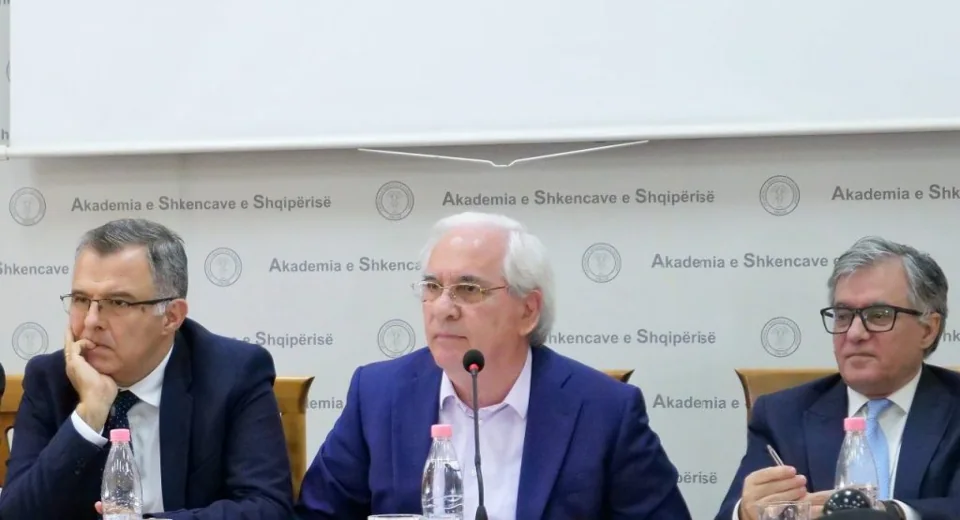
Akademia e Studimeve Albanologjike, or the Academy of Albanological Studies, was the Tirana-based institution bringing together research into Albanian language, literature, history and culture. Its constituent institutes had earlier histories of their own. The official Linguistics and Literature Institute account records their work within the Centre of Albanological Studies from 2008 and the centre’s change into an academy in 2017.
The institution’s present context is defined by reorganisation. A May 2023 government decision ordered the closure of the academy’s separate activity and the transfer of its rights and obligations to Albania’s Academy of Sciences. Its research units and academic personnel were to be reorganised within that academy. Current institute histories record their return to the Academy of Sciences from January 2024. The former academy’s name therefore remains important to the history of these research fields, while their work continues through the reorganised institutes.
Sources: Linguistics and Literature Institute history ↗ · Official statutory bulletin: decisions 338 and 821, pages 57–59 ↗
Institutional continuity through reorganisation
The 2023 decision addressed research personnel, collections and academic records as well as institutional administration. It transferred assets to the Academy of Sciences with responsibilities for their preservation and maintenance. It also required arrangements for unfinished doctoral studies to be transferred to other higher-education institutions offering the same or similar subjects. A December 2023 decision established permanent Albanological research units within the Academy of Sciences.
In its public explanation, the Academy of Sciences described the change as an institutional union and the integration of research institutes into its academic network. It emphasised coordination across Albanological scholarship and cooperation on major dictionary, history and encyclopedia projects. This explanation concerns the organisation of continuing research rather than the disappearance of the disciplines or their scholarly collections.
Sources: Official statutory bulletin: decisions 338 and 821, pages 57–59 ↗ · Academy of Sciences explanation of institutional union ↗
Archaeology and field research
Archaeological research within this institutional tradition reaches back to the creation of an archaeological group and museum in 1948. The research organisation subsequently developed through a sector within the History Institute, an archaeological research centre and, in 1991, the Archaeology Institute. The institute joined the Centre of Albanological Studies in 2008 and returned to the Academy of Sciences in January 2024.
Its work combines field investigation, the study of material remains and scholarly publication. The institute’s history describes projects concerning prehistory, antiquity and the medieval period, together with international cooperation at sites including Apollonia, Butrint and Sovjan. Such projects brought Albanian researchers together with overseas archaeologists and provided opportunities for younger specialists and students to gain research experience. Results have appeared in monographs and the journal Iliria.
Sources: Archaeology Institute history ↗
Language, literature and research resources
The Linguistics and Literature Institute studies Albanian and its dialects, literary history and the development of written language. Its departments address grammar and language history, lexicology and terminology, applied linguistics and literary studies. Documentary resources include lexical and grammatical card collections, dialect and place-name records, sound recordings and bibliographic material. These collections provide evidence for linguistic and literary research.
The institute’s research account describes scientific grammars, explanatory and specialist dictionaries, historical linguistics and critical editions of earlier texts. Dialect research has included field collection across Albanian-speaking areas and work leading to a dialect atlas. Literary scholarship examines authors, periods and the development of Albanian literature, with publication of critical editions and comparative studies. Conferences and scholarly meetings provide another route for presenting and discussing this work.
Sources: Linguistics and Literature Institute history ↗ · Linguistics and Literature research activities ↗
Anthropology, ethnology and folklore
The Anthropology Institute brings together ethnology and folklore. Its origins lie in an ethnography sector established in 1947, and its research examines social and cultural phenomena in Albanian society through historical, comparative and theoretical approaches. Contemporary cultural life and the development of modernity are among the subjects described in its institutional account.
Its scientific archives preserve material gathered through generations of field expeditions. These include photographs and negatives, written ethnographic and folklore records, textiles, wooden and metal objects, and audiovisual recordings. Some objects were collected by researchers and others donated. The collections document cultural practices through several kinds of evidence rather than through written accounts alone. The institute also publishes Antropologji, a scholarly journal covering anthropology, ethnography, folklore and related work.
Arts scholarship and public collections
The Arts Study Centre traces its foundation to 1986. Its subjects include visual art, theatre, cinema, music, choreography, aesthetics and artistic institutions. It became part of the Albanological research organisation in 2007, integrated within cultural anthropology and art studies. Following the 2023 reform, it was re-established as a permanent scientific unit within the Academy of Sciences. Its publishing tradition includes the journal Studime mbi Artin, first issued in 1995. Its current description distinguishes research and service sections and includes architecture, painting, sculpture and the moving image within its remit, alongside the history of artistic institutions and interactions between art forms.
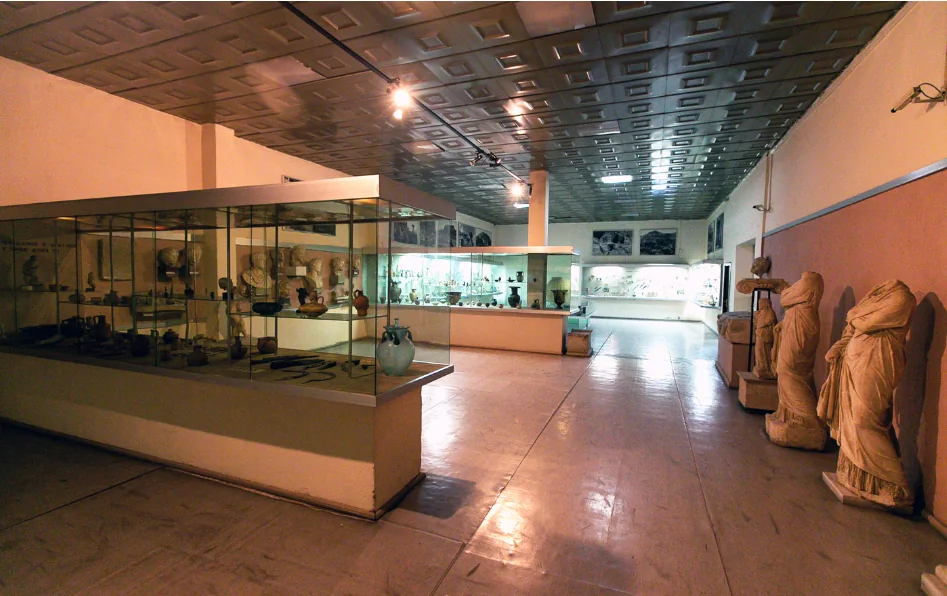
A public-facing part of this research landscape is Tirana’s Archaeological Museum. It opened in 1948 as an archaeological and ethnographic museum and became specifically archaeological in 1976. Its galleries present material from prehistoric periods through antiquity and the Middle Ages, supported by maps, photographs and information identifying where objects were found. The museum also describes guided visits and educational activities for school pupils and students, connecting archaeological research with public learning.
Sources: Arts Study Centre history ↗ · Tirana Archaeological Museum ↗