Visa
About Alanus University of Arts and Social Sciences
Art and academic study in dialogue
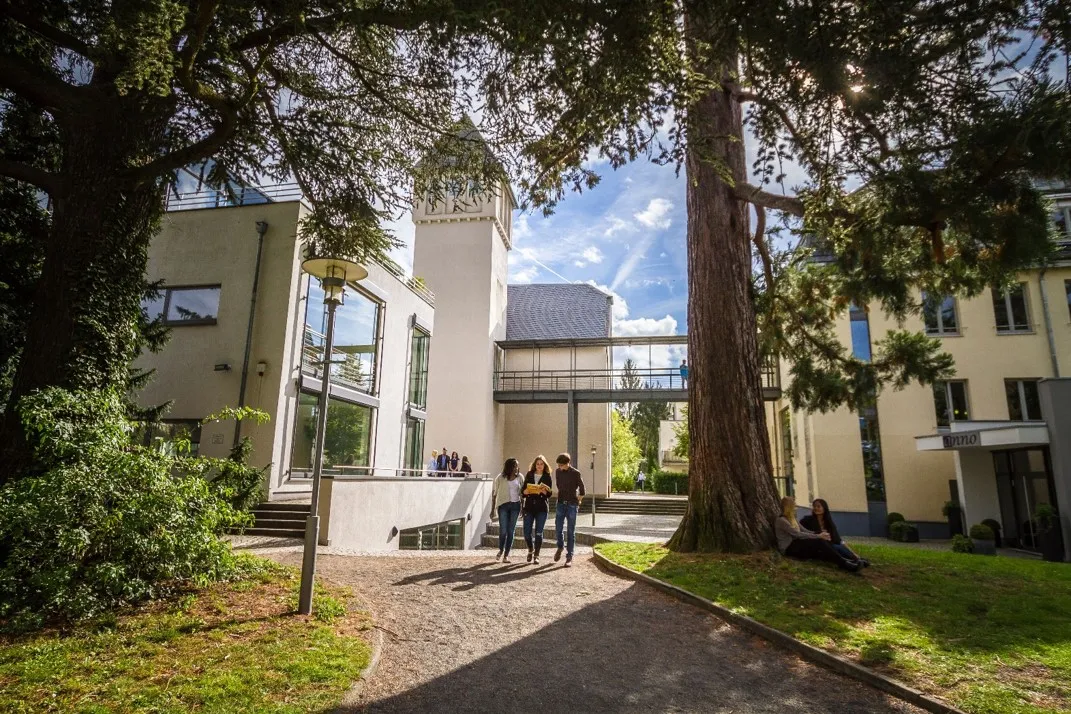
Alanus University of Arts and Social Sciences is known in German as Alanus Hochschule für Kunst und Gesellschaft. Based in Alfter near Bonn, North Rhine-Westphalia, it brings artistic practice into dialogue with academic study and questions about society. The university’s subject range includes architecture, visual and performing arts, eurythmy, artistic therapies, education and business. Its profile describes small working groups, close contact with teaching staff and interdisciplinary approaches as important elements of the learning environment. Bachelor’s and master’s study is organised in several formats, including full-time, part-time and study alongside employment. The institution presents personal development and social responsibility as aims that accompany specialist knowledge and artistic work. Alanus describes itself as a privately operated, state-recognised arts university. Its interdisciplinary courses create opportunities for collaboration through projects that cross departmental boundaries.
Sources: University profile ↗
Two Alfter campuses and a Mannheim centre
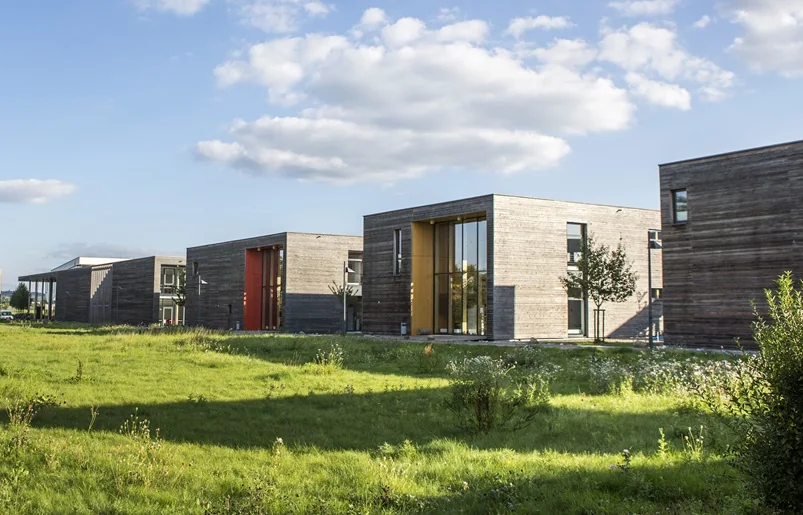
The university’s current locations have different roles. Campus I at Johannishof in Alfter is associated especially with visual art, art-education-therapy, acting and eurythmy. Studios, rehearsal rooms, stages and its own courtyard theatre support artistic activity. Campus II at Villestraße opened in 2009 and accommodates educational science, artistic therapies, business and architecture. Its facilities include seminar rooms, studio buildings with student workspaces, the library and dining areas. The Mannheim study centre houses the Institute for Waldorf Education, Inclusion and Interculturality, linking its work with educational science in Alfter. The location page also sets out a future change: a gradual consolidation at a new Bad Honnef campus is planned to begin in September 2027. The Alfter campuses and Mannheim centre therefore belong to the present location description, while Bad Honnef is an announced development.
Sources: Alfter, Mannheim and planned Bad Honnef move ↗
The shared Studium Generale
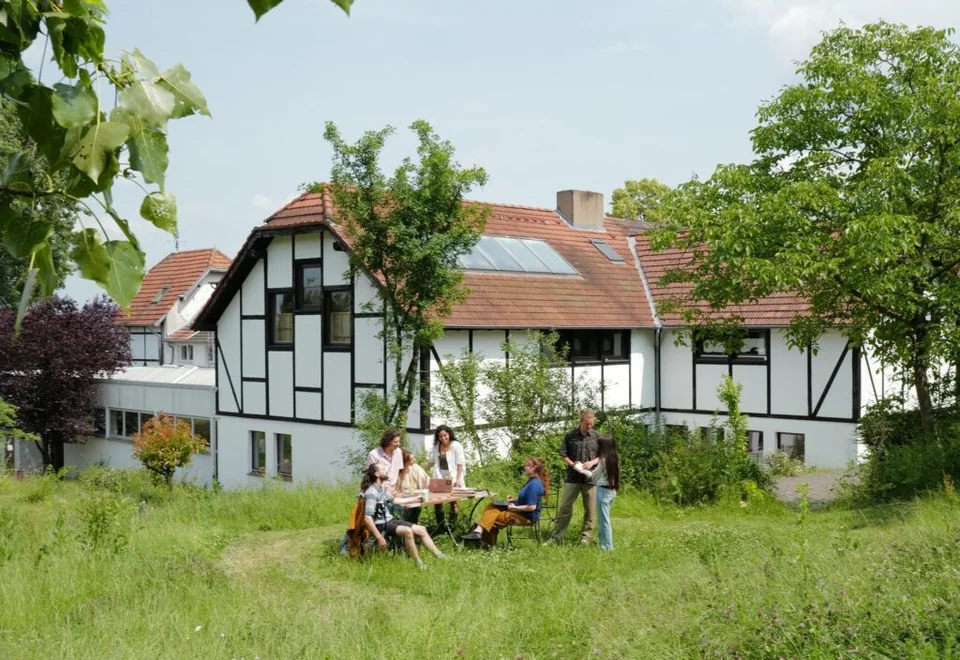
A distinctive part of study at Alanus is the cross-disciplinary Studium Generale. It brings together students from different subjects and year groups to consider philosophy, art and social science. Its themes include theoretical philosophy, ethics, spirituality, aesthetics, art theory, cultural history and social questions. Students can develop individual interests within this shared framework. The university explains the programme through a humanistic educational tradition associated with its namesake, Alanus ab Insulis, and the liberal arts. The purpose is to encourage critical reflection on the assumptions behind specialist disciplines and to help students articulate their own cultural and social positions. The published organisation normally includes two compulsory modules, with detailed requirements set by each degree programme. Additional certificate themes include diversity, philosophy and life, socioecological transformation, and digitality and artificial intelligence. The Studium Generale also provides a setting for examining Rudolf Steiner’s thought through philosophical analysis and critical comparison with other perspectives. Students can continue attending additional sessions throughout their specialist degree studies.
Sources: Studium Generale ↗
Library resources for study and research
The Alanus library combines printed literature and scholarly articles with electronic resources. An online catalogue provides a starting point for locating material held in Alfter, with a separate catalogue available for Mannheim. Users can reserve borrowed items and manage renewals through their accounts. DigiBib supports wider literature searching and the ordering of books or journal articles through interlibrary loan. The library also describes cooperation with the University and State Library Bonn and links to its bonnus discovery portal. Materials are arranged by subject, while reference collections and semester reading collections keep selected resources available for use on site. Students can also request a collection service for books held by the library and suggest acquisitions through their department. These services connect day-to-day reading with broader scholarly research. Semester collections bring together seminar readings by teacher and topic, keeping accompanying literature available to multiple users. A book-return box supports returns outside the library’s opening hours.
Sources: University library ↗
Architecture through projects and making
The Bachelor of Arts in Architecture illustrates the relationship between artistic, technical and social learning at Alanus. Its curriculum includes spatial design, interiors and urban space, building types, construction materials, structures and resource-conscious planning. Supporting subjects encompass freehand drawing, model making, CAD, three-dimensional visualisation, architectural history, law and building economics. Students work on projects involving real sites and discussions with clients or community partners. The programme describes presentations and exhibitions of projects at the end of each semester, alongside a concluding bachelor’s thesis. Teaching takes place at Campus II, where architecture has student workspaces, a model-making workshop, a digital laboratory and a space for full-scale spatial experiments. An accompanying office internship forms part of the practical study experience. The published full-time bachelor’s structure comprises six semesters and 180 ECTS credits. It specifies at least six weeks of accompanying office practice, adding a defined workplace component to studio projects and academic coursework.
Sources: Bachelor of Arts in Architecture ↗
Research across artistic and social questions
Alanus’s research organisation reflects its combination of art, education and society. Its published institutes include the Research Institute for Creative Arts Therapies, a graduate college for Waldorf education, and the Institute for Education and Social Innovation. Other units address process architecture, social organisation and regenerative economic practices. The research directory also identifies work on learning through practical activity and vocational education. Institutes concerned with art therapy, music therapy and eurythmy therapy organise teaching and research in their respective fields. The directory presents these as distinct academic areas within the university’s wider setting. Together with cross-disciplinary teaching, this institutional structure provides several routes for connecting specialist practice with research questions and public concerns.
Sources: Research institutes ↗