Visa

About Al-Ryada University for Science and Technology
A university in Sadat City
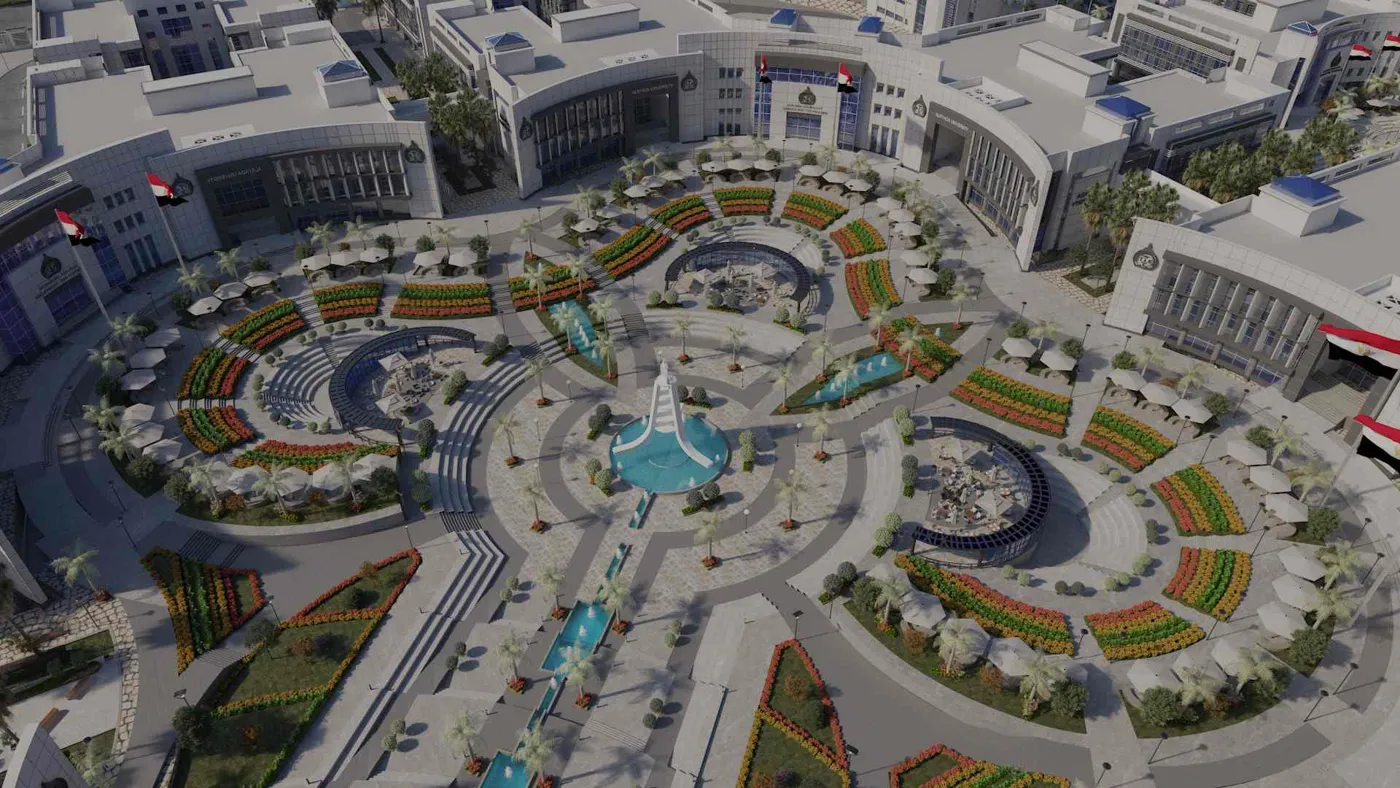
Al-Ryada University for Science and Technology, usually abbreviated RST, is a private university in Sadat City, Menoufia Governorate, Egypt. Its official address places it on the city's central axis near the Cairo–Alexandria desert road. The university's institutional account cites Presidential Decree 445 of 2021 as the basis for its establishment. Its location links it with Sadat City's industrial and urban setting. The university brings together technical, business and health-related education, with specialist faculty descriptions explaining how its programmes combine subject knowledge, practical study and research. Its published information also provides student systems, electronic learning and academic service links.
Sources: Al-Ryada University: About RST ↗
Engineering
The Faculty of Engineering offers bachelor's specialisations in automation and robotics engineering, automotive mechatronics engineering, and renewable and sustainable energy engineering. Its published account identifies a credit-hour system and emphasises educational and research work connected with societal and industrial problems. Laboratories, workshops and interdisciplinary coursework form part of the learning environment it describes. Sustainability is a particular theme, alongside collaboration, creativity and continuing learning. The faculty's mission also addresses professional ethics and social values. These priorities connect the study of automated systems, vehicles and energy with broader questions about technological development and its effects on the surrounding environment.
Sources: Faculty of Engineering ↗
Computing and artificial intelligence
The Faculty of Computers and Artificial Intelligence combines a common computing foundation with specialist study. Its published specialisms include mobile programming, computer and software security, artificial intelligence, and medical informatics. Early study covers programming, computation, mathematics, technical writing and communication. Students then encounter data structures, database design, algorithms, software engineering and web programming. Later study introduces networks, security and operating systems before more specialised subjects such as machine learning, embedded systems, data mining and natural language processing. The final stage includes an individual honours project supported by a supervisor. The faculty also identifies teamwork, project management and the ability to continue learning as important parts of computing education.
Business and business informatics
The Faculty of Business Administration provides specialisations in accounting, finance, marketing, entrepreneurship and innovation, business administration, economics and business informatics. Its first-year curriculum establishes foundations in management, accounting, economics, statistics, financial mathematics and business computing. Students subsequently follow business informatics or a broader business route before concentrating on a chosen field. Business informatics connects information systems with commercial and financial subjects, including programming, database management, enterprise resource planning and analytics. Later topics include information privacy, business intelligence, digital transformation and decision-support systems. The faculty's published plan concludes with an individual final-year project. Its educational approach links theoretical understanding with practical work and includes sustainability within its stated teaching and research priorities.
Sources: Faculty of Business Administration ↗
Nursing education
Nursing study combines fundamentals of nursing with basic medical sciences, followed by medical and surgical nursing, maternity-related study and mental health nursing. The faculty describes simulation laboratories as settings where students can practise skills and assessments before entering clinical environments. Its curriculum also includes a hospital-based internship following academic study. The programme account emphasises professional communication, teamwork, ethical conduct and the use of information technology. Critical thinking and problem-solving are presented as educational priorities. Together these elements describe the faculty's preparation of students through theoretical knowledge, simulated practice and supervised learning experiences.
Sources: Faculty of Nursing ↗
Dental education
The Faculty of Dentistry's curriculum brings together basic science, medical science and dental subjects. Initial study includes dental morphology and biomaterials, followed by the biology of oral and dental tissues. Preclinical education introduces laboratory work and dental simulators alongside subjects such as pathology and radiology. Later stages involve clinical dental courses and comprehensive care. The faculty also describes additional training interests in digital dentistry, including computer-assisted design and manufacturing, laser applications and three-dimensional printing. Its academic mission emphasises logical thinking, research, self-directed learning, infection control standards and professional ethics. Electronic learning materials provide further support for students' study.
Sources: Faculty of Dentistry ↗
Educational direction
RST's university-wide mission links educational technology, partnerships and research with community responsibility. Its vision connects institutional development with sustainable development goals. The mission also emphasises a stimulating learning environment and cooperation with national and international universities and organisations. Ethical values and national identity are included in the framework it sets out. This provides a common direction for faculties whose subjects range from engineering and business to health education, while allowing their published curricula and research interests to address different disciplinary needs.
Cooperation with the National Telecommunication Institute
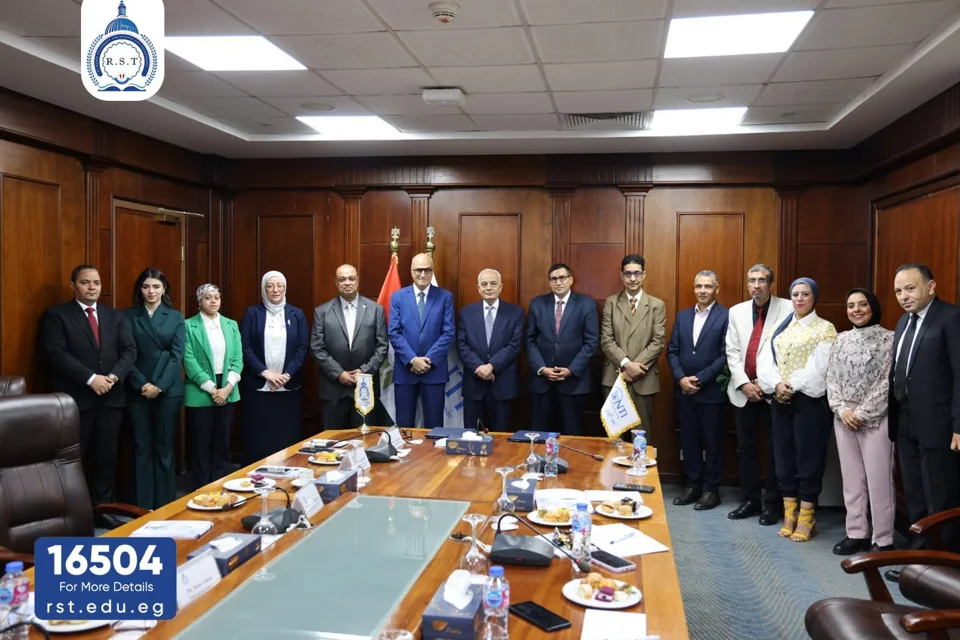
RST and the National Telecommunication Institute signed a cooperation protocol at the institute's headquarters in Smart Village. The agreement concerns training for students and graduates, knowledge exchange, workshops and scientific research. Its listed technology areas include artificial intelligence, cybersecurity, cloud computing, the Internet of Things, embedded systems, mobile communications and fibre optics. The published account also identifies web design, graphics and freelancing within the training interests. Cooperation extends to graduation projects, innovation and the supervision of research-related work. The university connects the agreement with the industrial setting around Sadat City and with opportunities to relate academic projects to practical problems.
Sources: RST and National Telecommunication Institute cooperation protocol ↗
University community
A university report about the beginning of the 2026–2027 academic year describes visits to several faculties and meetings with students in their classrooms. The account emphasises practical training and student activities alongside lectures and examinations. Leadership, communication and teamwork were highlighted as skills developed through participation in university life. The visits covered Business Administration, Nursing, Engineering, Physical Therapy, Dentistry and Pharmacy.
Sources: University faculties at the start of the 2026–2027 academic year ↗