Visa
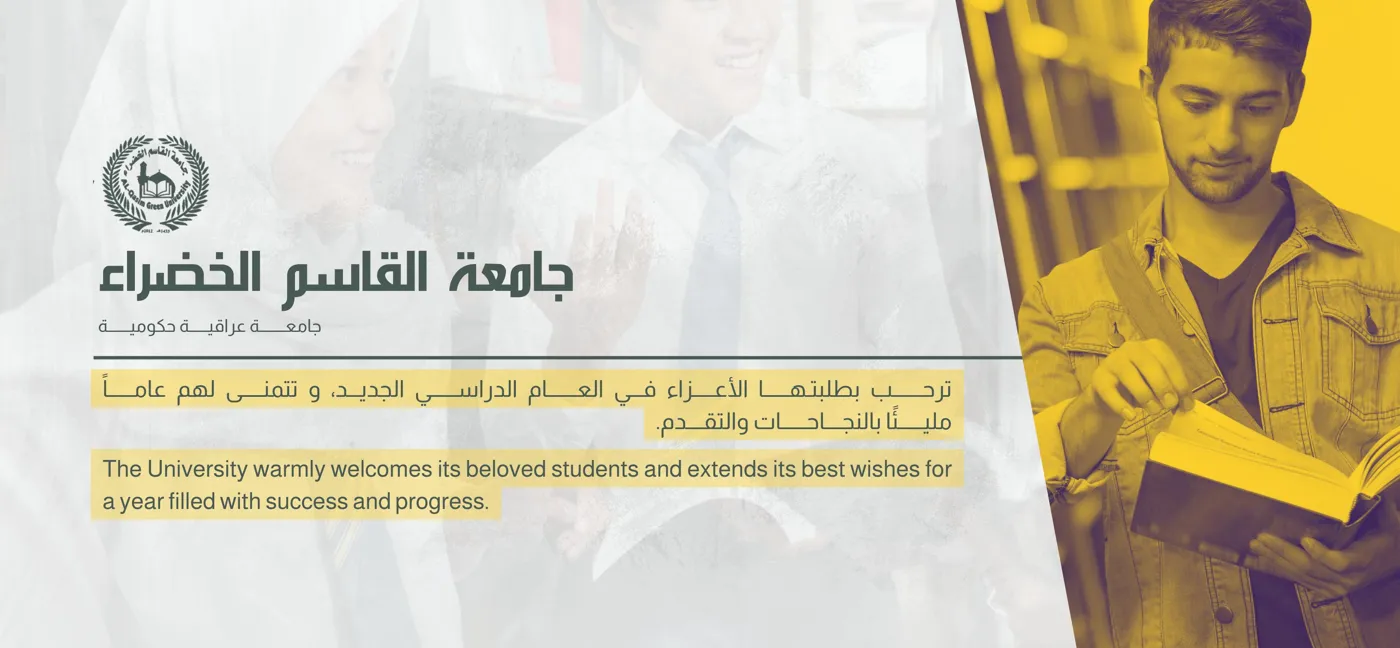

About Al-Qasim Green University
A public university in Babil
Al-Qasim Green University is an Iraqi public university based in Al-Qasim, in Babil province south of Baghdad. Its official overview traces the institution to a ministerial letter dated 24 April 2012. The initial development involved separating the colleges of Agriculture and Veterinary Medicine from the University of Babylon and bringing them into the new university, followed by the creation of further colleges.
The university connects the word “green” in its name with attention to environmentally friendly buildings and sustainable energy in campus planning. Its academic remit includes agricultural and veterinary sciences, food, biotechnology, environmental subjects, science, engineering and sport. The institutional account also identifies community-facing courses, seminars, workshops and field visits as ways of connecting university knowledge with the needs of surrounding communities.
Sources: University overview ↗
Agriculture and the university’s origins
The College of Agriculture predates the university itself. Its published history records establishment in 2004 with departments in animal production and soil and water. Field crops and horticulture were added in 2006. The account describes several changes of premises during the college’s early development, showing how its teaching activity developed before it became part of Al-Qasim Green University.
The college’s educational statement links teaching, research and outreach. It emphasises academic and social development through activities such as training placements, workshops and participation in conferences. Its departmental framework brings together animal production, soil and water science, field crops and horticulture. These subjects provide a disciplinary foundation for the university’s continuing interest in agriculture, environmental resources and the relationship between scientific knowledge and regional production.
Sources: College of Agriculture ↗
Food science and agricultural products
The College of Food Science describes its establishment through a Ministry of Higher Education and Scientific Research letter dated 21 August 2013. Its founding rationale concerns what happens to agricultural products after production: storage, processing and marketing can affect how plant and animal products are used and how losses are limited.
The college’s published structure includes Food Science and Technology, Dairy Science and Technology, and Food Health and Nutrition. Its introductory account connects specialist education with manufacturing processes, storage methods and the use of agricultural surpluses. This gives food science a distinct place within the university’s broader agricultural and environmental interests. The academic focus extends from the production of raw materials to their transformation, preservation and movement through food-related activities.
Sources: College of Food Science ↗
Library collections and research support
The Central Library describes its role as collecting, organising, preserving and making information available for teaching and research. It serves academic staff, researchers, undergraduate and postgraduate students, and university employees. Its resource framework includes books, periodicals and dissertations in printed and electronic formats.
The library’s functions extend beyond acquiring materials. Its published responsibilities include cataloguing and classification, collection maintenance, coordination with other libraries and helping students use information resources. Electronic and virtual-library services are part of its approach to access. It also identifies continuing education in library and information work, training for library personnel, and participation in general and specialist book exhibitions. Together, these functions position the library as both a collection service and a source of guidance in locating and using academic material.
Sources: Central Library ↗
Coordinating scientific work
The Scientific Affairs Department coordinates research-related administration across the university. Its work includes circulating information about conferences, seminars and training, following research projects and communicating scientific activity within and beyond the institution. It also acts as an administrative link with the Ministry of Higher Education and Scientific Research for matters such as new academic departments, postgraduate study and consulting offices.
The department’s published structure identifies units for scientific journals, conferences and seminars, and research plans and patents. Their responsibilities include maintaining research records, following publication activity, organising the administrative requirements of scientific meetings and archiving patents. A further division concerns the dissemination and potential application of scientific products, including communication about university research that may be relevant to ministries or other public institutions.
Sources: Scientific Affairs Department ↗
Supporting entrepreneurial ideas
The Technology Incubator Division is described within Iraq’s public-university incubator network. Its stated purpose is to support ideas, projects, research and patents and to develop a culture of entrepreneurship among university staff and students. The division presents incubation as a process of helping an initial idea develop into a more defined project.
The services described include technical and administrative training, marketing and consultancy, feasibility studies, legal guidance and networking. Intellectual property and patents also feature in the division’s objectives. It aims to help participants understand how to protect ideas, organise projects and communicate with interested external partners. Connecting initiatives with possible sources of finance is another stated function, alongside advice during project development and follow-up after incubation.
Sources: Technology Incubator Division ↗
Sport, arts and participation
The Student Activities Department brings together sporting, artistic and scouting activities. Its institutional history describes an early sports-and-arts committee during the 2014–2015 academic year and the adoption of the Student Activities Department name in February 2015.
The department’s responsibilities include preparing teams, organising participation in university activities and arranging the supervision of competitions and events. Its artistic remit includes drawing, sculpture, handicrafts and theatre, with programmes intended to develop students’ talents. Scouting activities place emphasis on volunteering, cultural awareness and participation in camps. These activities provide forms of participation alongside academic courses, while the department coordinates the administrative, planning and reporting work needed to organise them across the university.
Sources: Student Activities Department ↗
Educational guidance and student support
The Psychological Counseling and Educational Guidance Division describes support for students at different levels of study, as well as university employees. Its remit includes educational, social and psychological concerns and helping new students become familiar with university life.
The published organisational model uses representatives within colleges and departments, with advisers assigned to student groups. The division identifies scheduled counselling hours, guidance publications, educational seminars and visits to colleges as parts of its work. It also describes coordination with relevant university bodies and referral links with specialist services when needed. This framework connects direct guidance with communication between the university’s central division, its colleges and the advisers who work with particular groups of students.
Sources: Psychological Counseling and Educational Guidance ↗