Visa

About Al-Naji University
A new university in Baghdad
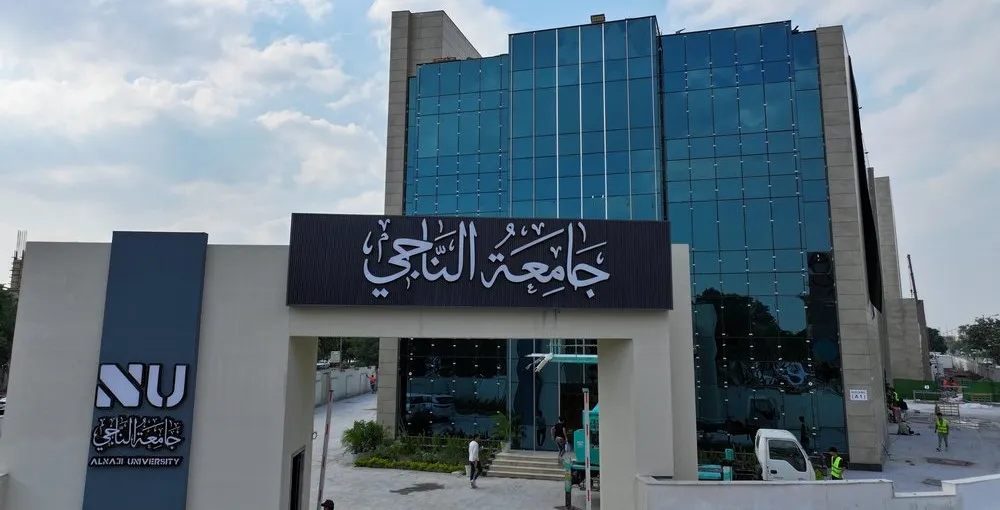
Al-Naji University is a private university in Baghdad, Iraq. Its published address places it in the Yarmouk district, in the Four Streets area on Al-Shawaf Mosque Street. The university's quality assurance policy cites the ministerial establishment order dated 24 October 2024, placing its establishment in 2024. Its president's welcome links education, research and innovation with service to society. The university describes its broader mission in terms of developing specialist knowledge, supporting academic research and creating an educational environment connected with the needs of Iraq's professional and scientific sectors.
Sources: Al-Naji University: About the university ↗ · Al-Naji University: Quality assurance policy ↗
Academic organisation
The university brings together colleges of Pharmacy, Dentistry, Health and Medical Technologies, Engineering and Education. Its department listings cover subjects ranging from petroleum and civil engineering to computer engineering, cybersecurity and artificial intelligence. The health and medical technology listings include anaesthesia and radiography and ultrasound. Education adds chemistry, English, and physical education and sports sciences to the academic range. These subjects place technical and health education alongside teacher preparation within the same institution. The university also directs students to electronic services, research platforms and academic information through its official website.
Computer engineering
Computer Engineering provides a detailed example of the university's technical education. The department publishes a programme guide and curriculum information organised by year of study. Its stated objectives connect the fundamentals of computer engineering and networking with applications of artificial intelligence. It also emphasises applied research, continued curriculum development and professional development for teaching staff. Proposed academic partnerships, visiting specialists and joint research are part of its development aims. The department's account includes integrated hardware and software systems, network design and secure computing among the areas associated with its subject. Continuing education and specialist workshops complement its longer-term academic objectives.
Sources: Department of Computer Engineering ↗
Engineering education and development
The College of Engineering's quality framework places students' technical and leadership skills at the centre of its educational approach. It sets out a cycle of planning, implementation, checking results and taking further action. Curriculum renewal, professional development for teachers, research activity and improvement of laboratories and library resources are identified as priorities. The college also describes involving teachers, students and employers in development through evaluation and accountability. These are published educational and organisational objectives, with attention to both technical knowledge and the systems used to review teaching. Its subject range encompasses physical infrastructure, energy and digital technologies.
Sources: College of Engineering ↗
Teacher preparation
The College of Education identifies departments in English education, chemistry education, and physical education and sports sciences. Its account describes workshops, training courses, competitions and projects intended to develop students' theoretical understanding and practical skills. Educational laboratories support practical learning and research. The college's objectives include creative problem-solving, independent learning and the development of capable teaching staff. It also identifies continuing education, conferences and specialist courses as ways to support educators and trainers in community institutions. Academic staff development and the regular evaluation of educational programmes form part of its stated approach to improving teaching.
Sources: College of Education ↗
Pharmacy study
The College of Pharmacy presents its undergraduate curriculum across five stages. Its description connects academic study with understanding medicines, their composition, storage and communication about their use. The college also identifies research and pharmaceutical development among the professional contexts related to the subject. Scientific seminars, conferences and workshops feature in its account of maintaining subject knowledge. Its teaching information sits alongside staff profiles and curriculum links on the college website. Together these materials describe the pharmacy programme's academic organisation and educational interests.
Sources: College of Pharmacy ↗
Library resources and study
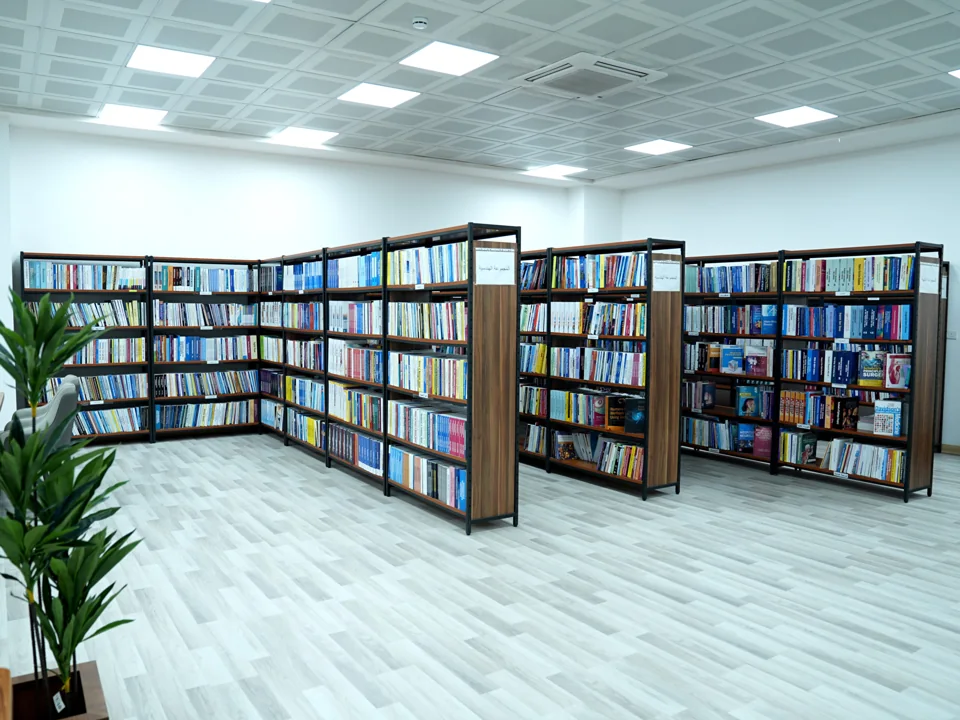
The university library combines printed collections with digital resources for students, academic staff and researchers. Its published subject coverage includes humanities, medical sciences, engineering, management and information technology. Library services include borrowing, access to electronic books and periodicals, academic database searching and reference assistance. The facility provides areas for individual and group reading, while its digital provision supports access to resources under the university's relevant policies. Training in the use of digital library tools and academic platforms is also listed. The university publishes an interior gallery showing its subject-organised bookshelves and study environment.
Sources: Al-Naji University Library ↗
Student activity and external engagement
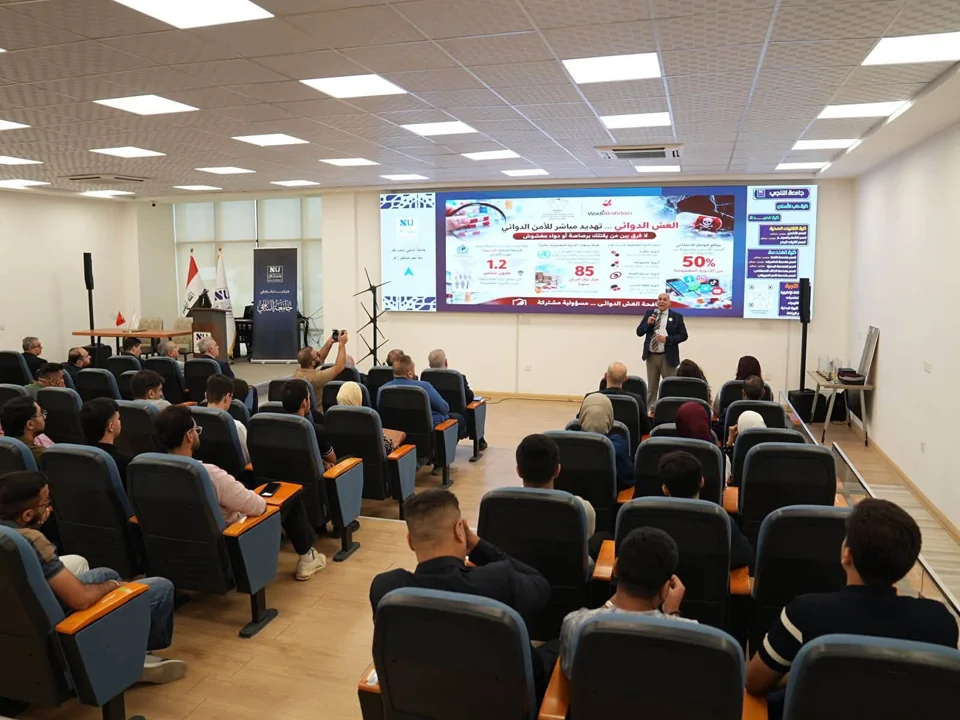
An October 2026 pharmacy event offers a concrete example of activity beyond scheduled classes. The college celebrated high-achieving students and presented the work of its PH Coders team, which had participated in the national robotics and artificial intelligence competition NURAI. The programme also included educational presentations concerning health awareness and pharmacovigilance, with guests from professional and pharmaceutical organisations. According to the university's report, the event concluded with a scientific, training and consultancy agreement between the College of Pharmacy and Wadi Al-Rafidain pharmaceutical manufacturing company. The stated purpose included developing practical training for students and strengthening cooperation between the college and the company.
Sources: College of Pharmacy student celebration and PH Coders project ↗
Institutional review
The university's institutional quality policy describes periodic self-evaluation across its colleges and programmes, with annual reports submitted to the relevant authorities. Internal committees are expected to prepare performance evidence, while external review teams assess provision through documents and visits. The policy also calls for studying evaluation reports, drawing up improvement plans and following their implementation. Training academic and administrative staff in quality management is another stated responsibility. This framework treats educational review as an ongoing institutional process covering curricula, teaching, assessment and administrative work.