Visa

About Al-Mustaqbal University
From university college to university
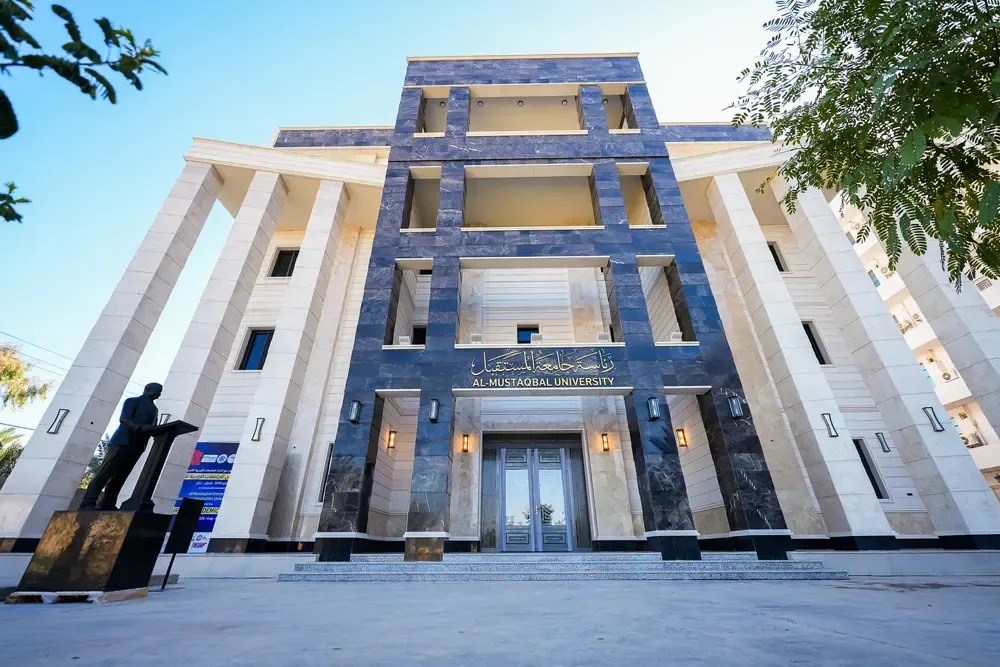
Al-Mustaqbal University is a private institution in Hillah, Babil Governorate, Iraq. Its campus is on the Hilla–Najaf road, opposite the University of Babylon. It began in 2010 as Al-Mustaqbal University College, following a 2009 Council of Ministers decision. Teaching started in the 2010–2011 academic year with computer techniques engineering and refrigeration and air-conditioning techniques engineering. The institution subsequently expanded beyond those original technical fields. Its official history dates the transition to university status to a ministerial order issued on 16 April 2023. The university name therefore represents a later stage in an institution whose teaching history began more than a decade earlier.
Sources: University history, vision and mission ↗
Academic scope and institutional priorities
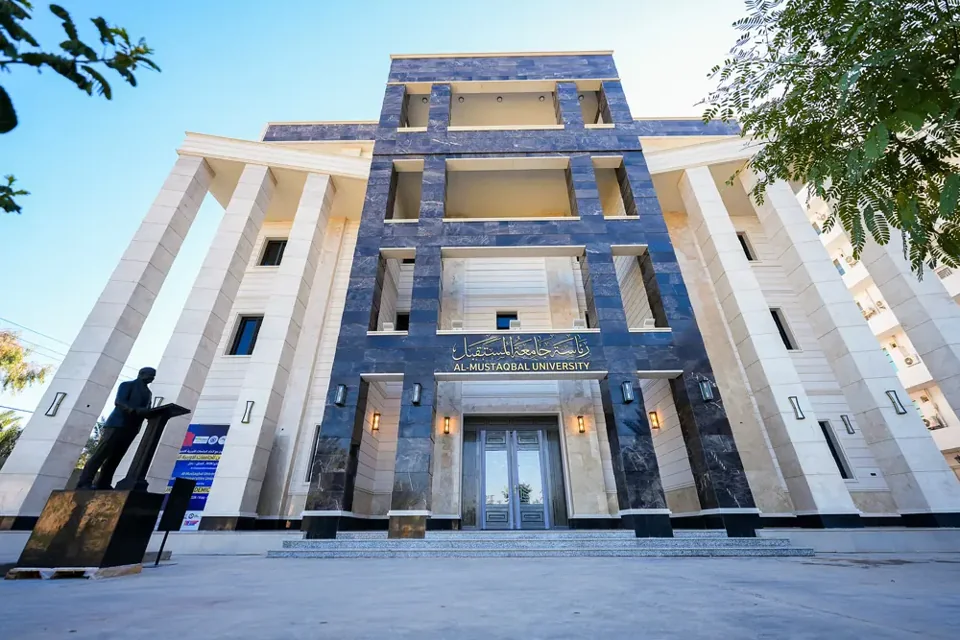
Al-Mustaqbal now describes a multidisciplinary academic community encompassing engineering, medicine and health-related subjects, management, arts and humanities. Its university-wide mission links teaching with scientific research and community participation. The published strategic objectives include developing students' scientific knowledge and technical skills, improving faculty members' professional capabilities, and creating an academic environment that supports learning. Continuing education and training are identified as means of strengthening relationships with local organisations. The university also places occupational safety, health, environmental management and energy within its institutional planning. These priorities describe the direction of its development, including improvements to infrastructure and administrative services, rather than a claim that every strategic objective has already been completed.
Sources: About Al-Mustaqbal University ↗
Computer engineering technologies
The Computer Techniques Engineering Department traces its establishment to 2010. Its programme concentrates on computer systems from an engineering perspective, including electronic systems, circuit boards, operation, maintenance and implementation. The department describes a four-year course taught in English leading to a bachelor's degree in computer engineering technologies. Its educational objectives bring computers, networks, internet services and related project management together with practical technical skills. Research and teaching are intended to connect theoretical understanding with application. The department also encourages scientific competitions and debates as ways of developing creative thinking and communication. Cooperation with specialist institutions and companies, and the development of practical training opportunities, appear among its stated objectives.
Sources: Computer Techniques Engineering Department: about ↗
Engineering across several applications
The College of Engineering presents a range of applications for engineering education. Biomedical engineering concerns the design, operation and maintenance of medical equipment, while chemical and petroleum industries engineering addresses chemical production and petroleum-related processes. Prosthetics and orthotics engineering focuses on the design and manufacture of prosthetic limbs, orthotic devices and assistive technologies. The college's account also covers civil engineering, construction, infrastructure and project management. Its teaching approach combines theoretical study with practical application through field training and research projects. Published objectives emphasise active learning, interactive teaching, applied research, professional ethics and social responsibility. Continuous improvement of programmes, laboratories and educational infrastructure is part of the college's stated development agenda.
Sources: College of Engineering: about ↗
The central library
The Central Library supports study and research through printed and electronic materials. Its account identifies engineering, medical sciences, sports sciences and humanities as four main subject areas, alongside an archive of master's theses and doctoral dissertations. The library website provides a catalogue and separates printed books from electronic resources, helping readers find materials appropriate to their work. Listed titles range from solar energy and traffic engineering to Arduino programming, medical physics and nanotechnology. The library also describes scientific activities and workshops intended to develop research skills. Its website connects the central collection with libraries associated with the university's individual colleges, placing library support within both the wider institution and its specialist academic communities.
Sources: Al-Mustaqbal Central Library ↗
Digital access for students
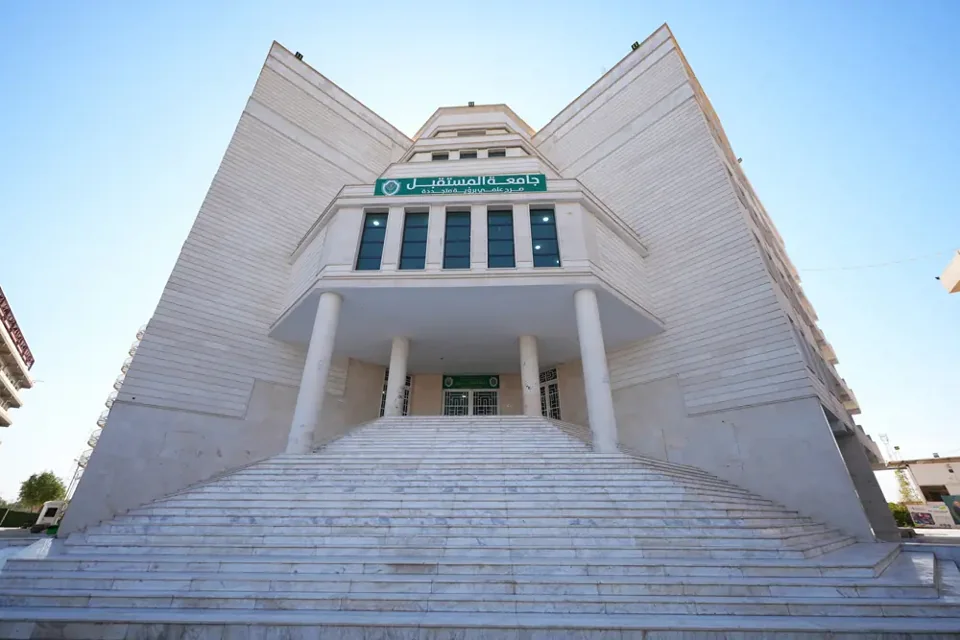
The university's electronic student portal is presented as a single place for course materials and administrative services. Its public introduction, labelled as a 2026 release, describes browsing courses by semester and downloading lectures in several formats. It also lists a route for submitting complaints and proposals to the deanship and obtaining administrative documents. This digital provision sits alongside the university's public academic pages and gives enrolled students a separate channel for managing study information. Course access and service requests are the central functions described, linking the academic timetable of semester-based study with routine communication between students and university administration.
Sources: Electronic Student Portal ↗
International residential training
A university report dated 6 September 2026 records recognition of students who completed an international residential training programme at the University of the West of England in Bristol, United Kingdom. University president Hassan Shakir Majdi met the participants at the conclusion of the programme and commended their commitment during the training period. The report identifies artificial intelligence, cybersecurity and robotics as fields connected with the experience. It also states that the university covered programme and accommodation expenses and provided participants with financial rewards. This dated activity gives a concrete example of students taking part in learning beyond their home campus, rather than simply expressing an ambition for international exchange.
Sources: UWE training participants honoured, 6 September 2026 ↗
A research visit in Bristol
The preceding day's report, dated 5 September 2026, describes the university president's visit to Bristol Robotics Laboratory at UWE Bristol. The tour covered assistive robotics and smart living, autonomous vehicle research, advanced manufacturing with industrial robotic arms, and human–robot interaction. It included discussion of research undertaken by postgraduate students and researchers with external collaborators. The president connected the visit with the importance of knowledge exchange and developing research opportunities at Al-Mustaqbal. The technologies described belong to the Bristol laboratory visited during this event. The account documents engagement with an external research environment and the university leadership's interest in bringing that experience into future academic development.
Sources: Bristol Robotics Laboratory visit, 5 September 2026 ↗