Visa
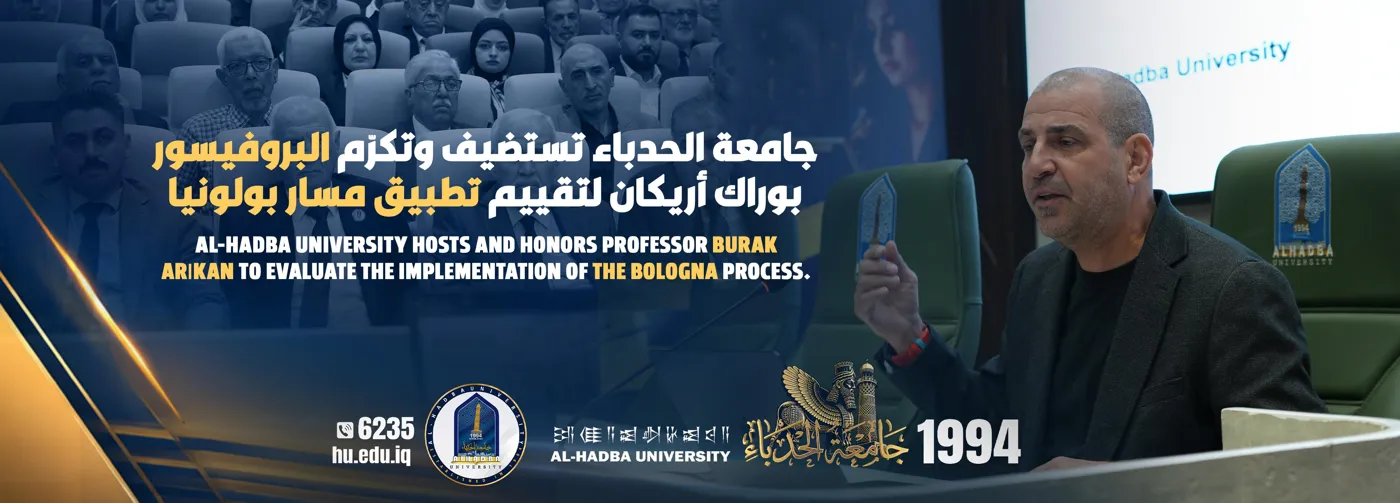

About Al-Hadba University
A Mosul institution with three decades of history
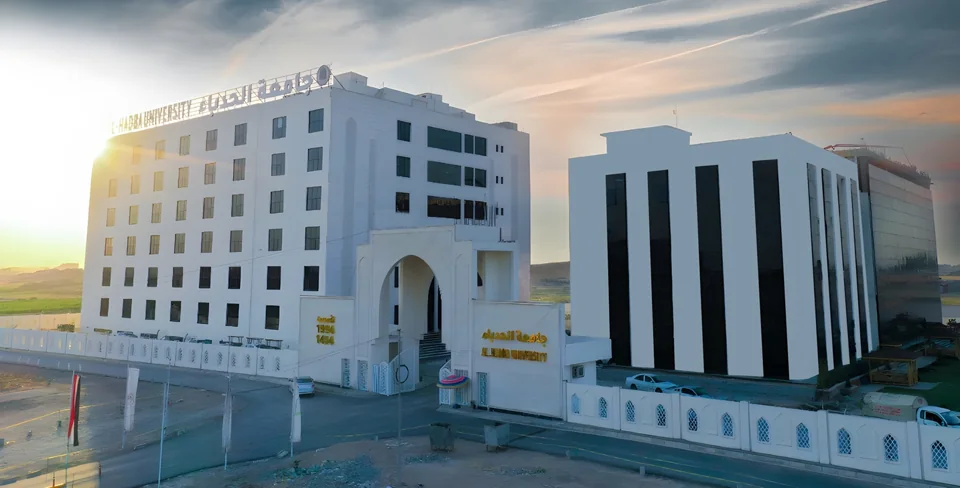
Al-Hadba University is a private higher education institution in Mosul, Nineveh Governorate, Iraq. Founded in 1994, it developed from Al-Hadba University College into the institution now using the university name. Its own account of education in Nineveh dates that transition to 2024 and connects it with an expansion into a new building and campus area.
The university takes its name from the historic leaning Al-Hadba minaret of Mosul's Great Mosque of Al-Nuri. Its institutional account also records the disruption caused by the conflict of 2014–2017: teaching was suspended, students and lecturers were displaced, and the university later resumed its work. The same account describes subsequent investment in academic programmes, staff development and research. These stages place the university's present development within the wider educational history of Mosul.
Sources: Al-Hadba University: University history in the Nineveh education record ↗
Education and the surrounding community
The university's About page presents teaching, research and community development as connected responsibilities. It places particular emphasis on Mosul and the reconstruction and development needs of Iraq. The stated educational approach includes both students' intellectual development and their ability to participate in the wider community.
Its institutional priorities include improving the use of resources, strengthening governance and developing research that responds to social needs. Sustainability and environmental responsibility also appear in its plans. Collaboration with productive sectors of the economy is described as a way to connect academic work with practical questions. The university therefore frames its role around the exchange and production of knowledge, alongside its educational programmes, with cooperation and responsibility to the surrounding community recurring throughout its account of its purpose.
Library resources and study
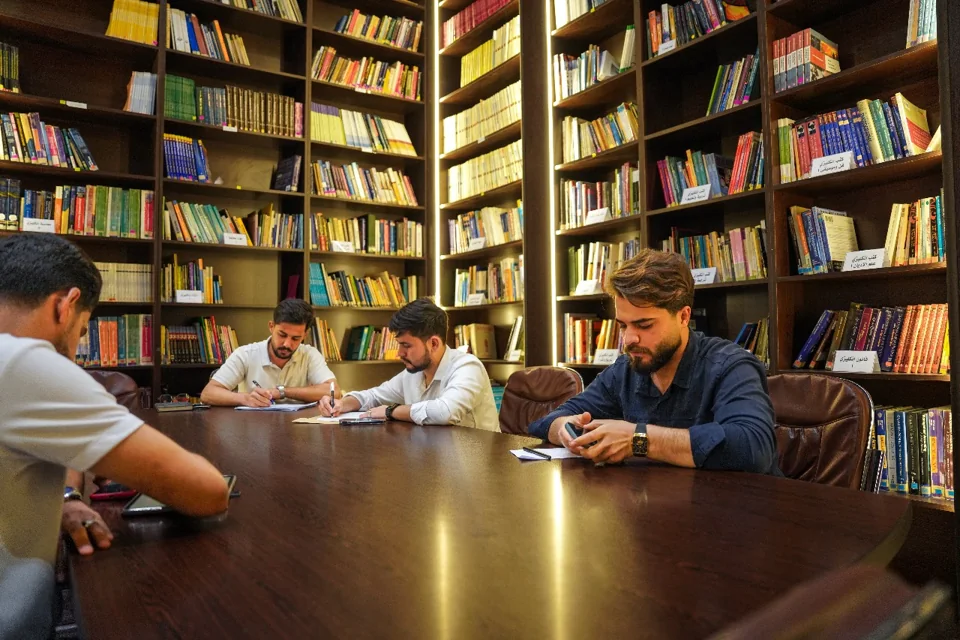
The university library combines printed collections with electronic resources. Its published description identifies books, academic periodicals, dictionaries, encyclopaedias, research guides and university publications among its holdings. Theses and dissertations from Al-Hadba and other Iraqi universities are also included, together with special collections of historical and rare texts.
The library describes individual and group study spaces, reading areas and computer workstations. A digital catalogue and online academic resources provide additional routes to finding material. Librarians offer assistance with research, information literacy and citation. Printing and scanning are listed among the practical services supporting students' academic work. The library page also explains that members of the wider public can obtain access to its electronic system after receiving login details from the information desk. These arrangements connect the collection with both university teaching and research use beyond the institution.
Sources: Al-Hadba University: University library ↗
Scholarly publication
The university's principal scholarly periodical is the Journal of Prospective Researches, published by its Centre for Future Studies in Mosul. The institutional journals page describes it as a quarterly, peer-reviewed, open-access journal. Its subject coverage extends across social sciences, sciences and engineering.
The journal accepts research articles, reviews and letters. The university describes full-text access without a subscription and publication under a Creative Commons Attribution–NonCommercial–NoDerivatives licence. Its listed fields include economics, law, education, history, geography, psychology, accounting and business administration, as well as pure and applied sciences, medicine, engineering and technology. This breadth gives the university's publication activity a multidisciplinary scope. The journals page directs prospective contributors to the journal's own platform and presents scholarly publication as part of the institution's wider exchange of research and ideas.
Research priorities and support
The Al-Hadba University Research Centre outlines an applied and interdisciplinary research role. Its stated aims include cooperation between academic researchers, public institutions, industry and community organisations. It connects research development with questions facing Iraq and with the university's 2025–2030 strategic plan.
The centre identifies several areas of interest, including health sciences, engineering, renewable energy, environmental studies, business and economics, cultural heritage and computing. Cybersecurity, software development and artificial intelligence appear within its technology priorities. Its plans also include training in research methods and proposal writing, mentoring for emerging researchers and greater student participation in projects. Support for publications, access to research information and the development of partnerships are presented as parts of the same research framework. These are institutional priorities and development objectives rather than claims about particular completed research results.
Programme structure and learning objectives
The university publishes detailed departmental statements linking academic programmes to faculty aims and the wider strategic plan. The accounting programme provides one concrete example. Its published specification describes a four-year, full-time Bachelor of Science in Accounting, organised over eight semesters with 240 ECTS credits under the Bologna framework. Arabic and English are identified as teaching languages.
The accounting department's educational aims connect theoretical study with professional practice and ethical responsibility. Its curriculum development priorities include financial reporting, auditing, taxation, digital accounting systems and data analysis. Applied research in financial transparency and corporate governance is also included. The department proposes cooperation with auditing firms, banks and professional organisations, while its community objectives include financial literacy and support for small-business bookkeeping. The programme statement brings these disciplinary aims together with intended learning outcomes and periodic curriculum review.
Sources: Al-Hadba University: Academic programme specifications ↗
Plans for academic exchange
The university's conference initiative sets out a programme of academic meetings beginning in 2026. Its published plan identifies three streams: science and engineering, social sciences, and dentistry and pharmacy. The intended participants include researchers, students, academic staff and professional practitioners.
The science and engineering stream covers areas such as computing, civil and electrical engineering, mathematics and the physical sciences. The social sciences stream includes education, law, economics, psychology and media studies. Dentistry and pharmacy form a separate specialist forum. The university presents these planned meetings as opportunities to discuss research and build academic connections. The initiative complements its research centre and journal by proposing another setting for the exchange of ideas across disciplines.
Sources: Al-Hadba University: Academic conference initiative ↗