Visa
About Al-Furat Al-Awsat Technical University
Technical education across the Middle Euphrates
Al-Furat Al-Awsat Technical University is an Iraqi university established in 2014. Its educational work extends across a network of colleges and institutes rather than a single teaching site. The university identifies constituent institutions in places including Kufa, Najaf, Babylon, Karbala, Al-Musayyib, Samawah, Al-Diwaniyah and Al-Rumaitha. This geographical spread brings technical education to several communities in the Middle Euphrates region.
The university’s stated educational purpose is to prepare technical personnel able to work with modern technologies. Its institutional objectives connect specialist teaching with the needs of different sectors of society. They also include collaboration with scientific institutions, exchanging expertise, developing staff capabilities and providing scientific and technical consultation. Lifelong technical education and the use of information technology in university services form additional parts of this mission.
Sources: About the university ↗ · Administrative Affairs ↗
Administration supporting a distributed university
The Administrative Affairs department dates from the university’s establishment. Its remit covers the administrative systems that support faculty and other employees across the institution. Separate divisions address faculty affairs, staff affairs, employment and staffing, documentation and electronic files, and retirement matters. The department coordinates personnel transactions with the university’s colleges and institutes and maintains the records required for these processes.
Electronic administration is an explicit development priority. The department describes work on employee databases, electronic archives and systems for staffing, leave and promotions. Its documentation division indexes official correspondence and orders and supplies university departments with information. Staff development also falls within its objectives, including identifying training needs and improving administrative skills. These functions provide the organisational infrastructure behind teaching and research.
Sources: Administrative Affairs ↗
Research planning and scientific support
Scientific Affairs coordinates the university’s research planning. Its responsibilities include assembling research plans, tracking changes during the academic year and calculating annual completion rates for the university and its constituent units. The department also follows scientific and educational activities through periodic reports. Workshops and courses for faculty members and postgraduate students are part of its responsibility for developing research capabilities.
The department’s structure includes functions concerned with marketing scientific outputs and with technological incubators and entrepreneurial ideas. Its online services include a system through which teaching staff record research plans and outputs, alongside information on intellectual property protection. Library development is another part of its remit: the department identifies internet access, Koha library software, reading and computer rooms, new publications and book exhibitions among its areas of work.
Sources: Scientific Affairs ↗
Libraries and access to academic material
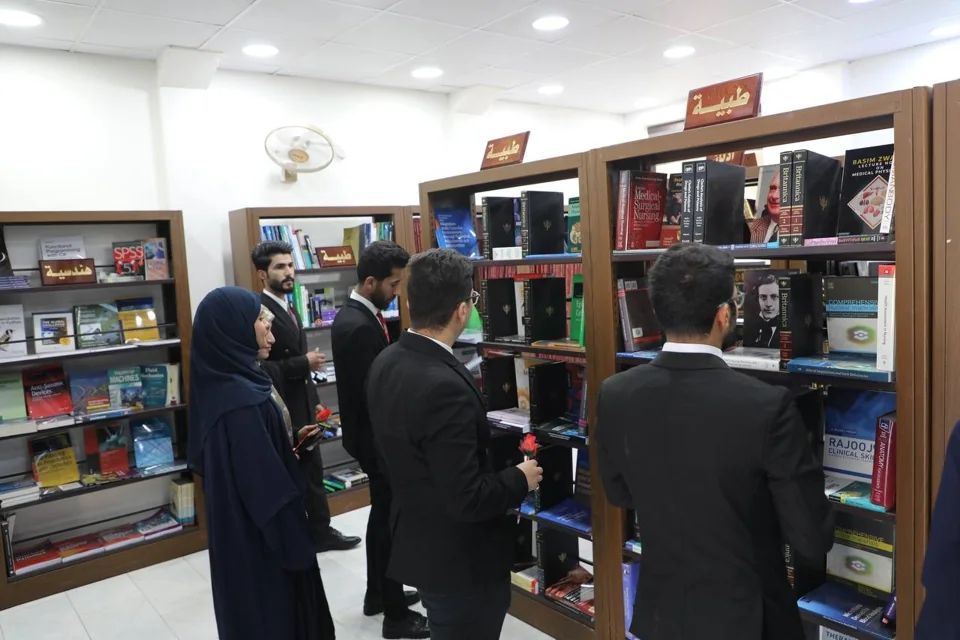
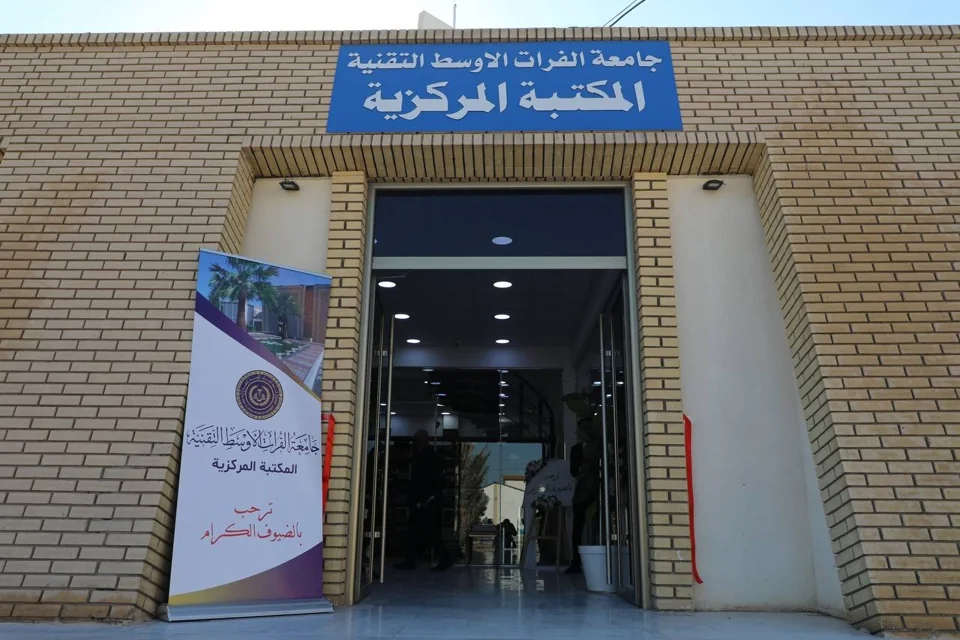
The Central Library supports students, researchers and faculty members with resources for the university’s scientific and technical disciplines. Its collections include books, scientific periodicals, theses and dissertations, alongside electronic databases. The university presents the library as both an academic resource and a cultural setting supporting learning and research.
The library website provides routes to the university’s central collection and to the libraries of individual faculties. It also links readers to an electronic library, the Iraqi Digital Repository and the World Digital Library. Research discovery links include Google Scholar and Scopus. These links bring together university services and wider information resources, with the national dissertation repository identified separately from the university’s own holdings.
Sources: Central Library ↗
Student records and academic administration
Registration and Student Affairs follows undergraduate students from admission through graduation and the issue of graduation documents. Its work involves coordination with the colleges and institutes and with relevant bodies inside and outside Iraq. The department implements the admission plan for morning study and supervises registration procedures for evening study. It also organises the admission of vocational branch graduates to the university’s institutes.
Its subdivisions cover student follow-up, registration and admission, document auditing, graduates and authentication, and quality follow-up. Beyond handling records, the department considers academic cases raised by colleges and institutes. Its stated responsibilities include educational evaluation studies and recommendations concerning student issues, as well as answering institutional enquiries and coordinating the documentation associated with graduates.
Sources: Registration and Student Affairs ↗
Activities beyond the classroom
The Student Activities department organises cultural, sporting, artistic and social programmes. Developing students’ artistic talents and cultural participation is a stated objective. The department connects this work with opportunities to take part in festivals organised by the university and the ministry, where participants can exchange experience.
Its published activity categories extend to scouting, volunteering and literary events as well as sport and the arts. These activities sit alongside formal academic study and provide organised settings for students to contribute skills beyond their specialist subjects. The department’s university page also provides access to information about its objectives, organisational structure and channels of communication.
Sources: Student Activities ↗
Continuing education and professional development
The Continuing Education Center was established in 2017. It serves teaching, administrative and technical staff, while also offering training to governmental and private institutions and the local community. Its activities include courses, workshops and specialist seminars, supported by an annual programme guide.
The centre separates training and development functions. The training branch identifies needs, follows course delivery and evaluates feedback; its units include teaching methods, statistics and informatics, and registration. The development branch works on curricula, training methods, information systems and community training projects. The centre also publishes material for training and qualifying instructors. Its listed 2026 course results cover subjects including Arabic language, computer applications, renewable energy and environmental sustainability, and human resources.
Sources: Continuing Education Center ↗