Visa
About Al-Farabi University
A Baghdad institution with a developing academic range
Al-Farabi University is based in the Al-Dora district of southern Baghdad, Iraq. It began in 2013 as Al-Farabi University College, with departments in civil engineering, architecture, petroleum engineering, computer engineering, life sciences, law and media. Its official institutional history records further expansion in 2017 through oil and gas refining engineering, banking and accounting sciences, and nursing.
Dentistry, medical laboratory techniques, optics technology and design followed in the 2018–2019 academic year. In March 2025, the institution formally became a university. This development brought a broader academic structure to an institution that had grown across professional, scientific and humanities fields. The university's account places continuing academic development, research and the improvement of its educational environment at the centre of its institutional direction.
Sources: A Baghdad institution with a developing academic range ↗
Continuing education and community activity
The Continuing Education Department organises training programmes, seminars and workshops for students, academic staff and the wider community. Its published description includes law, artificial intelligence, cybersecurity, interior design, psychological counselling and health-related subjects among the areas of training.
The department connects its educational work with community service. Awareness campaigns, seminars and volunteering are identified as ways of engaging with social questions. Subjects named in this account include human rights, drug-abuse prevention, women's empowerment and clean energy. The page also retains training and community-service plans for the 2023–2024 academic year. Together, these descriptions outline a department concerned with learning beyond ordinary courses and with bringing university knowledge into wider professional and community settings.
Educational guidance and student support
The Psychological Counseling and Educational Guidance Division describes its work as support for students' personal, academic and social development. Its objectives include helping newcomers adapt to university life, understand academic regulations, manage their time and recognise their abilities. The division also identifies self-confidence, responsibility and self-guidance as priorities.
Its account distinguishes individual counselling relationships from broader educational-guidance activities. The latter can involve lectures, meetings, newsletters, noticeboards and social media. Academic difficulties and social challenges are among the matters addressed through this support structure. The published membership list connects the division with guidance representatives in academic departments. Responsible digital communication and the encouragement of ethical, respectful behaviour on social media also appear in its objectives.
Training staff to support entrepreneurship
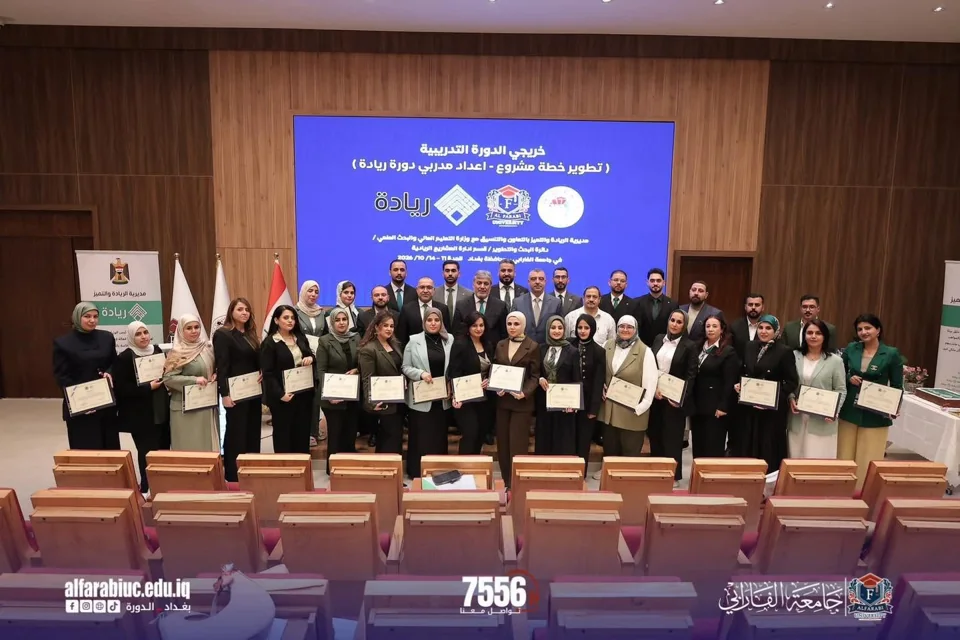
On 16 October 2026, the university reported the conclusion of a Training of Trainers programme linked to Iraq's Riyada initiative. The programme was organised with the Directorate of Entrepreneurship and Excellence at the Prime Minister's Office and the ministry department responsible for entrepreneurial projects within research and development.
Academic and administrative staff participated in training concerning entrepreneurial business plans, incubation frameworks and the mentoring of emerging businesses. The university presented this as part of developing the institutional ability to support entrepreneurship among students and graduates. The report provides a dated example of professional development involving university staff and national organisations. Its focus was on preparing trainers and developing applied approaches to business support within the university's wider educational activities.
Sources: Training staff to support entrepreneurship ↗
Learning through a technology exhibition
A university report dated 3 October 2026 describes a student visit to the fifth ITEX information-technology exhibition and conference. The visit was intended to connect academic learning with developments being demonstrated by technology companies and other exhibitors. Students encountered topics spanning communications, networking, artificial intelligence and digital transformation.
Financial technology and electronic payments also featured among the areas highlighted, alongside information assurance and cybersecurity. The report describes opportunities for students to speak directly with company representatives and engineering teams. This example places learning outside a conventional lecture room and in a setting where academic subjects meet contemporary applications. It illustrates the university's use of organised field visits to broaden students' exposure to technological work and ideas.
Practical electrical-engineering training
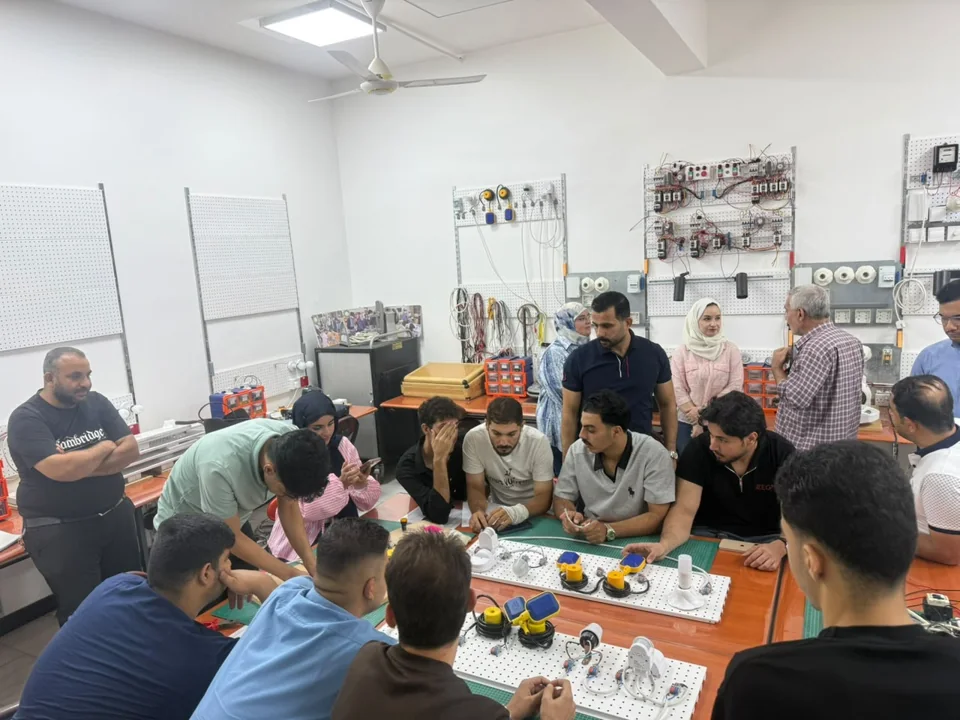
Electrical Engineering Technologies students took part in a three-day course at the Science Care House under the Ministry of Youth and Sports from 27 to 29 September 2026. The university's report, published on 30 September, places the visit within the work of its Technical Engineering College.
The course concerned electrical installations and practical work in a specialist laboratory setting. Its educational objectives included connecting classroom theory with technical activity, developing practical skills and introducing students to the procedures involved in electrical work. The account presents cooperation with a government scientific institution as a way of expanding field-based education. This is a specific example of the settings used for practical learning, with the host organisation identified separately from the university's own facilities.
Sources: Practical electrical-engineering training ↗
Research identity and technical support
On 30 September 2026, Al-Farabi reported establishing a technical-support team to help academic staff and researchers review and update their ORCID profiles. The initiative focused on the organisation of researchers' digital identities and the attribution of scholarly work.
The university's report describes assistance and consultation concerning profile accuracy, publication records and links between research outputs and academic information systems. It also refers to connections with the Iraqi higher-education platform HEPIQ and international research databases. This work concerns the administration and visibility of research as well as the publications themselves. It provides an example of institutional support that helps researchers organise information about their work and distinguish their contributions within scholarly records.
Interdisciplinary scientific discussion
Another report from 30 September 2026 describes a scientific session on artificial intelligence in biotechnology. Al-Farabi organised the event in cooperation with the College of Engineering at Al-Nahrain University, the College of Excellence at the University of Baghdad and the Iraqi Programmers Syndicate. Academics, researchers and students participated in the discussion.
The session included attention to an Iraqi team's planned participation in the iGEM synthetic-biology competition in France. Discussion addressed research projects and the use of artificial intelligence within biotechnology and genetic-engineering investigation. The report documents an academic exchange and a prospective competition appearance, rather than a completed competition result. It illustrates cooperation across universities and a professional body around a subject connecting computing with biological research.