Visa
About Al-Bayan University
A university on Baghdad’s airport road
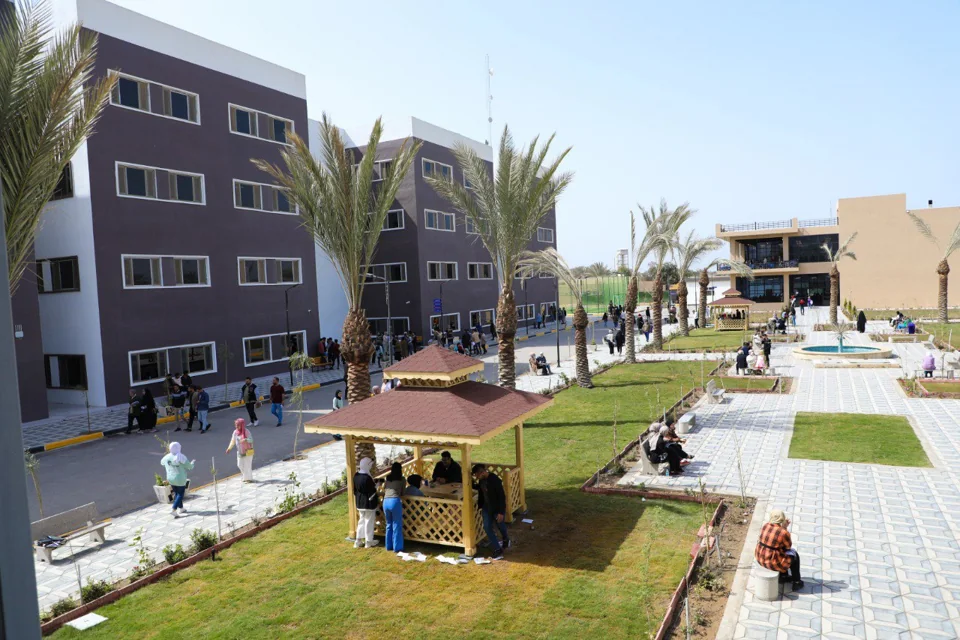
Al-Bayan University is located in Baghdad, Iraq, on the road to Baghdad International Airport near Abbas Ibn Firnas Square. Its official history dates establishment to 2016 and identifies an initial group of colleges concerned with pharmacy, medical laboratory technologies, law and business administration, including accounting. Dentistry and nursing were added through decisions issued in 2017. The institution's published development record also documents a technical engineering college beginning in the 2021–2022 academic year, followed by further programmes and administrative units. It records the establishment of continuing education, laboratory-management and research-related functions as the university expanded. This sequence shows an institution that began with a combination of health, legal and business education and later extended into additional technical, educational and artistic fields. The Baghdad campus brings these different academic activities within one university environment.
Sources: University establishment and academic expansion ↗
A range of academic disciplines
The university's current institutional website presents colleges spanning dentistry, pharmacy, health and medical technologies, nursing, technical engineering, law, business administration, education, fine arts and engineering. The educational range therefore includes both health-related and non-medical fields. Its statement of vision places quality of education alongside creativity and social responsibility. It also identifies participation in the advancement of society through knowledge and technology as a core purpose. These are expressed as institutional aims guiding the university's work, connecting the different colleges through a shared interest in education and the use of contemporary knowledge. The separate college websites provide more detailed descriptions of their fields, teaching arrangements and activities. Together, they show a university structure organized through distinct academic communities while retaining common institutional services.
Registration and the student academic record
The Registration and Student Affairs Department describes its role as a link between students and college administrations from admission through graduation. Its functions include checking admission and transfer records, maintaining academic histories, issuing relevant university orders and verifying academic documents. It also follows examination instructions and university decisions affecting undergraduate students. The department provides confirmation of continuing enrolment and deals with official correspondence concerning students and graduates. Staff meetings and workshops support the work of college examination committees and registration personnel. Electronic archiving and email form part of its administrative methods. The department also receives students and family members seeking help with study-related problems. These responsibilities make student administration a continuing process, combining academic records, documentation and communication with the colleges throughout a student's university course.
Library collections and information support
Al-Bayan's central library was established alongside the university and combines reading and research functions with cultural activity. Its published description identifies printed and electronic books, theses and dissertations, scholarly journals, scientific films and illustrated material organized by subject. Collections cover humanities and social sciences relevant to law and business, as well as medical fields associated with pharmacy, dentistry, nursing and laboratory study. Database searching and electronic reference assistance help readers locate information, while reproduction services support access to selected materials. The library also hosts workshops, seminars and cultural discussions. Its electronic-library provision complements the physical collections through digital books and other resources for students and teaching staff. This combination gives the library a role in independent study and research as well as organized academic exchange.
Continuing education and links with the community
The university records the creation of its Continuing Education Center under a ministerial order dated 4 September 2023. The centre's objectives concern training, development and the provision of scientific and educational services to the community. It identifies medical, engineering, scientific and legal subjects among the areas in which university expertise can contribute to training. Workshops and courses are intended for different groups in society, with programmes designed around professional and academic skills. The centre also emphasizes cooperation with other scholarly institutions and the use of contemporary approaches to teaching and learning. These stated functions extend the university's educational work beyond ordinary college courses. They provide an organizational setting for drawing on academic staff expertise and campus resources when developing shorter training and development activities.
Sources: Continuing Education Center ↗
Practical teaching in laboratories and workshops
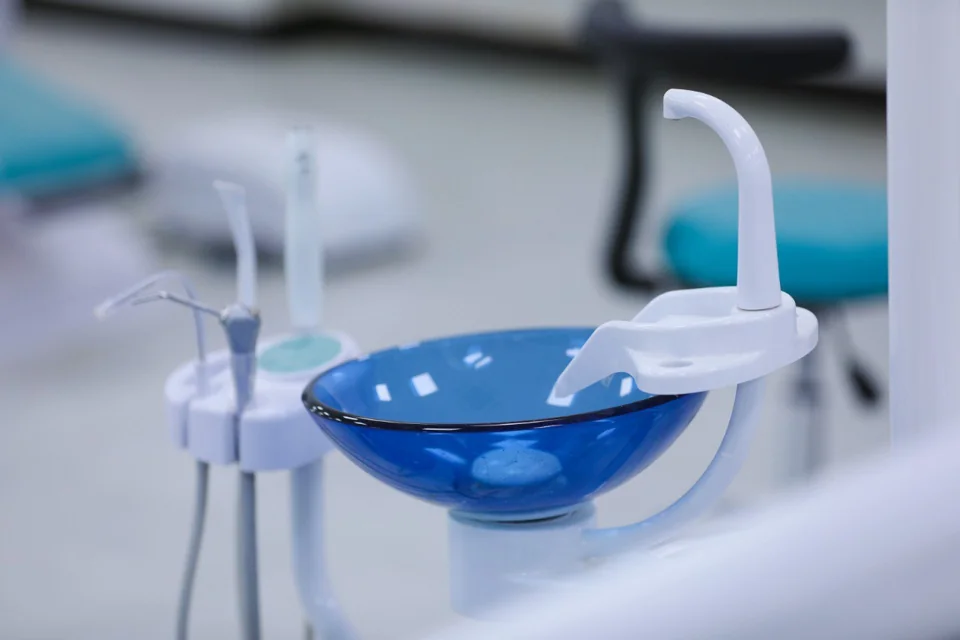
The university publishes a detailed inventory of laboratories associated with several of its colleges. Pharmacy facilities cover subjects including industrial pharmacy, pharmaceutical technology, biochemistry, pharmaceutical chemistry, pharmacognosy, physiology, microbiology and pharmacology. The technical engineering inventory includes computing, engineering drawing, electrical circuits, power electronics, medical devices, measurement, materials, thermodynamics, fluid mechanics, communications and networks. Workshops cover electrical and mechanical work as well as machining and welding. The dentistry inventory identifies teaching spaces for anatomy, dental materials, prosthodontics, microbiology, oral histology and related subjects. The laboratory page presents these spaces as part of practical and applied learning, complementing theoretical instruction. The range of listed facilities reflects the different kinds of observation, calculation, equipment work and technical practice required across the university's scientific programmes.
Sources: Teaching laboratories and workshops ↗
Fine arts and interior design
The College of Fine Arts was established for the 2023–2024 academic year and describes a four-year course of study. Interior design is a central part of its published academic description, with art education also identified as a newly introduced department. The interior-design approach combines artistic work with the functional and physical requirements of residential and commercial spaces. Student projects are developed under staff supervision, with attention to the people who use a space and to the relationship between function and visual design. The college describes theoretical, practical and combined applied subjects within a semester-based assessment system. Its educational mission emphasizes developing design knowledge through projects and engagement with contemporary methods. This adds an artistic and spatial-design dimension to the university's broader mix of professional, scientific and humanities education.
Sources: College of Fine Arts ↗