Visa

About Akwa Ibom State University
From AKUTECH to a conventional university
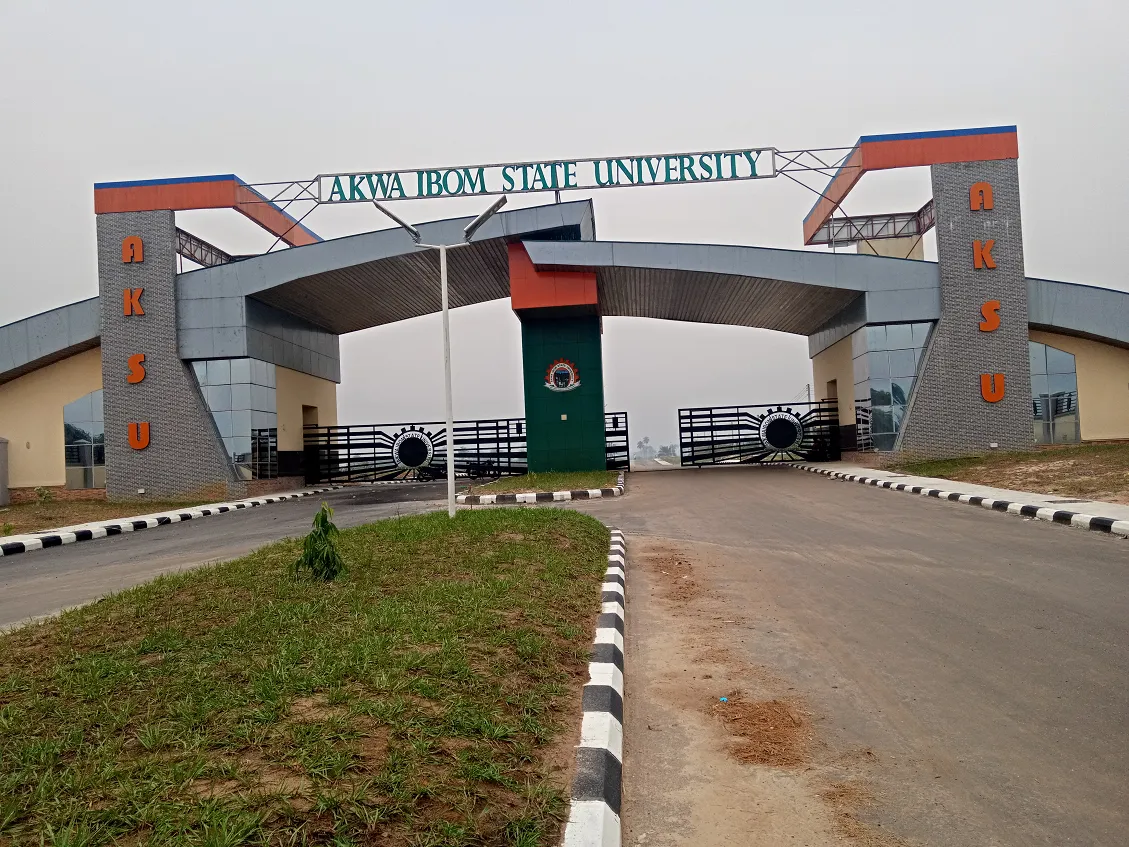
Akwa Ibom State University is a public university in Akwa Ibom State, Nigeria, whose development began with a proposed technology-focused institution. A state committee started planning the university in October 2000, followed by an implementation committee in December 2001. The law establishing Akwa Ibom State University of Technology, or AKUTECH, was signed on 16 April 2003. The state subsequently broadened the project into a conventional, multi-campus university and changed its name to Akwa Ibom State University. Teaching began on 1 November 2010 with an initial intake of 300 students. Engineering, natural and applied sciences, oceanography and naval architecture, and agriculture formed the first academic groupings. Social and management sciences followed in the 2011–2012 session. This history explains the older technology name associated with the institution.
Sources: University history ↗
Two campuses and university administration
The main campus is at Ikot Akpaden in Mkpat Enin Local Government Area, near the meeting of the Ikot Akpaden–Eastern Obolo road and the Eket–Ikot Abasi highway. The second campus is at Obio Akpa in Oruk Anam Local Government Area, on the Abak–Ikot Okoro road. University administration includes the registry, bursary, library, works department, health services and student affairs. Its Governing Council handles general policy, property, finances and staff service matters. The Senate directs academic affairs, including teaching organization, examinations, programmes, degrees and research. A further body, the Congregation, brings together senior degree-holding academic and non-teaching personnel as a forum for discussing university issues and making recommendations to the Council and Senate.
The surrounding landscape and campus development
The university's description of its environs places the main campus in the southern, coastal part of the state. The northern portion at Ikot Akpaden connects to Nigeria's East–West Highway, while the wider estate extends toward the Atlantic shoreline. Its account distinguishes higher, better-drained ground used for development from lower wetland containing mangroves and tidal creeks. The early main-campus development included lecture buildings, laboratories, engineering workshops, a library, accommodation, a cafeteria, a medical centre and sporting space. Obio Akpa has a different history: the site previously served agricultural education and experimentation. The university describes demonstration farms there for oil palm, rubber, fisheries and livestock, alongside academic buildings, administration and laboratories.
Sources: University and its environs ↗
An educational mission rooted in the state
AKSU connects its mission to the use of knowledge and technology for social and economic development. Its published philosophy places individual development alongside participation in community life. The associated educational goals include scholarship, community service, national understanding and the development of intellectual, physical and social abilities. Environmental awareness also appears in these aims, with education intended to help people understand and protect both their immediate surroundings and wider physical and cultural environments. The university's statement gives technical skills an important place while also addressing cultural and ethical questions. This combination reflects the broader remit adopted when the original technology-oriented project became a conventional university, serving several academic fields within the state's educational system.
Sources: Mission and educational philosophy ↗
Agriculture and rural development
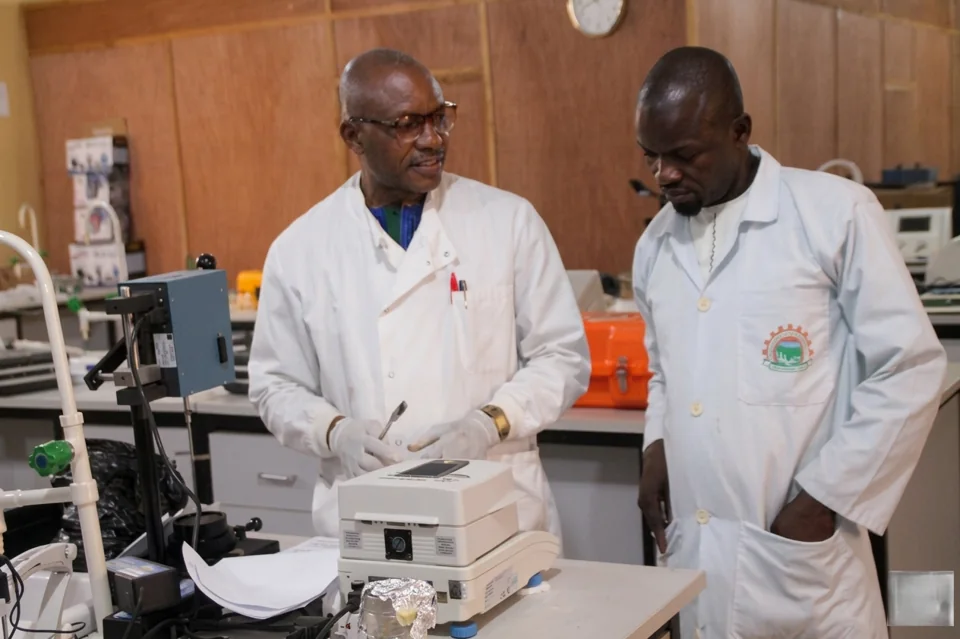
The Faculty of Agriculture combines theoretical study with practical preparation in agricultural production. Its published subject areas include agricultural economics and extension, animal science, crop science, soil science, and fisheries and aquaculture. Faculty objectives encompass production, research and entrepreneurship across agriculture and related disciplines. The faculty also identifies technical and productive skills as part of its educational approach. Its profile of Professor Jemimah Ekanem describes work in agricultural extension, rural sociology and development, as well as the establishment of a faculty internship programme. These subjects connect agricultural education with questions of communication, rural livelihoods and the organization of production. They sit alongside the faculty's emphasis on understanding the scientific and economic aspects of agriculture.
Sources: Faculty of Agriculture ↗
Humanities and cultural study
The Faculty of Arts lists English, philosophy, religious and cultural studies, history and international studies, and performing arts, also described as theatre arts. This grouping brings language, historical inquiry, performance and the study of ideas into the university's academic structure. Its published faculty profile also identifies areas such as African philosophy, epistemology, metaphysics, peace and conflict, and computer applications among the research interests of its academic leadership. The same profile records work on digital humanities and interdisciplinary arts publishing. These activities show how the faculty's humanities provision includes both established disciplines and engagement with digital tools. The range of listed programmes reflects the university's development beyond its original engineering and applied-science emphasis.
Sources: Faculty of Arts ↗
Science education and teacher preparation
The Faculty of Education publishes programmes in biology education, chemistry education, integrated science education, physics education and mathematics education. The subject combinations bring scientific knowledge into a faculty concerned with teaching and educational study. Its academic profile describes experience in curriculum studies and science education, alongside teaching and supervision at undergraduate, master's and doctoral levels. It also records departmental leadership in science education and scholarly work on curriculum development. Together, these details establish education as a distinct academic component of AKSU, with a particular emphasis on science and mathematics. The faculty's provision forms part of the wider university rather than a separate institution bearing a similar state name.
Sources: Faculty of Education ↗
Library services across the university
The university operates libraries at both Ikot Akpaden and Obio Akpa. The latter developed from the former College of Agriculture library, and both assumed their university academic-library roles during the 2010–2011 session. The main-campus library supports engineering, education, biological sciences and physical sciences, while Obio Akpa serves agriculture, arts, social sciences and management sciences. Faculty resource centres provide additional subject-level information support. Library functions include resource development, processing, readers' services, reference, reprography, electronic-library services and an institutional repository. The official library page identifies Dr Nse Akwang as university librarian and describes her academic background in library and information science. This distributed arrangement connects information services to the university's two-campus teaching structure and the different subject communities based at each site.
Sources: Multi-campus university library ↗